Introduction:
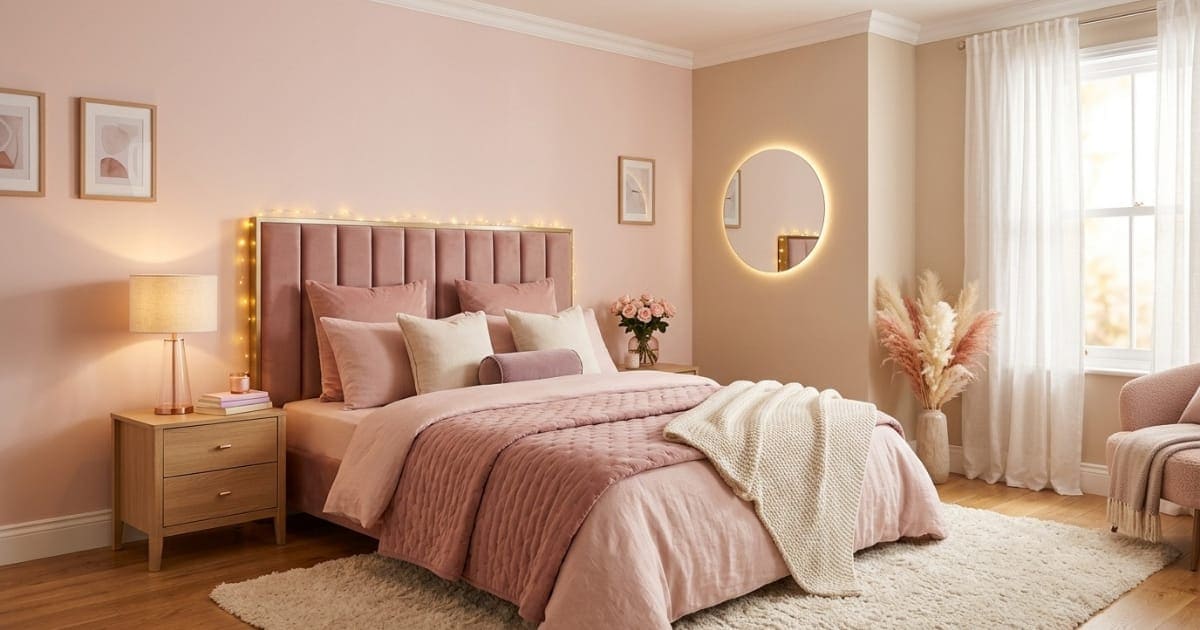
Finding the perfect soft pink bedroom aesthetic is all about balance. The right shade of blush can make your bedroom feel warm, cozy, and elegant without looking overly sweet or childish. It’s a timeless style that works just as beautifully in a small apartment as it does in a spacious master bedroom.
In this guide, you’ll discover 14 practical decorating ideas that are easy to adapt to your own space. From layered bedding and warm lighting to blush color combinations and cozy finishing touches, each tip is designed to help you create a bedroom that feels relaxing, inviting, and uniquely yours.
Why Soft Pink Bedrooms Feel So Cozy
Muted pinks with warm undertones — blush, rose dust, pale mauve — tend to read as calming rather than stimulating, which is part of why they’ve become such a popular bedroom choice. The tone is often compared to sunset light, and there’s something to that association: it feels like the visual cue for winding down.
It’s also why this look dominates Pinterest boards. A lot of neutral bedroom trends lean on cool white light and minimalist iron frames, which can look striking but occasionally feel a little cold in person. Soft pink brings in organic, skin-toned warmth instead. It photographs beautifully, but more importantly, it tends to feel genuinely restful to actually live with — not just look at.
14 Soft Pink Bedroom Aesthetic Ideas for Your Space
1. Start with Soft Blush Pink Walls
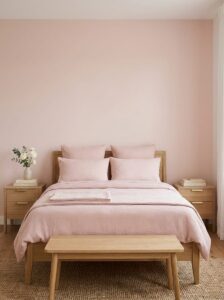
Wall color sets the tone for everything else in the room, which is exactly why it’s worth getting right before you buy a single piece of furniture. The most common misstep here is picking a pink that looks delicate on a tiny paint swatch, then watching it turn bright and almost neon across four full walls in daylight.
The Palette Look for chalky, muted shades with gray, beige, or peach undertones — rose dust and pale plaster pink are reliable starting points. These tones absorb light rather than bouncing it back harshly, which pairs nicely with white trim and warm oak furniture.
Renter-Friendly Swap If you’re renting, paint isn’t always an option, and that’s fine. Peel-and-stick wallpaper on the wall behind your headboard does most of the same visual work. A textured linen or botanical line-art print in blush looks intentional rather than temporary, and it comes down cleanly when you move.
Before You Commit Tape a sample to the actual wall and check it morning and evening. Paint reads differently under daylight than it does under lamp light, and that gap catches people off guard more often than you’d expect.
2. Layer Different Shades of Pink
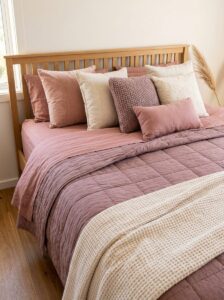
Matching every fabric to the same exact shade of pink is one of the quickest ways to flatten a bed visually. The eye reads it as one block of color rather than something layered and considered.
Building the Layers A better approach: ivory sheets as your base, a washed linen duvet in pale blush over that, then a textured coverlet in deeper dusty rose folded at the foot. Finish with a few pillows in dark mauve or crushed velvet.
Why Contrast Matters Pairing two lighter pink pieces with one deeper, desaturated tone creates subtle shadow lines between the layers — which is really what makes a bed look plush rather than just made.
Skip the Matching Set Bed-in-a-bag sets are convenient, but they tend to work against this. Everything arrives in the same dye lot, so there’s no natural variation to play with. Mixing pieces from a couple of different sources takes more effort upfront but is worth it.
3. Add Cozy Fairy Lights
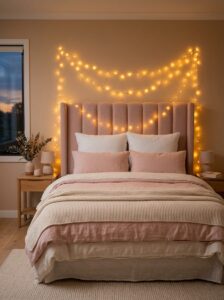
A single overhead bulb does a room no favors — it tends to flatten everything into the same harsh, even light. Fairy lights fix this by building a softer, more layered glow instead.
Placement Ideas Drape thin copper micro-LED strands behind your headboard in a loose, swooping pattern, or let them spill behind sheer curtains. During the day they more or less disappear; at night they read as small, warm points of light rather than a single source.
Get the Color Right Color temperature matters more than most people expect here. Look specifically for “Warm White” or “Ultra-Warm White,” somewhere around 2200K–2700K. Cool white or bluish strands clash noticeably against pink — it’s a small detail, but it’s the difference between cozy and slightly off.
Seasonal Bonus If you’re someone who likes to switch up your seasonal decor, fairy lights are also one of the easiest things to swap out without committing to anything permanent.
4. Pair Pink with Warm Beige
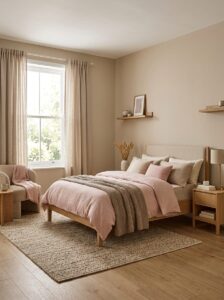
If pink alone feels a touch too sweet or youthful for your taste, beige is the natural correction. The pairing tends to read as calmer and more contemporary, without losing any of the warmth.
Where to Add It Bring beige in through floor-to-ceiling linen curtains, an oatmeal upholstered headboard, or a natural jute rug. Because pink and beige typically share a similar warm undertone, they blend rather than compete.
Ground It with Wood Mid-toned oak or walnut furniture grounds the look further. The wood grain adds a bit of organic texture that keeps the palette from feeling overly soft or one-dimensional.
Watch the Undertone Cooler, gray-leaning beige tones can sometimes fight with warm pink rather than complement it, resulting in a slightly muddy look. When in doubt, hold fabric swatches together in the room’s actual light before buying.
5. Create a Luxury Blush Pink Bedroom
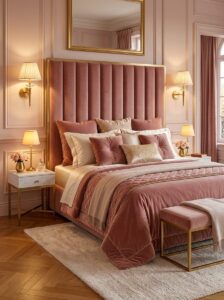
A boutique-hotel feel rarely comes from adding more decor — it’s usually about upgrading material weight instead.
The Anchor Piece A channeled velvet headboard in dusty rose, climbing partway up the wall, makes a strong starting point. Flank it with brushed brass sconces and small marble-topped side tables. The contrast between soft velvet and cool, hard stone does a lot of the heavy lifting here.
Texture Against Texture Crisp white Egyptian cotton or linen bedding against that velvet headboard adds another layer of contrast — texture against texture, which photographs well and feels even better in person.
Know When to Stop This look can tip into “overdone” quickly if you stack too many pillows. Three to five is usually the sweet spot before it starts looking more cluttered than curated. If velvet maintenance isn’t appealing, a heavy boucle or linen headboard gives a similar silhouette with considerably less upkeep.
6. Decorate with Rose Gold Accents
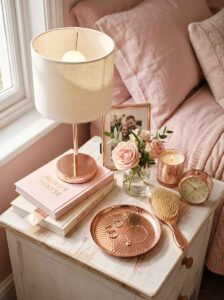
Metallics function a bit like jewelry for a room — small, but they change the whole impression. Chrome and silver can feel slightly cold against blush walls, while rose gold tends to add matching warmth instead.
Where It Counts Most Focus on the small surfaces you actually touch daily: dresser pulls, a framed vanity mirror, a slim reading lamp base. These details add polish without requiring you to redo the whole room.
Finish Over Shine Brushed or satin finishes generally age better than high-gloss rose gold, which can show fingerprints and water spots more visibly over time, especially on handles you’re touching constantly.
One Metal, Not Three If you’re mixing metals elsewhere in your home, it’s usually safer to keep this room to one dominant tone. Gold, silver, and rose gold all together tends to read as unplanned rather than eclectic.
7. Upgrade Your Bedding with Soft Textures
Coziness is mostly a tactile experience before it’s a visual one. A gorgeous color palette on flat, synthetic fabric still won’t feel inviting once you actually lie down in it.
Building the Base Start with a waffle-weave cotton or heavy linen duvet in soft pink. Add an oversized cream knit throw at the foot — let it pool slightly onto the floor rather than folding it too neatly. Mix in pillows covered in boucle, linen, and velvet for variation.
Material Matters Natural fibers are worth the investment here. Cotton, linen, and bamboo rayon breathe better and genuinely soften with each wash, unlike polyester satin, which looks shiny in photos but tends to trap heat and feel slippery against skin overnight.
The One Exception Satin isn’t without its uses — a satin pillowcase specifically can be genuinely good for hair and skin, even if it’s not the right call for full bedding.
8. Build a Cozy Reading Corner
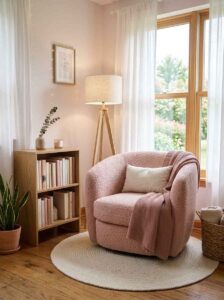
An underused corner near a window or wardrobe is often wasted square footage. With a few small additions, it can become a tech-free spot you actually use most evenings.
Furniture to Use A small boucle swivel chair or dusty rose armchair works well here, paired with a slim tripod floor lamp positioned behind it and a tiny marble side table for your coffee or tea. A woven basket nearby for extra throws finishes the look without adding clutter.
The Scale Detail Keeping the chair footprint under 30 inches wide usually prevents it from disrupting the room’s traffic flow — which matters more in smaller bedrooms than the styling itself does.
9. Add Floating Shelves for Stylish Storage
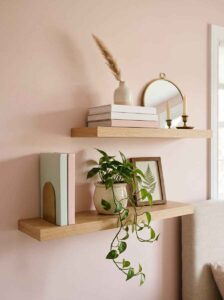
Open shelving turns practical storage into something you actually want to look at, without needing a dark closet to hide things away in.
Setting It Up Two or three oak or white floating shelves above a nightstand or dresser give you enough surface to work with. Style them with a few books standing vertically, a trailing pothos in a blush pot, and a small framed print or mirror.
The Restraint Rule The real skill with open shelving is restraint. Leaving visible gaps between objects is usually what separates a curated shelf from a cluttered one — packing it edge to edge almost always looks busier than intended, even with beautiful individual pieces.
10. Decorate with Pampas Grass & Greenery
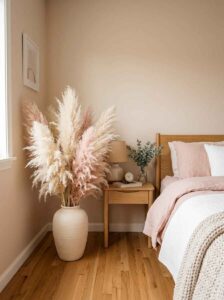
A room this heavy on soft textiles tends to benefit from one organic element to keep it from feeling overly staged.
Where to Place It A tall ceramic floor vase filled with pampas grass in beige and soft pink tones works well as a statement piece. On the nightstand, fresh eucalyptus or a low-maintenance snake plant in a terracotta pot adds a smaller dose of the same effect.
The Shedding Problem Pampas grass sheds. Taking the stems outside, shaking them gently, and misting lightly with hairspray before bringing them in locks the fluff in place and saves you from finding bits of it on your floor for weeks afterward.
Low-Maintenance Alternative If you’d rather skip the maintenance entirely, a quality faux pampas stem has gotten genuinely difficult to distinguish from the real thing in recent years — worth considering if low-fuss is a priority.
11. Install Soft LED Accent Lighting
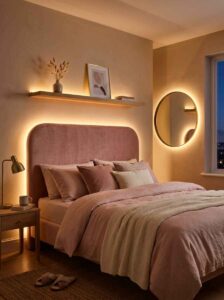
For a more architectural, modern glow, hidden lighting tends to outperform table lamps.
Where to Hide the Strips Warm-white LED strips tucked behind a headboard, under floating shelves, or behind a wall mirror create a soft halo of light without the bulb itself ever being visible. It’s a subtle effect, but it changes how the whole wall reads at night.
Worth the Upgrade App-based dimming is worth the small extra cost if you can find it. Being able to lower the strip to around 10% brightness before bed turns it into a gentle nightlight rather than something you need to turn fully off.
The One Rule Cool-toned strips are the one thing to avoid entirely in this context — they tend to cast pink walls in an odd purplish-gray rather than the warm glow you’re going for.
12. Choose Minimalist Wall Art
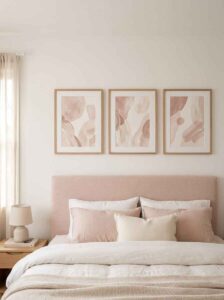
Bare walls can feel unfinished, but art that’s too dark or busy works against the calm you’re trying to build elsewhere in the room. The fix, more often than not, is restraint.
What to Choose Two or three matching light-wood frames above the bed, filled with minimalist line art or soft watercolor washes in blush and cream, tend to hold up well over time — unlike trend-driven pieces that can date a room within a year or two.
Getting the Hang Right Center the artwork around eye level, roughly 58–60 inches from the floor, with a 6–8 inch gap above the headboard. It’s a small measurement, but it’s the kind of detail that makes a gallery wall look professionally hung rather than slightly off.
13. Add Plush Rugs for Extra Warmth
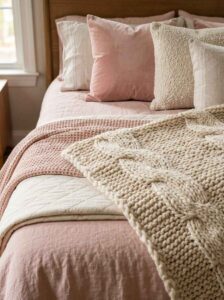
Stepping onto a cold floor every morning is a small but genuinely annoying problem, and one of the easiest to solve.
Sizing It Right A thick cream shag or wool rug under the bed frame, extending at least 24–30 inches past each side of the mattress, means your feet land on something soft no matter which side you get up from.
Layering Over Carpet If you already have wall-to-wall carpet, layering a flat-woven vintage pink rug on top still works — the texture contrast adds visual interest and helps define the sleeping zone, even over existing flooring.
The Common Slip-Up The mistake to avoid is sizing down. A rug that doesn’t extend past the mattress edges tends to make the whole room look smaller, not more finished — it’s worth spending slightly more to get the size right.
14. Finish with Cozy Accessories
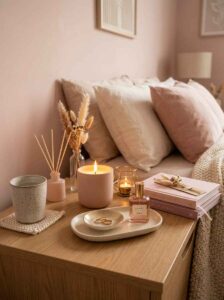
The last few details are usually what separate a room that feels staged from one that feels lived-in.
What Belongs on the Nightstand A small ceramic tray for rings and a watch, two stacked design books topped with a soy candle in a pink glass jar, and a stone diffuser or water carafe cover most of what a nightstand actually needs.
The Rule of Three Grouping accessories at varying heights — a tall lamp, a medium candle, a low dish — tends to look more naturally balanced than items lined up at the same level. If the surface starts disappearing under stuff, that’s the cue to edit rather than add.
Best Color Combinations for a Soft Pink Bedroom
⚪ Pink + White — Clean and timeless, keeps the space feeling bright and airy.
🟤 Pink + Beige — Warm and grounding, leans soothing and organic.
🍦 Pink + Cream — Slightly more vintage and romantic than straight white.
🌿 Pink + Sage Green — A natural contrast that tends to make pink feel fresher rather than sweeter.
🪵 Pink + Oak Wood — Pulls out the warm undertones already hiding in most blush paints.
✨ Pink + Gold — Leans glamorous, good for a boutique-hotel feel.
🌹 Pink + Rose Gold — A seamless, monochromatic metallic match.
Common Mistakes to Avoid
- Going too bright: Neon or bubblegum pink tends to overstimulate rather than relax. Staying gray-toned and muted on large surfaces is generally the safer call.
- Cool white lighting: Bulbs above 3000K cast a colder glow that can shift pink walls toward purplish-gray. 2700K is the number to look for.
- Matching everything exactly: A perfectly coordinated bed-in-a-bag set often reads as flat. Mixing tones and textures by hand takes more effort but pays off.
- Undersized rugs: A rug that stops short of the mattress edges tends to shrink the room visually rather than ground it.
- Oversized furniture: A heavy frame in a smaller room can block both light and walking space. Lower-profile pieces with slender legs usually work better in tighter footprints.
FAQs
Is soft pink a good bedroom color for adults? Generally, yes. Desaturated shades like blush and plaster pink tend to function more like warm neutrals than a typical “pink,” offering an alternative to gray or white that still feels sophisticated. Paired with natural materials like wood and stone, it rarely reads as juvenile.
How do I make a pink bedroom look elegant instead of childish? Steer away from saturated, primary pinks. Muted, dusty tones with gray or beige undertones tend to read as more grown-up. Pairing them with marble, oak, brushed brass, or velvet adds the layered, intentional feel that makes the difference.
What colors pair best with blush pink? Beige, cream, and taupe create a calm, warm base that’s hard to get wrong. For more contrast, muted sage green or charcoal accents tend to ground the palette nicely without overpowering it.
Are fairy lights good for bedroom decor? Used thoughtfully, yes. Warm white strands around 2700K, draped behind a headboard or curtain, add soft, shadow-free light. Cool white or blue-toned strings are really the only thing to avoid — they tend to feel sterile against pink tones.
How can I create a luxury pink bedroom on a budget? A few high-impact swaps go a long way: chalky blush paint, brushed gold hardware, a faux sheepskin layered over existing carpet, and a stack of hardback books as a small styling pedestal. Material choices tend to matter more than spending on new furniture.
What lighting works best in a soft pink bedroom? Layered, warm lighting generally outperforms a single overhead fixture. A fabric-shaded table lamp, hidden LED strips behind the headboard, and a candle or two together create more depth. Keeping bulbs around 2700K helps bring out pink’s warmer undertones.
How do I decorate a rental bedroom without painting? Peel-and-stick wallpaper on one accent wall, floor-to-ceiling curtains on tension rods, an oversized rug layered over existing carpet, and a leaning ladder shelf instead of drilled-in storage cover most of what painting would otherwise achieve.
Conclusion
A soft pink bedroom doesn’t require a full renovation to feel transformed. Swapping bright pink for something more muted and gray-toned, layering in real texture, and switching to warmer bulbs can shift the whole mood of a room more than people expect. Even one small change — a new throw, a dimmer lamp, a properly sized rug — tends to make a noticeable difference.
Start with whichever idea feels most doable right now, and build from there. The goal isn’t a showroom — it’s a room that actually feels like yours to come home to.
Related Posts:
21 Small-Space Blush Bedroom Ideas to Create a Dreamy, Clutter-Free Room
11+ Best Amazon Pink Bedroom Decor Finds For A Cozy Oasis
7 Cozy Reading Nook Ideas to Transform Your Small Apartment Corner
“Urooj Fatima is the founder and lead stylist of Blush Heaven, a digital sanctuary dedicated to budget-friendly home decor and small apartment styling. Trusted by a Pinterest audience of millions each month, she specializes in creating high-end aesthetics for small spaces. Urooj is the creator of the Small Apartment Glow-Up Guide, helping women worldwide transform their rooms into cozy, blush-toned havens.”