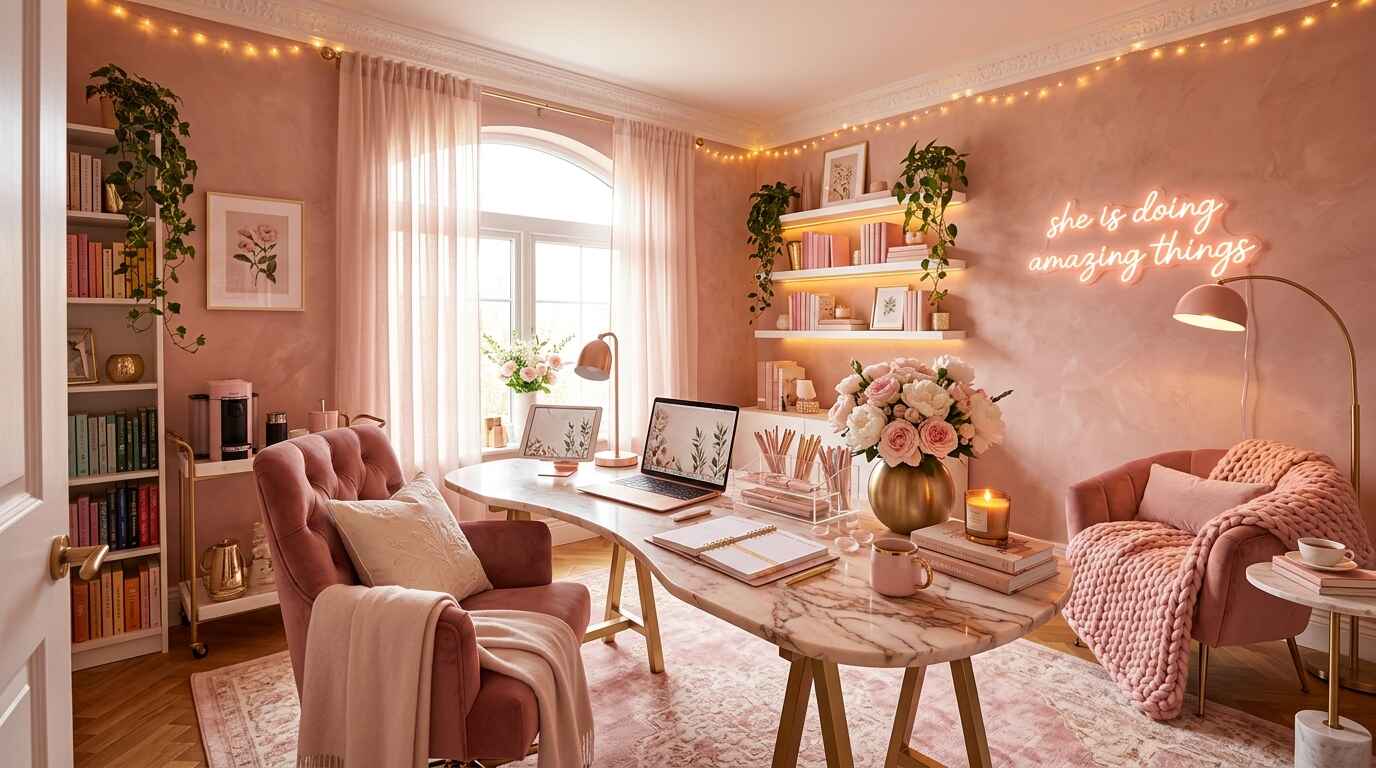
Working from home sounds ideal until you’ve spent six hours hunched over a dining table surrounded by yesterday’s mail. The setup matters more than most people admit — not just for productivity, but for how you actually feel at 3pm when the motivation has quietly left the building.
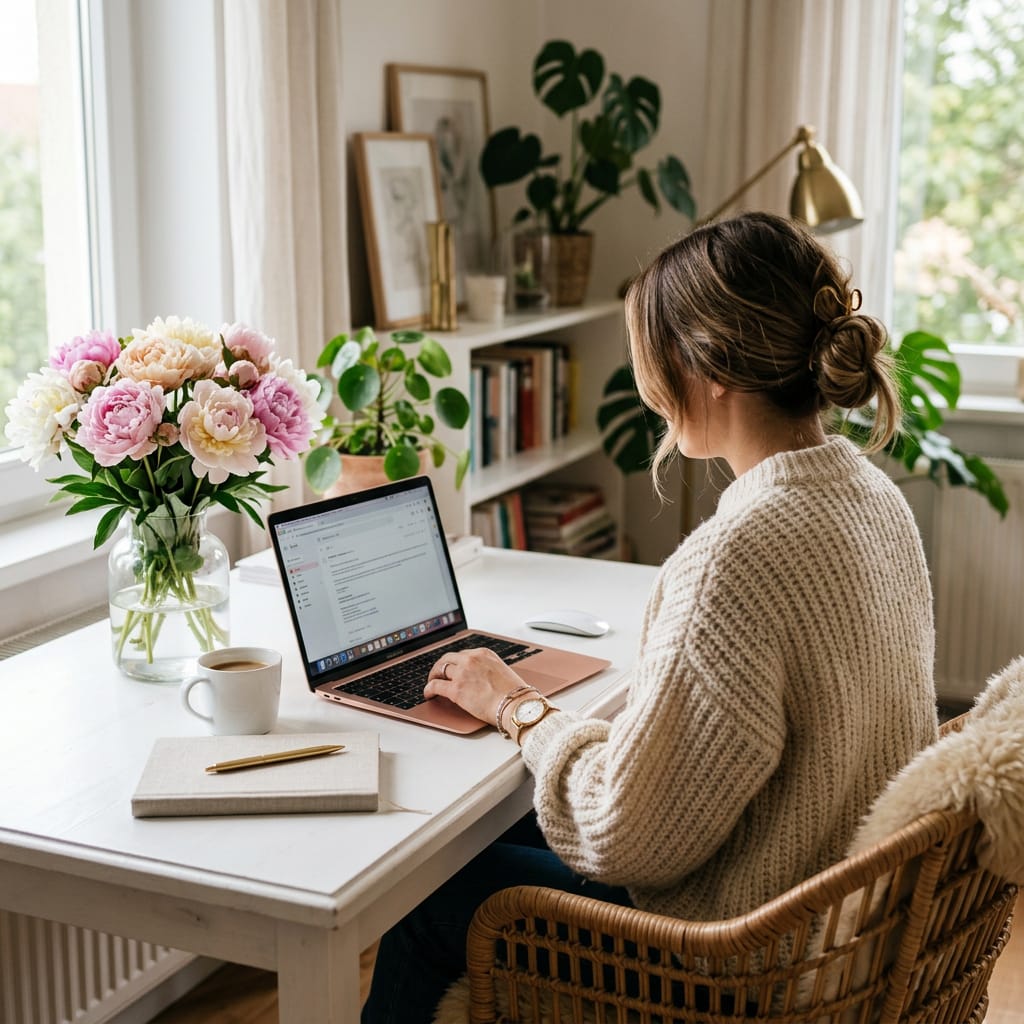
A cozy home office isn’t about aesthetics for the sake of a Pinterest photo. It’s about building an environment that makes you want to sit down and do good work. Warm lighting, real texture, proper support — these aren’t luxuries. They’re the difference between a workday that drains you and one that doesn’t.
These 15 cozy home office ideas work for apartments, spare bedrooms, and dedicated offices without requiring a huge budget.
Why Your Office Environment Affects Your Work
Three things matter most in a home workspace:
Lighting — Cool overhead light triggers eye strain and afternoon fatigue. Warm layered lighting at 2700K keeps your eyes comfortable across a full workday.
Physical comfort — You can’t think clearly when your lower back aches. Ergonomics is maintenance for your brain, not an upgrade.
Visual clarity — Physical clutter competes for your attention constantly. When everything has a place, your mind spends less energy processing background noise.
None of these require a large budget. They require intention.
15 Cozy Home Office Ideas
1. Build Around a Soft, Warm Color Palette
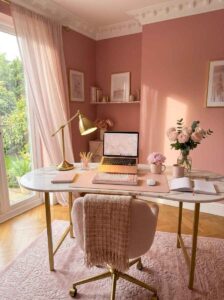
The foundation of a cozy workspace is color temperature — the underlying warmth of everything in the room, not just the paint color. Creamy whites, warm beiges, soft blush, and natural oak tones create an environment that’s calming without being dull.
One thing worth knowing: always test wall colors under your actual lighting conditions. A paint chip that looks warm in the store can read cool and gray under a standard LED ceiling fixture.
Pair a light oak desk with a blush desk pad, cream upholstery, and brushed gold accents. Use warm off-white on the walls rather than bright white — it bounces morning light without feeling clinical.
2. Layer Your Lighting
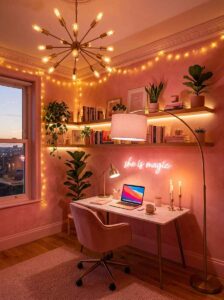
A single overhead light makes a workspace feel like a staff break room. Build three layers instead: a warm task lamp on the desk, a brass floor lamp in the corner, and a small ceramic lamp on a nearby shelf for evening sessions. Every bulb should sit between 2200K and 2700K.
The detail most people miss: shade material matters as much as bulb temperature. A linen or fabric shade diffuses light softly. A white plastic shade throws a harder beam regardless of the bulb inside.
You may love to read : 15 Cozy Bedroom Lighting Ideas to Create a Warm & Relaxing Space
3. Choose an Ergonomic Chair You Actually Want to Sit In
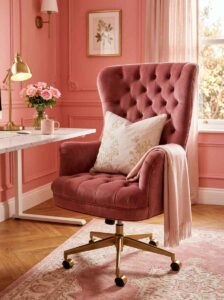
Most people either buy a stylish chair with no back support or a functional chair that looks like it belongs in a call center.
Cream boucle desk chairs with contoured lumbar support and adjustable height now exist at a range of price points. Look for a seat depth of at least 17 inches and armrests that keep your shoulders relaxed rather than raised.
Drape a soft knit throw over the back — having a blanket within reach genuinely extends your comfortable working hours on cooler mornings.
A mistake I see often: choosing a chair based on product photos rather than testing the seat depth. A chair that forces you forward within an hour isn’t worth the shelf styling it provides.
4. Use Floating Shelves to Work Vertically
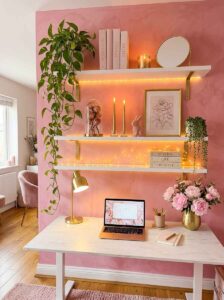
Most desks sit below a completely bare wall. Two or three oak floating shelves above the monitor draw the eye upward, create storage that keeps the desk clear, and give you somewhere to display objects that make the space feel personal.
Style with intention: hardback books stacked horizontally as pedestals for ceramics, a trailing pothos, a framed print leaning at the back, one candle. Leave 30% of each shelf empty — a packed shelf reads as clutter regardless of how carefully each object was chosen.
5. Create a Small Coffee or Tea Corner
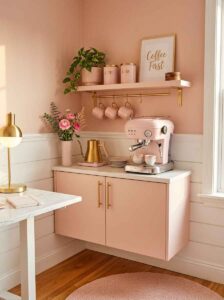
A dedicated beverage spot — even just a slim rolling cart beside the desk — creates a natural break point in your workday. Standing up to pour a fresh cup of tea, away from the screen, is one of the simplest focus resets available.
Keep it simple: a compact kettle or espresso machine, two or three ceramic mugs you actually like, a small jar of tea or coffee. A dried floral stem in a bud vase beside it. It doesn’t need to be elaborate to be effective.
6. Bring Plants Into the Space
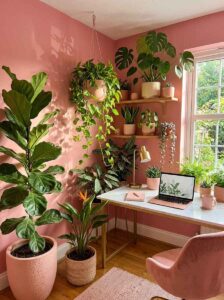
One well-placed statement plant has more visual impact than six small succulents combined. A fiddle leaf fig, olive tree, or monstera in a blush ceramic or terracotta pot breaks up the hard geometry of a desk setup and adds movement that static decor can’t replicate.
For low-light offices, snake plants and ZZ plants handle neglect well and still look considered. If plant maintenance feels like one more task, a high-quality faux stem in a beautiful pot reads as intentional. The pot matters as much as the plant.
7. Choose One Large Piece of Wall Art
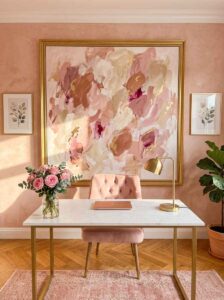
A gallery wall above a desk creates visual noise in exactly the place you need visual calm. One large framed print — a soft abstract, a botanical study, a warm landscape — anchors the wall without competing for attention.
Stick to cream, blush, warm beige, and dusty gold tones. Hang the center at 57 to 60 inches from the floor, even above a desk. Art hung too high creates a disconnected floating effect that makes the room feel unfinished — one of the most consistent mistakes in home office decorating.
You will like to read : 15 Elegant Bedroom Wall Decor Ideas to Create Your Dream Space
8. Replace Plastic Storage with Woven Baskets
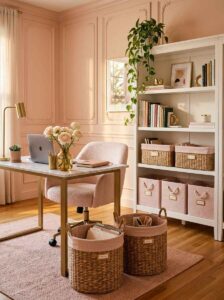
Woven seagrass baskets, fabric storage cubes, and matte blush boxes with lids hide the same amount of clutter as plastic bins while adding organic texture. Use them under the desk for tech accessories, on lower shelves for notebooks, and on higher shelves for items you access less frequently.
Labeling the inside of each basket extends the system long-term — the exterior stays beautiful while you can still find things quickly.
9. Layer a Rug Under the Desk
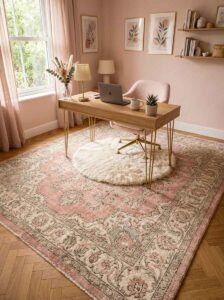
Hard floors create two problems in a home office: they’re cold underfoot during long sessions, and they echo during video calls in a way that reads as unprofessional.
A low-pile rug in cream, warm oatmeal, or subtle blush anchors the desk zone and absorbs sound simultaneously. Size up — the rug should extend past the chair when pulled back from the desk. For most standard setups, a 5×7 or 6×9 is the right starting point.
10. Hang Sheer Linen Curtains
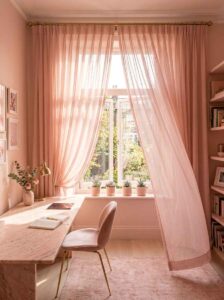
Natural daylight is the best light source for focused work, but direct sun on a laptop screen makes it unusable for hours.
Sheer linen panels in white or warm cream diffuse light into a soft, even glow without creating glare. Hang the rod 4 to 6 inches above the window frame and extend it 6 to 8 inches beyond each side.
This makes the window appear wider and maximizes light when the curtains are open. Avoid blackout curtains during working hours; blocking natural light worsens afternoon fatigue considerably.
11. Keep the Desk Surface Minimal
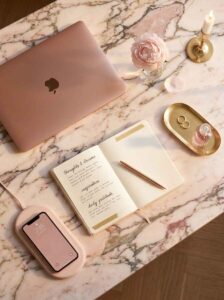
Keep only what you actively use: keyboard, mouse pad, a single pen, a ceramic mug, and one small object that brings genuine satisfaction to look at. Route cords under the desk using adhesive cable clips or a cable management tray.
Clearing the desk surface has a more immediate impact on focus than almost any other single change. The visual field directly in front of you during work affects cognitive load more than the rest of the room combined.
12. Add a Reading Corner Away From the Screen
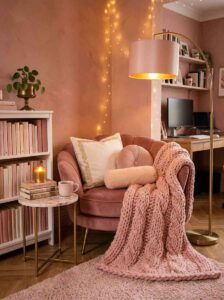
Screen-free thinking is genuinely different from screen-based thinking — and having a physical space that facilitates it changes how you work.
A rounded accent chair in an unused corner, a slim floor lamp behind it, and a small side table for notes creates a dedicated offline zone for reading, planning on paper, or taking calls. Keep the chair footprint under 30 inches wide in smaller offices so it doesn’t crowd the room.
You may love to read : 15 Bedroom Reading Nook Ideas for a Cozy Reading Corner You’ll Love
13. Mix Natural Wood with Warm Metal Accents
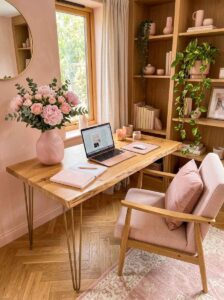
A palette of blush, cream, and white can feel flat without material contrast. Light oak desk surfaces paired with brushed brass lamp bases, gold drawer pulls, and warm-toned frames add depth through texture rather than additional color.
Matte finishes work better than glossy — polished gold reflects harshly under task lighting and shows fingerprints on surfaces you actually touch. Aim for one wood tone and one metal tone, consistent throughout. Mixing too many finishes creates visual noise that works against the calm you’re building.
14. Add Personal Objects That Mean Something
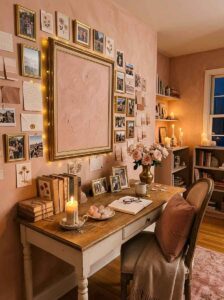
There’s a difference between a styled office and a personalized one. Styled offices look good in photos. Personalized offices feel good to work in every day.
A framed photograph from a trip you loved, a ceramic piece from a local market, a book that changed how you think about your work.
Keep them contained — one small cluster on a shelf, one personal item on the desk. The goal isn’t a display of everything meaningful; it’s a few anchors that remind you why the work matters.
15. Engage the Senses Beyond the Visual
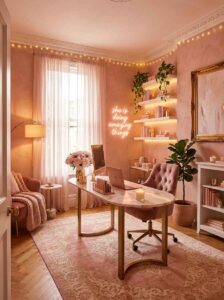
A visually cozy office that smells like nothing and sounds like a hard drive is only halfway there.
A quality soy candle or ceramic diffuser with lavender, eucalyptus, or sandalwood creates an olfactory signal that this space is calm and focused.
A chunky knit cushion for lumbar support adds tactile softness that smooth fabric can’t replicate. And the rug, curtains, and soft furnishings you add for aesthetic reasons also absorb room echo — another reason why texture is functional, not just decorative.
You may like to read : Home Office Decor Ideas
Color Combinations for a Cozy Home Office
| Palette | Mood |
|---|---|
| Blush + Cream | Serene, romantic, airy |
| Blush + Warm Beige | Grounded, calming, cozy |
| Blush + Sage Green | Fresh, restorative, nature-inspired |
| Blush + Light Oak | Clean, Scandinavian, minimal |
| Blush + Brushed Gold | Refined, modern, quietly elevated |
| Blush + Crisp White | Bright, energizing, clutter-free |
Common Home Office Decorating Mistakes
Overhead lighting only: Layer in desk and floor lamps at 2700K. One ceiling fixture is never enough.
Style over ergonomics: A beautiful chair with no lumbar support becomes a problem within two hours. Comfort first, aesthetics second.
Ignoring cable management: Visible cables undo otherwise beautiful setups. Under-desk trays and adhesive clips cost very little.
Overcrowding the desk: Decorative objects belong on shelves, not competing with your keyboard for working space.
No dedicated storage system: Without a place for papers and tech accessories, clutter migrates to the desk automatically.
Quick Cozy Home Office Checklist
- ✅ Warm 2700K task lamp on the desk
- ✅ Ergonomic chair with proper lumbar support
- ✅ Floating shelves above the desk for vertical storage
- ✅ At least one indoor plant in a ceramic or woven pot
- ✅ Area rug extending past the chair when pulled back
- ✅ Sheer curtains to diffuse natural light
- ✅ One large framed print rather than multiple small frames
- ✅ Cable management under the desk
- ✅ Woven or fabric storage for supplies and files
- ✅ One personal object that makes the space feel like yours
One Styling Rule I Always Come Back To
The most productive home offices aren’t the most decorated ones. They’re the ones where every object either makes the work easier or makes the person doing it feel genuinely comfortable. Before adding anything new, ask whether it earns its place by one of those two criteria. Spaces that feel collected over time — rather than assembled in an afternoon — are always the ones people actually want to work in.
Small Apartment Home Office Tips
Go vertical immediately. Floating shelves above a compact desk replace bookcase storage without touching the floor plan.
Choose slim-leg furniture. Tapered wood or thin metal legs keep the floor visible and make small rooms read as more open.
Face a window if possible. Natural light and even a narrow view make a tight corner feel considerably less confined.
Use a wall mirror near the desk. An arched or round mirror reflects light and adds perceived depth without taking floor space.
A storage ottoman near the chair handles overflow supplies while doubling as seating when the space is used for other purposes.
FAQs
How can I make my home office feel cozy on a small budget?
Start with the lightbulbs — swap cold LEDs for 2700K warm white. Add a throw blanket to your existing chair, bring in one plant, and clear the desk using a basket or tray you already own. These four changes cost very little and shift the atmosphere noticeably.
What colors work best for a productive home office?
Warm neutrals consistently outperform stark whites for sustained focus. Soft cream, warm beige, muted sage, and blush pink reduce visual stress without becoming monotonous across a full workday.
Can I set up a home office inside a bedroom?
Yes — with one rule. Create a clear boundary between the work zone and the sleeping zone. Face the desk away from the bed, use a tall plant or folding screen as a visual divider, and close the laptop completely at the end of the day.
What lighting reduces eye strain most effectively?
Layered, indirect warm lighting. Combine natural daylight diffused through sheer curtains with a warm desk lamp positioned to the side of your screen — not directly behind it. Avoid working in a dark room lit only by your monitor.
Conclusion
You don’t need a perfect room or a large budget. Most meaningful improvements cost very little — a warm bulb, a plant, a cleared surface, a blanket within reach.
Pick one thing from this list and change it today. Not next weekend. Today. The smallest change made immediately tends to lead naturally to the next one — and before long, your cozy home office should support both productivity and comfort every single day.
Your work deserves a better backdrop. So do you.
“Urooj Fatima is the founder and lead stylist of Blush Heaven, a digital sanctuary dedicated to budget-friendly home decor and small apartment styling. Trusted by a Pinterest audience of millions each month, she specializes in creating high-end aesthetics for small spaces. Urooj is the creator of the Small Apartment Glow-Up Guide, helping women worldwide transform their rooms into cozy, blush-toned havens.”