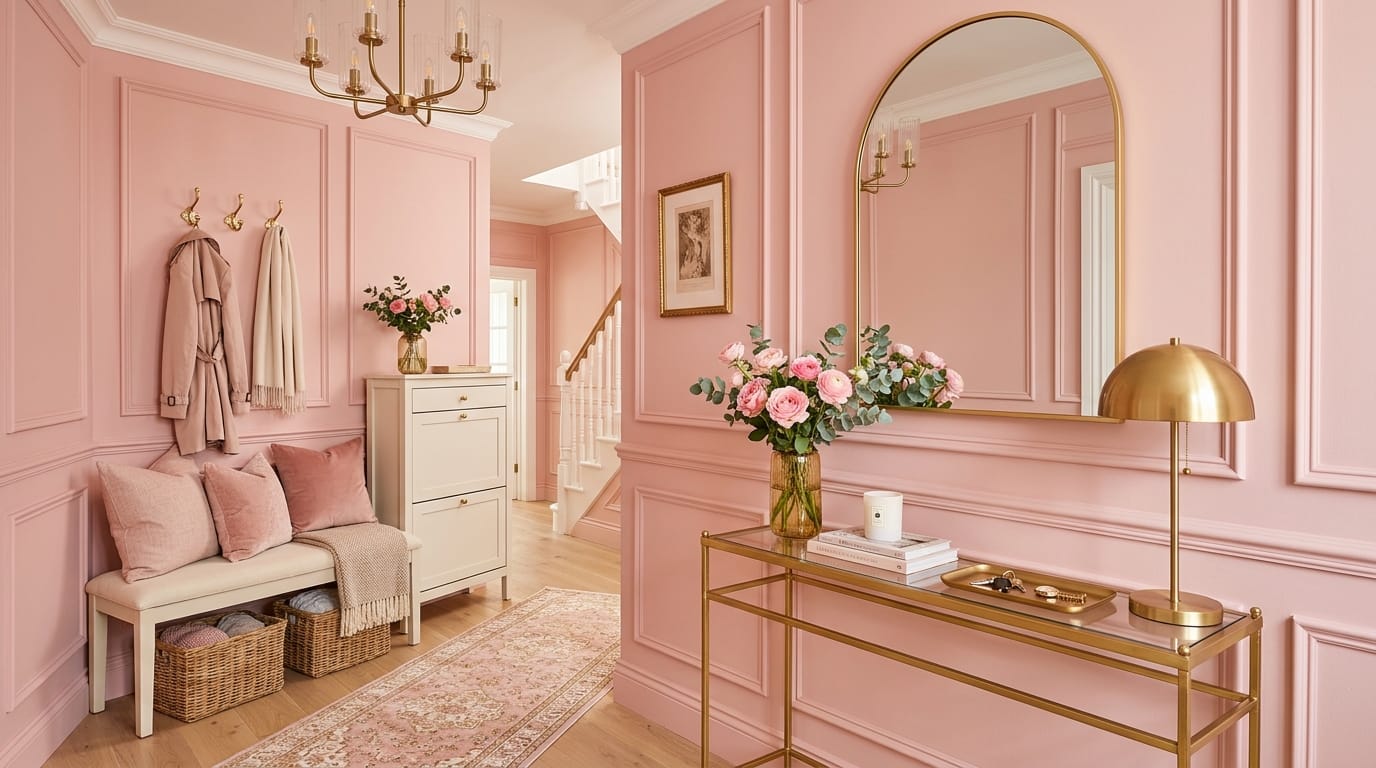
A cluttered entryway doesn’t just look messy — it sets the emotional tone for your entire home. The moment you step inside and see shoes scattered across the floor, jackets piled on whatever’s nearby, and keys nowhere to be found, the stress you were hoping to leave at the door follows you in.
The thing is, most small entryways don’t need more space. They need a better system. With the right small entryway organization ideas, you can turn even the narrowest hallway into a calm, functional drop zone that actually works for how you live. These 15 foyer storage ideas work whether you’re dealing with a tight rental corridor or a modest suburban front hall.
As an Amazon Associate, I earn from qualifying purchases with no extra cost.
Why Small Entryways Always Feel Cluttered
Small front halls collect mess faster than almost any other room because they serve as the transition point between outside and in. Everything lands right where you stand — shoes get kicked off without a designated spot, coats get draped over whatever’s nearby, and the flat surface nearest the door becomes a magnet for mail, keys, and anything else that doesn’t have a proper home.
The deeper problem in most narrow hallway storage situations is that vertical wall space goes completely unused while the floor gets overcrowded. When floor space disappears under loose items, the hallway feels physically smaller than it actually is. Moving storage upward — onto walls, hooks, and shelves — is the single most effective shift you can make in a small foyer.
15 Small Entryway Organization Ideas
1. Install a Wall-Mounted Coat Rack
Floor-standing coat trees take up corner space, tip over under heavy loads, and make a narrow hallway feel instantly more cramped. A wall-mounted coat rack solves all three problems at once — it frees up the floor completely, holds more items securely, and keeps garments off the walking path.
A solid brass or wooden multi-hook rail mounted at shoulder height works particularly well because it accommodates coats, tote bags, and hats while leaving the space beneath it open for a bench or shoe cabinet. One thing many people overlook: dual-hook designs — where each peg has both an upper and lower hook — effectively double your hanging capacity without adding more holes to the wall.
This is one of the highest-impact small foyer organization upgrades you can make for under $50, and it usually takes a single afternoon to install.
2. Add a Slim Entryway Console Table
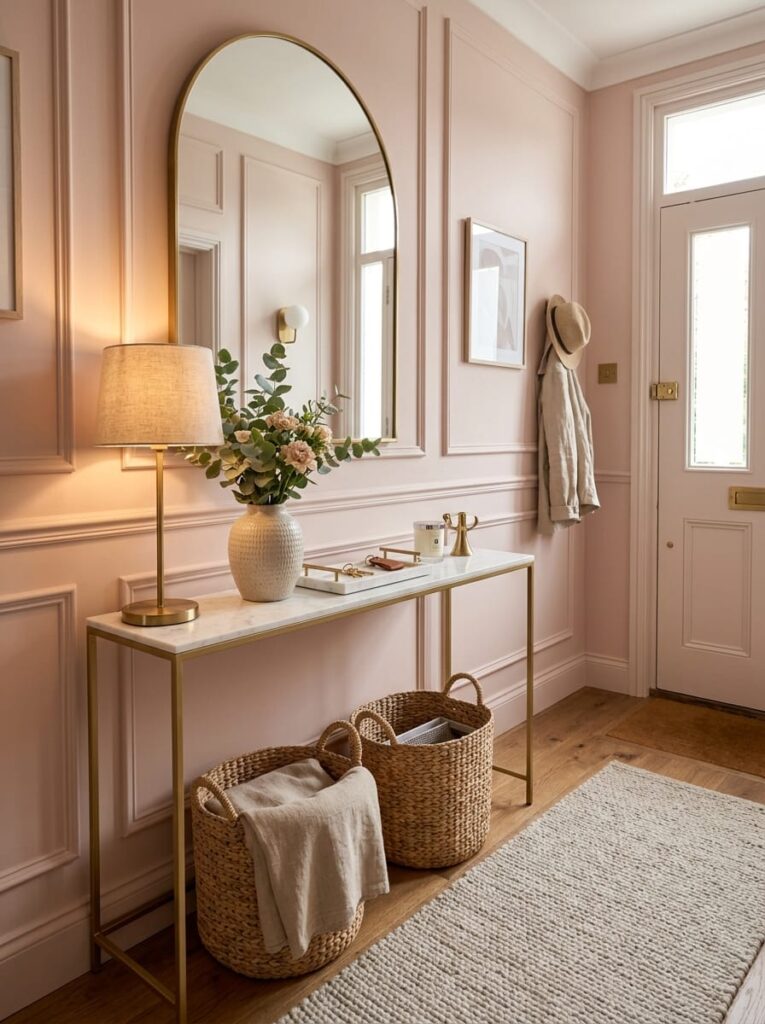
Standard console tables run 18 to 20 inches deep — deep enough to block a narrow hallway entirely. An ultra-slim console at 10 to 12 inches deep provides a proper landing surface for daily essentials without intruding on your walking path.
A slender metal frame with a marble or wood top creates a clear zone for mail, keys, and a small lamp while leaving floor space beneath it open for woven baskets. The visual lightness of thin legs also helps — furniture you can see beneath reads as less space-consuming than solid-based pieces.
If you’re organizing multiple tight spaces across your home, our Small Bathroom Organization Ideas guide covers the same vertical thinking applied to an even smaller footprint.
3. Store Shoes Inside a Closed Shoe Cabinet
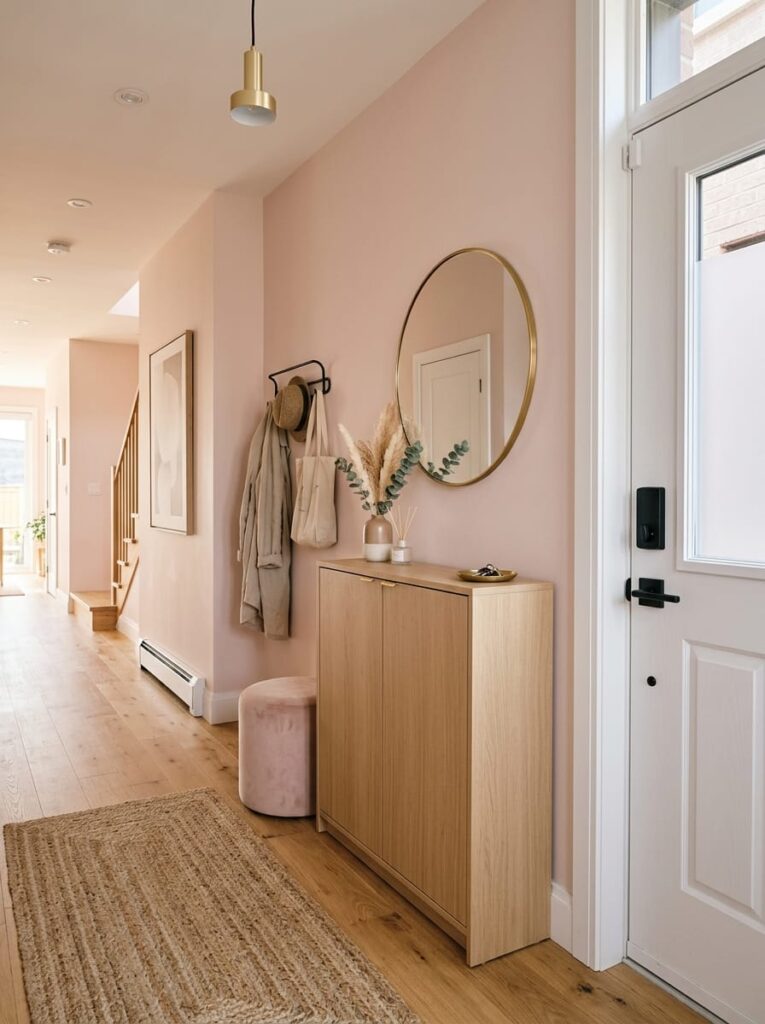
An open shoe rack might hold the same number of pairs as a closed cabinet, but it puts dirty soles on full display and makes a foyer look perpetually messy regardless of how tidy everything else is.
A slim tilt-out shoe cabinet sits flush against the wall, hides footwear completely behind clean cabinet doors, and uses the flat top surface as an additional console — giving you two functions in one piece. The tilt mechanism means shoes are stored vertically, keeping the cabinet footprint exceptionally narrow. For renters, freestanding models with removable anti-tip strips attach to walls without permanent hardware.
Product Recommendation:
4. Use Matching Storage Baskets
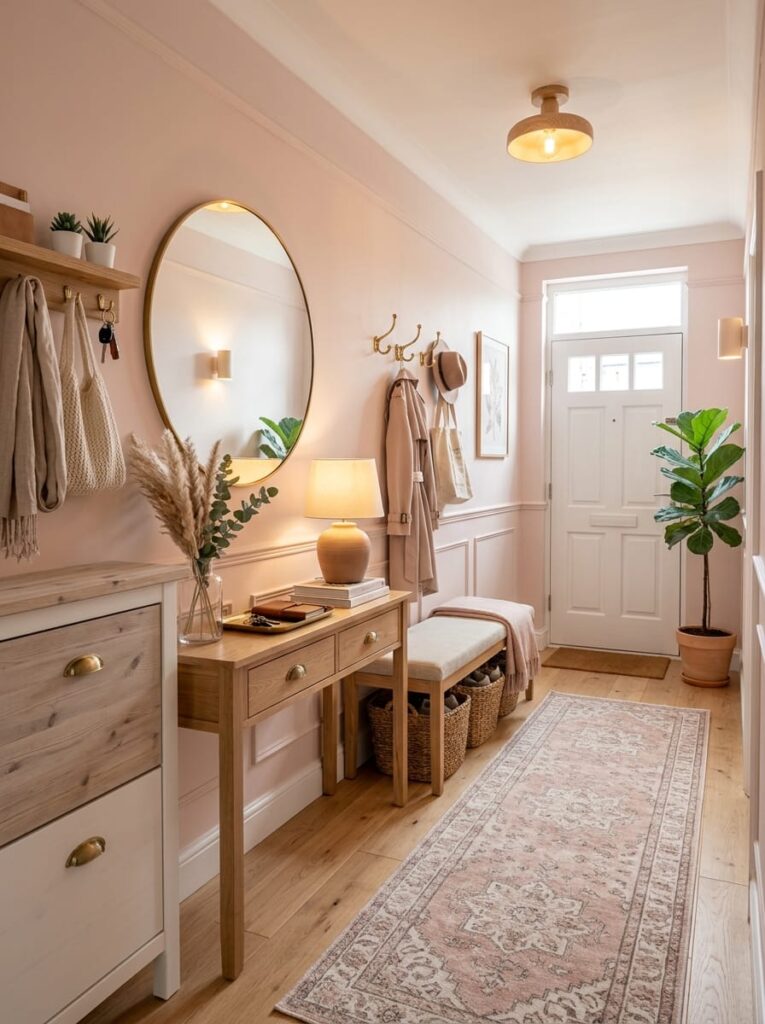
Mismatched containers create visual noise even when everything inside them is organized. Uniform woven baskets bring order and warmth to open shelving simultaneously — the natural texture softens hard furniture edges while keeping the clutter hidden.
The most effective approach is to assign specific categories to each basket rather than using them as general catch-alls. One for dog walking gear, one for seasonal accessories, one for reusable tote bags — the specificity is what keeps the system working long-term. A basket labeled “stuff” fills up with everything and empties with nothing.
Seagrass and water hyacinth baskets hold their shape well in entryways, which see more humidity than most rooms due to wet coats and umbrellas coming in from outside.
5. Add a Bench with Hidden Storage
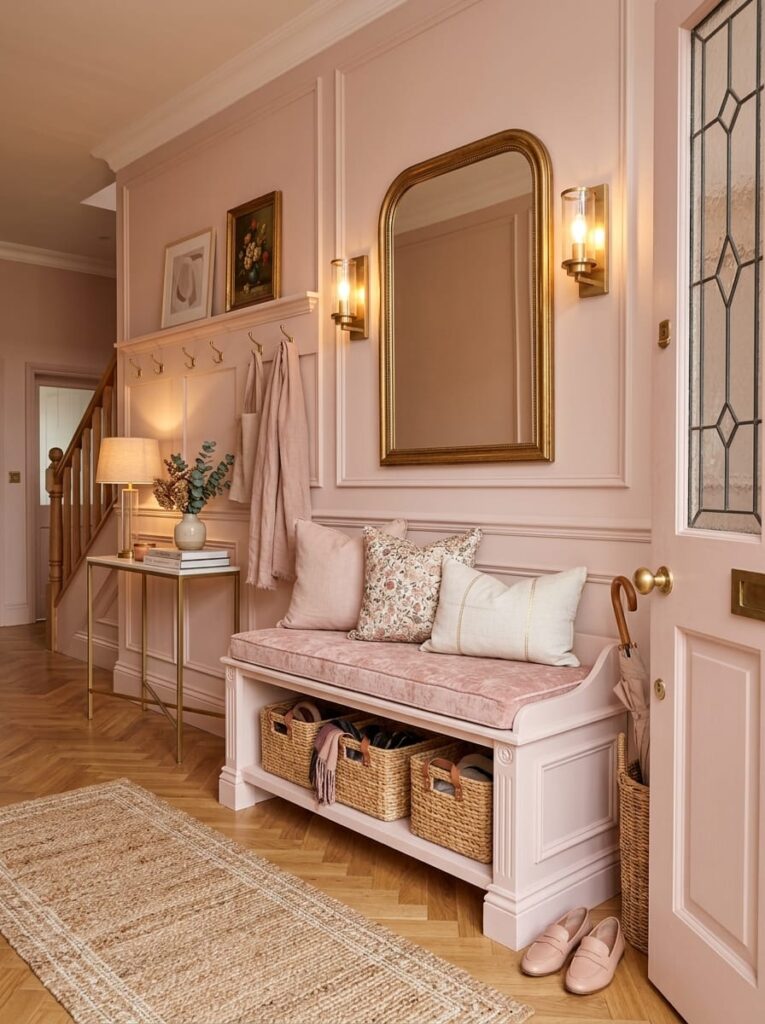
A bench without storage is a missed opportunity in any small foyer. The moment you add lower cubby slots or a lift-top lid, you’ve turned a single-purpose piece of seating into one of the hardest-working items in the room.
Open cubby benches with woven slide-out baskets are particularly practical — shoes go into the baskets at floor level, the bench surface provides a place to sit while putting them on, and a cushioned top makes the whole setup feel inviting rather than purely functional. Adding a throw pillow or two completes the built-in look without requiring any actual built-in construction.
Product Recommendation:
6. Hang a Large Mirror
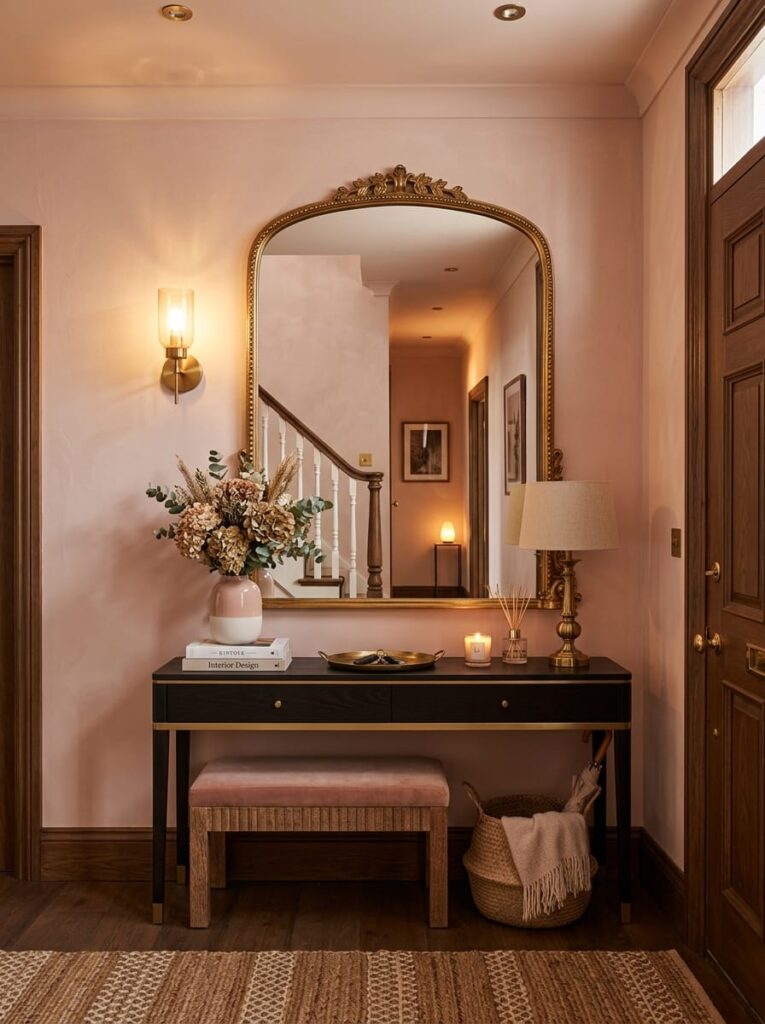
Mirrors are one of the most reliable tools in small-space design because they create genuine depth — not just the impression of it. A large arched or round mirror hung above an entry table captures ambient light and reflects it down a dark hallway, making the space feel both brighter and longer.
Positioning the mirror opposite an open doorway or window maximizes this effect during daylight hours. In the evening, it bounces lamplight from the console table across the whole entry. Beyond the practical function, a tall mirror gives you a full outfit check before heading out the door — which is something a small decorative mirror simply can’t do.
A common mistake in narrow hallway storage planning is choosing a mirror that’s proportionally too small for the wall. As a general rule, the mirror should be roughly two-thirds the width of the furniture below it.
7. Create a Dedicated Drop Zone
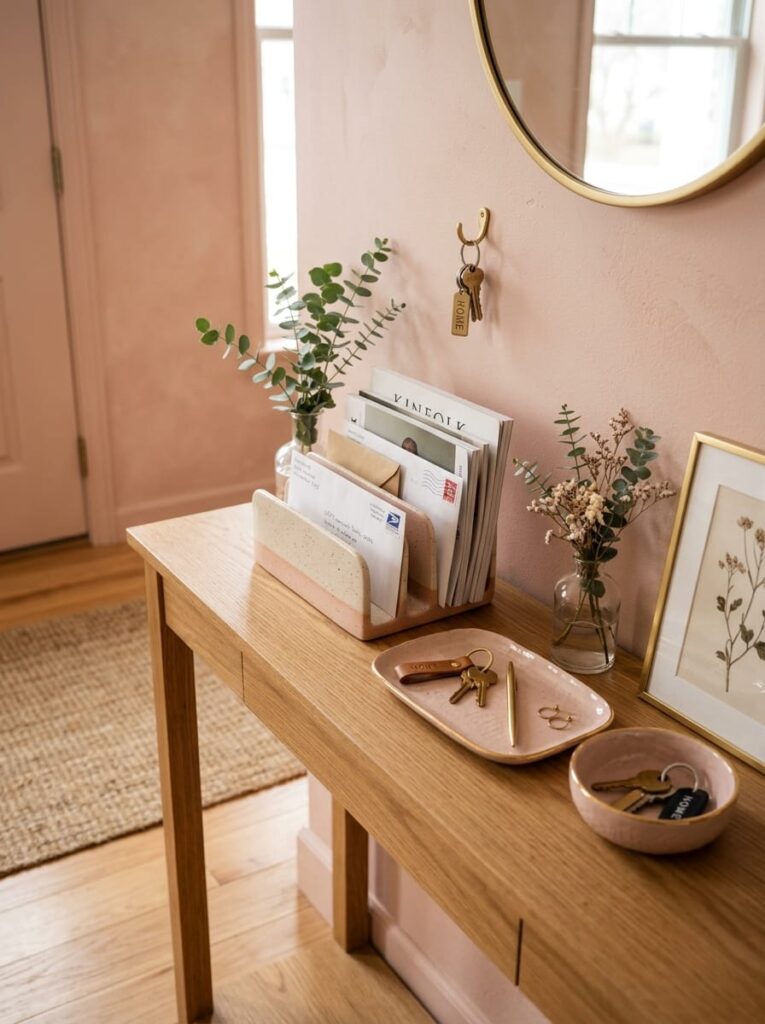
The reason keys and wallets disappear isn’t carelessness — it’s the absence of a specific, designated landing spot. When there’s no defined drop zone, items land wherever hands happen to be when you walk through the door.
A small ceramic catchall dish, a shallow leather tray, and a wooden mail holder arranged on the console table creates an immediate destination for pocket contents. The habit forms quickly when the spot is clearly defined — and it effectively eliminates the morning scramble for misplaced keys.
Keep the drop zone to three items maximum. More than that and the surface starts to function as general clutter storage rather than a specific organizational tool.
8. Install Floating Shelves
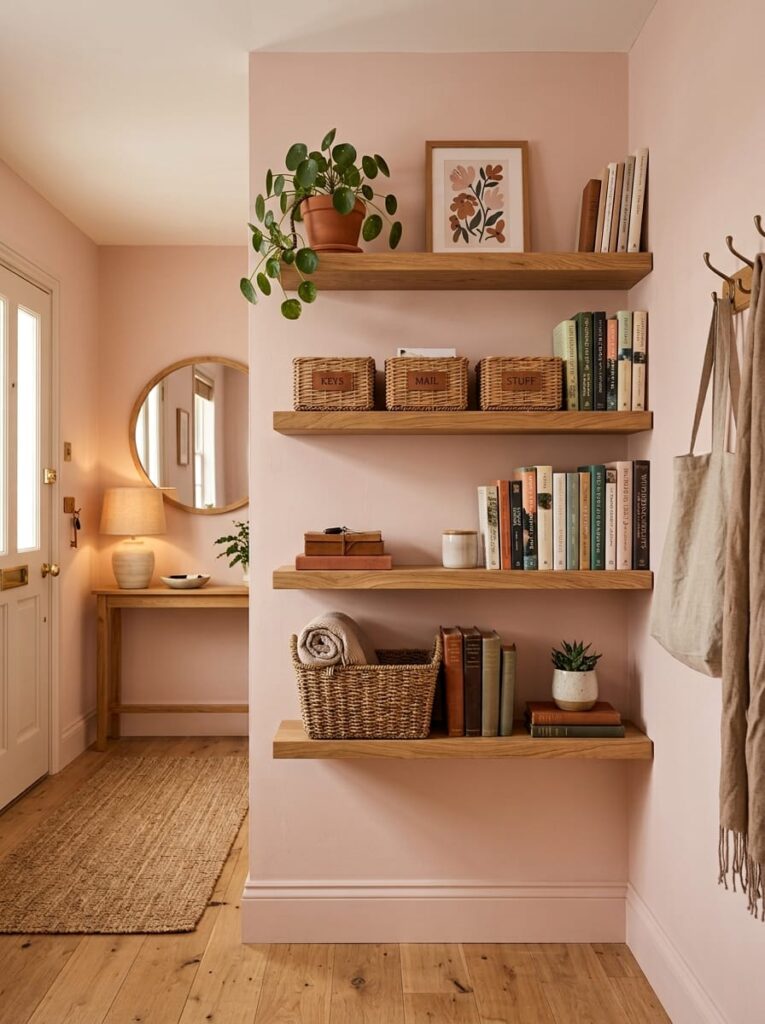
When floor area runs out, the wall becomes your storage. A series of oak floating shelves mounted vertically along an empty wall section adds meaningful entryway storage capacity without consuming a single inch of walking space.
The key to making floating shelves work in a small foyer is varied use across heights. Lower shelves within easy reach hold everyday items — labeled baskets for accessories, a small plant, a decorative tray. Higher shelves store seasonal items that don’t need daily access. The graduated approach makes the wall feel organized rather than stacked.
For more vertical storage strategies, our Small Laundry Room Organization Ideas guide applies the same principles to another compact space in the home.
9. Add Hooks for Everyday Bags
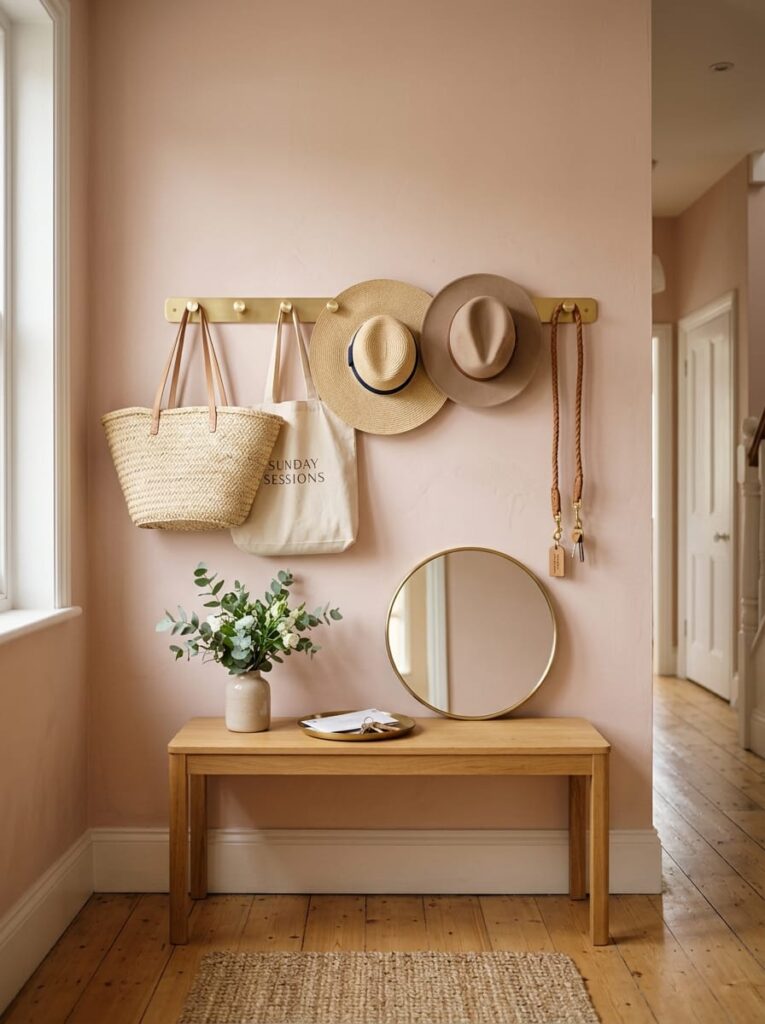
Handbags, backpacks, and gym totes dropped on the floor create both a visual problem and a physical hazard in a narrow hallway. A horizontal peg rail or individual wall pegs give every bag an elevated home and turn everyday accessories into part of the entry’s visual composition.
Height placement matters more than most people realize. Staggering hooks at three levels — higher for adult coats, mid-level for bags and purses, lower for children’s backpacks — means every household member can independently access their own items. That small detail dramatically reduces the “I can’t find it” chaos that tends to accumulate near front doors.
Brass and matte black finishes both hold up well in high-use entryway conditions and complement most wall colors without competing with other hardware in the space.
Product Recommendation:
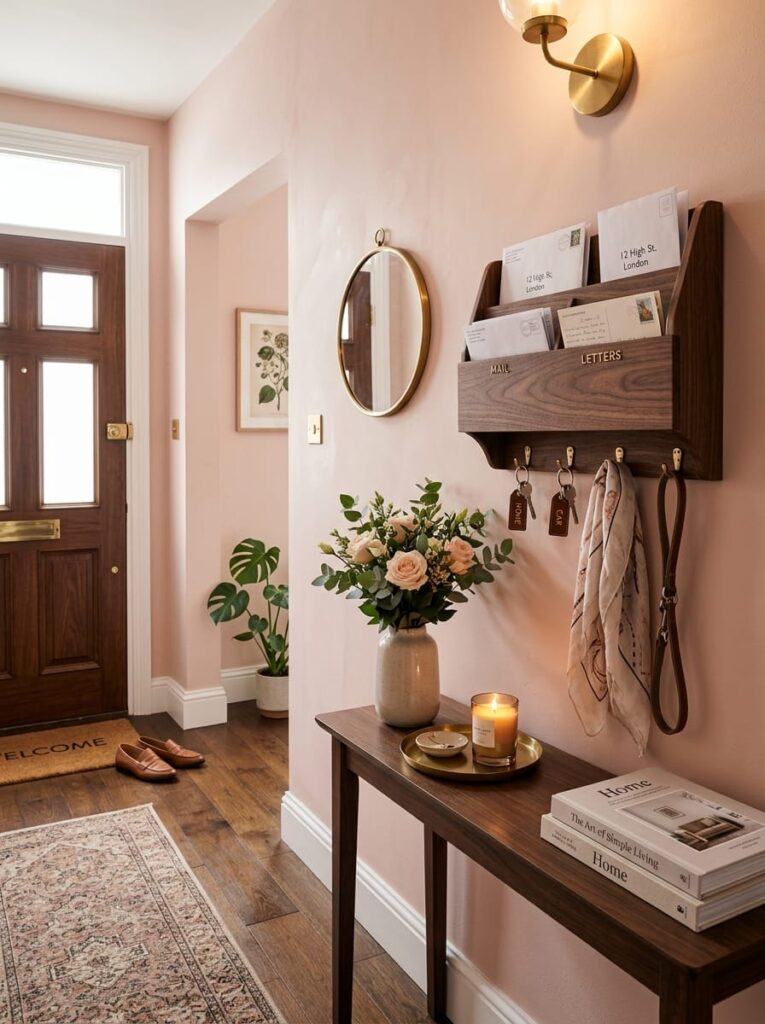
10. Organize Mail with a Wall Organizer
Paper accumulates in an entryway faster than almost anywhere else in the house because it arrives daily and rarely has a designated sorting spot. Without a system, important documents end up buried under takeout menus and expired coupons within days.
A wall-mounted mail sorter with divided slots — one for incoming, one for outgoing, one for to-do items — keeps paper moving rather than piling. Adding integrated key hooks below the sorter consolidates two common drop zone needs into one wall-mounted piece, which is particularly valuable in a foyer too narrow for a full console table.
The habit of sorting immediately on entry rather than setting mail down to deal with later makes an enormous difference in how quickly the system stays functional.
11. Use Vertical Corner Storage
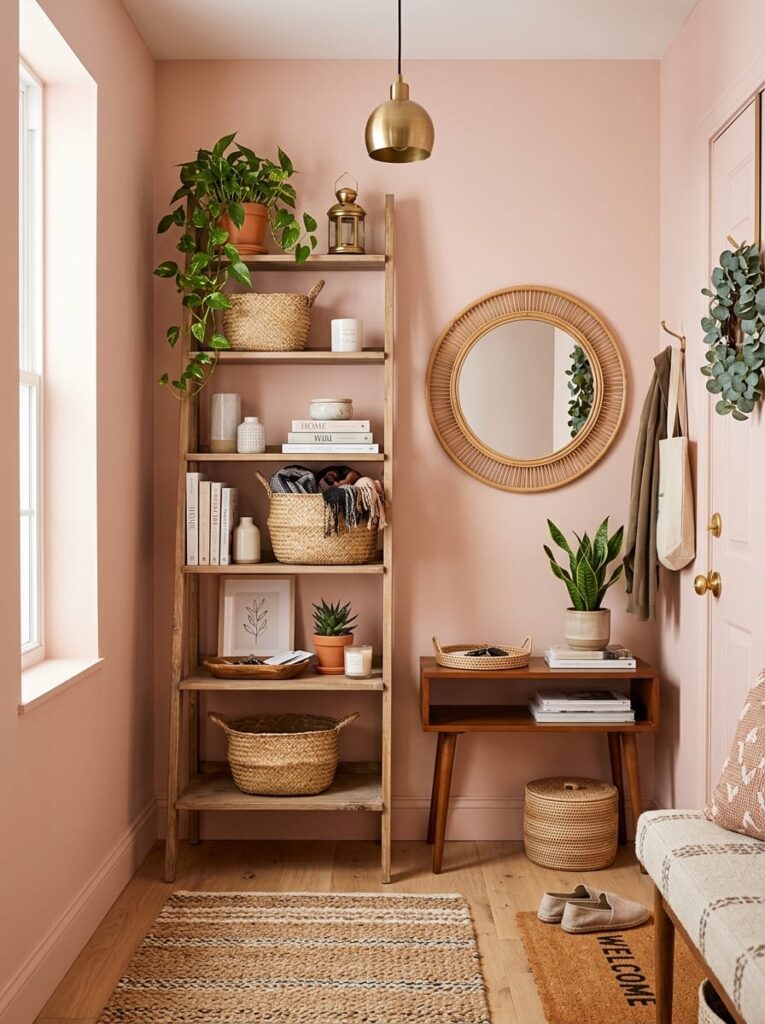
The corner beside the front door is one of the most consistently wasted spaces in small foyer organization. Standard rectangular furniture doesn’t fit without blocking doorways, so the corner typically stays empty — even in hallways that are otherwise well-organized.
A tall ladder shelf nestles directly into tight architectural nooks and offers multiple tiers of storage within a footprint that’s often under 18 inches square. Lower tiers hold woven shoe baskets; middle tiers display small plants and frequently accessed items; upper tiers store seasonal accessories that only need occasional access. The open construction keeps the corner from feeling heavy or blocked, which matters in a space where every visual inch counts.
12. Add an Entryway Rug
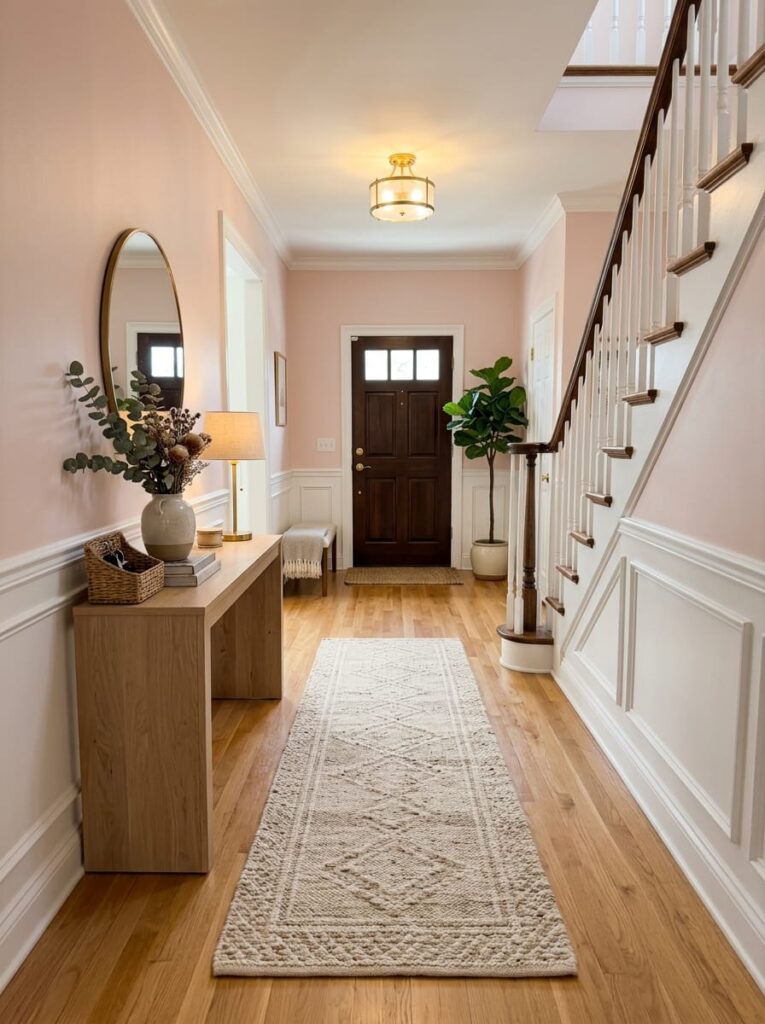
A runner rug in a narrow hallway does more organizational work than most people credit it for. Beyond trapping dirt and moisture at the door, it visually defines the entry as its own distinct zone — which psychologically signals “this area has a purpose” in a way bare flooring doesn’t.
Long, low-pile runners with geometric or vintage patterns draw the eye down the hallway, making short corridors appear longer than they are. Non-slip rubber backing is non-negotiable in an entryway where wet shoes and quick movements are the norm. Washable materials are worth the slight additional cost given how much traffic this area receives.
13. Label Every Basket
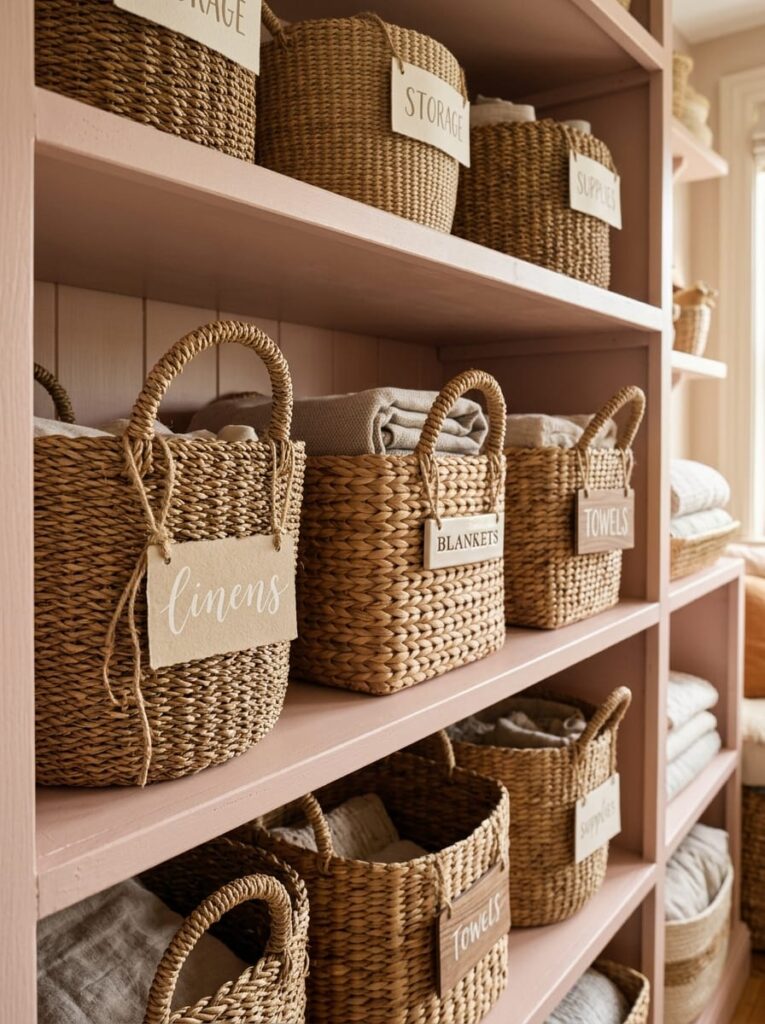
Organizational systems deteriorate when household members can’t tell at a glance where things belong. Labels are the maintenance tool that keeps a system working after the initial setup enthusiasm fades.
Wooden hanging tags, printed card stock, or leather label clips all work well on woven baskets. The specific format matters less than the specificity of the category — “winter gloves” maintains the system better than “accessories,” because it leaves no ambiguity about what goes in and what doesn’t.
In households with children, picture labels alongside text make the system independently usable for younger family members, which reduces the amount of parental intervention required to keep the entry tidy.
14. Decorate Without Creating Clutter
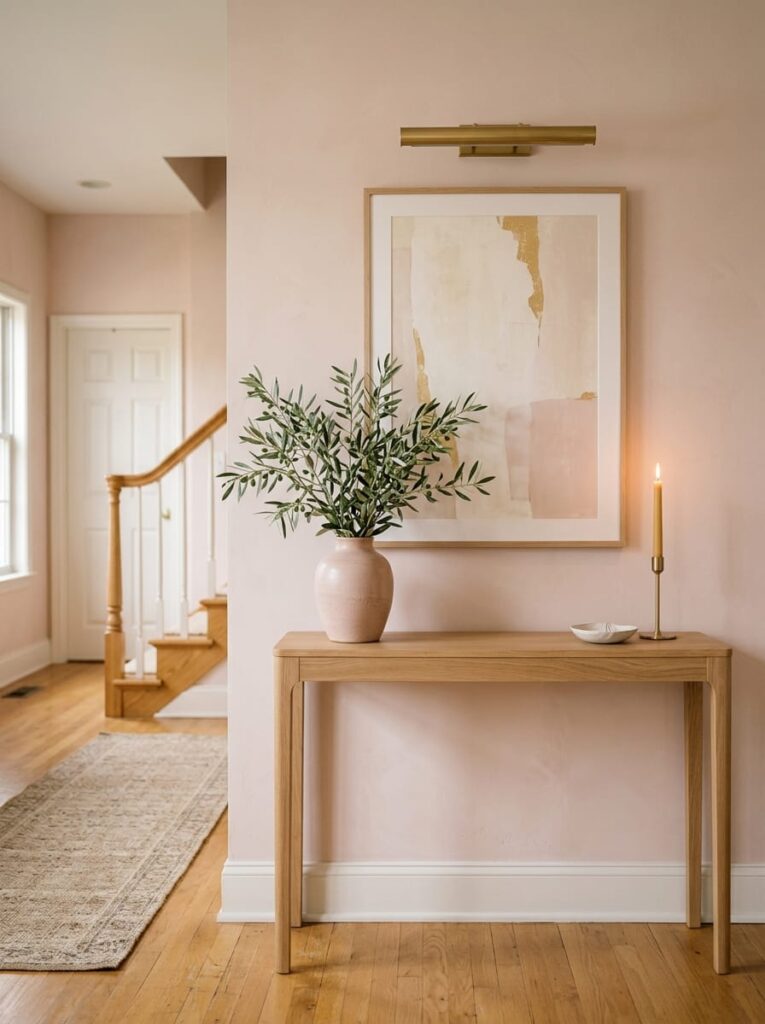
A foyer console can be both functional and visually considered — but it takes editing. The common mistake is filling the surface with decorative objects until no functional surface remains, which defeats the purpose of having a drop zone.
The rule of three works well here: one tall element (a ceramic vase with olive branches or eucalyptus), one medium element (a stack of books with a small candle), and one low element (a ceramic or marble key dish). Three objects at varying heights satisfy the eye without consuming the surface. Everything else belongs somewhere else.
This minimal approach also makes the entry easier to clean and reset — which matters in a high-traffic area that needs to function reliably every day.
15. Build a Complete Entryway Command Center
Individual pieces make a meaningful difference. But when a slim shoe cabinet, wall coat hooks, an arched mirror, a console table, and labeled baskets work together along a single main wall, the entry transforms from a collection of furniture into a genuinely organized system.
The command center approach works because it addresses every arrival behavior simultaneously — there’s a spot to hang the coat, a place for the shoes, a surface for daily items, a hook for the bag, and a mirror for the final check before heading back out. When the system accounts for every item that typically lands in the entry, nothing has a reason to end up on the floor.
For additional exterior organization ideas, our Apartment Balcony Privacy Ideas guide covers the transition zone between outdoor and indoor spaces.
Product Recommendation:
Find Your Solution: Common Problems Matched to Storage Fixes
| The Problem You’re Dealing With | The Best Storage Solution |
|---|---|
| Shoes piling up behind the front door | Slim tilt-out shoe cabinet or storage bench with cubby baskets |
| Coats and bags landing on chairs | Wall-mounted coat rack or brass peg rail at the right height |
| Keys and wallet disappearing daily | Ceramic catchall tray or wall-mounted mail sorter with key hooks |
| Narrow hallway that feels cramped | Ultra-slim console table (10–12 inches deep) and large arched mirror |
| Completely bare walls with no storage | Floating shelves or vertical corner ladder shelf |
| Mail accumulating on every surface | Wall-mounted wooden mail sorter with divided slots |
| Multiple family members creating chaos | Storage bench with cubbies and staggered hooks at varying heights |
| Open shelves looking cluttered | Matching labeled woven baskets with specific category assignments |
Common Entryway Organization Mistakes
Buying furniture before measuring: The front door swing radius matters as much as the hallway width. A bench that blocks the door from fully opening creates daily frustration regardless of how well it’s styled.
Using open shoe racks: Open shelving keeps dirty soles visible at all times. Closed cabinet doors or basket systems solve both the visual and organizational problem simultaneously.
Leaving key storage as an afterthought: A dedicated key dish isn’t a luxury — it’s the difference between leaving on time and a frantic ten-minute search every morning.
Ignoring vertical walls: In a narrow hallway, every item on the floor makes the space feel smaller. Moving storage upward onto hooks and shelves is the single highest-impact shift available in a small foyer.
Over-decorating flat surfaces: Console tops covered in small decorative objects have no room for the practical items that arrive at the door daily. Keep surfaces deliberately edited so they remain functional.
Small Entryway Organization Checklist
- Measure hallway width and front door clearance before purchasing any furniture
- Install a wall-mounted coat rack or peg rail for coats and bags
- Place a slim tilt-out shoe cabinet near the entrance
- Set up a dedicated key dish and mail sorter on the console surface
- Hang a large wall mirror to reflect light and add visual depth
- Position labeled woven baskets on shelves or beneath the bench
- Add a non-slip, washable runner rug to define the entry zone
- Edit decorative objects to three maximum on any flat surface
- Review and purge unused coats and seasonal shoes monthly
Apartment and Rental-Friendly Tips
Damage-free adhesive hooks: Heavy-duty adhesive hooks rated for 10+ pounds handle light jackets, tote bags, and keys without drilling. They remove cleanly from most painted surfaces when you move.
Freestanding shoe cabinets: Slim tilt-out shoe cabinets rest against the wall with removable anti-tip strips — no wall anchors required, and they move with you at the end of a lease.
Corner ladder shelves: These lean naturally against walls without mounting brackets, making them one of the most renter-friendly vertical storage options available for small foyer ideas.
Tension rods for open closet alcoves: If your entry includes an open closet nook, a spring tension rod with a fabric panel creates a clean privacy screen over open coat shelves without any installation.
Frequently Asked Questions
How do you organize a very small entryway?
The most effective small entryway organization strategy is to move everything off the floor and onto walls. A wall-mounted coat rack, floating shelves, a large mirror, and an ultra-slim console table address the most common problem areas without reducing walkable floor space. A slim tilt-out shoe cabinet handles footwear storage in as little as 10 inches of wall depth.
What should every entryway have for small foyer organization?
Three things cover the majority of daily chaos: a dedicated drop zone for keys and pocket items, vertical hanging hooks for coats and bags, and closed shoe storage that hides footwear from direct view. Everything else — mirrors, rugs, decorative elements — builds on that functional foundation.
What furniture works best in a narrow hallway?
Ultra-slim console tables at 10 to 12 inches deep, shallow storage benches, and tilt-out shoe cabinets are the strongest choices for narrow entryway storage because they maintain open walkway clearance while providing useful surface area and storage capacity.
How do I hide shoes in a small entryway without a closet?
A slim tilt-out shoe cabinet with closed doors is the cleanest solution — it holds multiple pairs in a narrow footprint and uses the flat top as a console surface. A storage bench with woven slide-out baskets is the next best option and adds seating simultaneously.
How do I organize keys and mail so they don’t get lost?
A wall-mounted wooden mail sorter with integrated key hooks keeps both items in a fixed, visible location near the door. For smaller consoles, a ceramic catchall dish paired with a compact mail slot achieves the same result without wall installation.
Conclusion
The most functional entryways aren’t the largest ones — they’re the ones with a clear system for every item that comes through the door. When shoes have a closed cabinet, coats have dedicated hooks, keys have a specific dish, and mail has a sorted slot, the entry maintains itself with minimal daily effort.
If you’re starting from scratch, the highest-impact first move is almost always the coat rack or the shoe cabinet — whichever problem causes the most friction in your daily routine. Fix the biggest source of chaos first, then layer in the remaining pieces over time.
An organized entryway changes more than the look of one room. It changes how you feel the moment you come home.

“Urooj Fatima is the founder and lead stylist of Blush Heaven, a digital sanctuary dedicated to budget-friendly home decor and small apartment styling. Trusted by a Pinterest audience of millions each month, she specializes in creating high-end aesthetics for small spaces. Urooj is the creator of the Small Apartment Glow-Up Guide, helping women worldwide transform their rooms into cozy, blush-toned havens.”