
Opening a crowded closet every morning can make starting your day feel unnecessarily stressful. When hangers are jammed tightly together, shoes form an untidy pile on the floor, and sweaters spill off upper shelves, finding what you need takes far more time than it should.
The issue in most homes is rarely a total lack of wardrobe space. Instead, the problem is usually how that space is laid out. Many reach-in wardrobes and small bedroom closets rely on a single hanging rail and a solitary top shelf, leaving most of the vertical height entirely unused.
Making a small wardrobe work isn’t about adding square footage to your room; it’s about using the space you already have far more efficiently. By taking advantage of vertical height, utilizing door surfaces, selecting slim hardware, and establishing a logical seasonal rotation, you can turn even a tiny closet into an organized dressing station. These 17 practical small closet organization ideas will help you maximize every available inch without tearing down a single wall.
This post contains Amazon affiliate links. As an Amazon Associate, I may earn a commission from qualifying purchases made through these links, at no additional cost to you.
Why Small Closets Feel Overcrowded
A closet often feels too small simply because its layout works against your daily routine:
- Unused Vertical Height: Leaving large gaps above clothing rails or beneath short garments wastes a significant portion of your total storage capacity.
- Bulky Hardware: Thick wooden or plastic hangers consume substantial horizontal rod space before you even hang a single garment.
- Floor-Level Chaos: Stacking shoes directly on the closet floor makes them difficult to see, quickly turns into an untidy heap, and restricts access to hanging items above.
- Misallocated Real Estate: Storing out-of-season coats or rarely used formal wear right at eye level pushes your daily essentials into hard-to-reach corners.
- Surface Clutter: Loose items like scarves, belts, and small bags lack designated homes, so they end up tossed onto open shelves or mixed into folded piles.
17 Small Closet Organization Ideas
1. Install a Double Hanging Rod
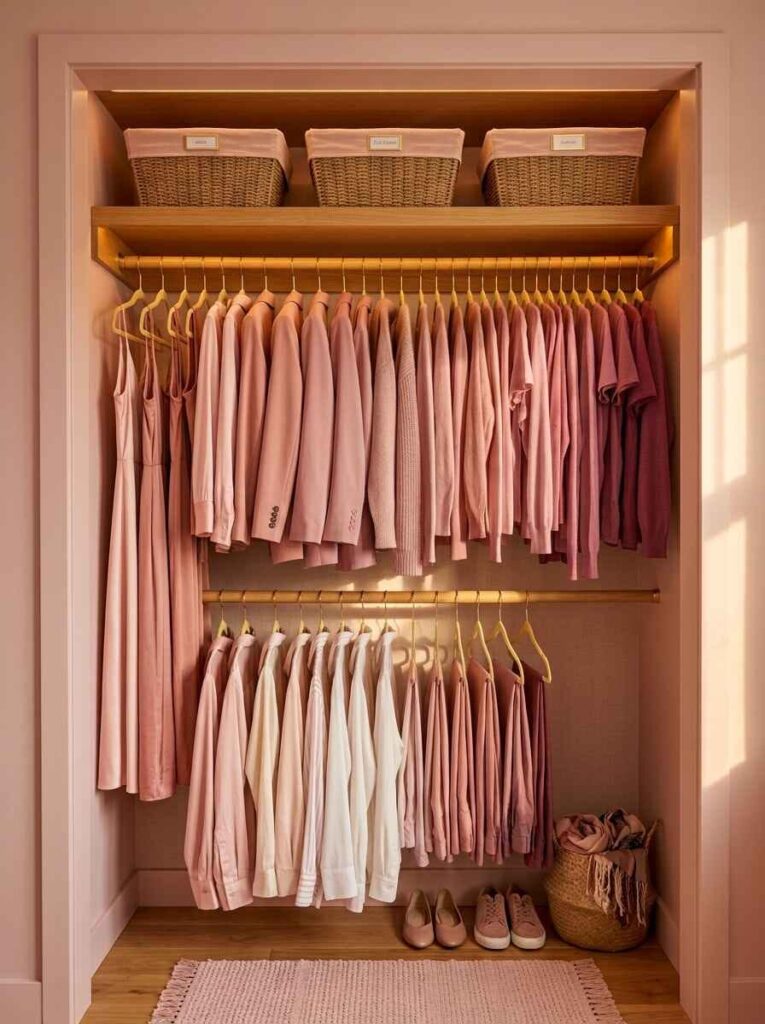
A single hanging rail mounted five to six feet high leaves a massive gap of unused wall space underneath shorter clothing like shirts, blouses, skirts, and folded trousers. Adding a second, lower hanging bar below your main rail takes advantage of that empty vertical room, doubling your total hanging capacity across that section.
Keep a full-height hanging zone on one side of the closet for long dresses, jumpsuits, and coats. Use the remaining width for two stacked rails to separate upper and lower body garments.
Who it’s best for: Reach-in closets, shirt-heavy wardrobes, and bedrooms without room for an extra dresser.
What to look for: An adjustable steel tension rail or an expandable hanging extender bar that hooks directly onto your existing top rod.
A quick practical note: Double rails work exceptionally well for short items, but if mounted too close together, longer shirts may graze the rail or clothes below. Measure your average shirt length before mounting the lower bracket.
2. Use Slim Velvet Hangers
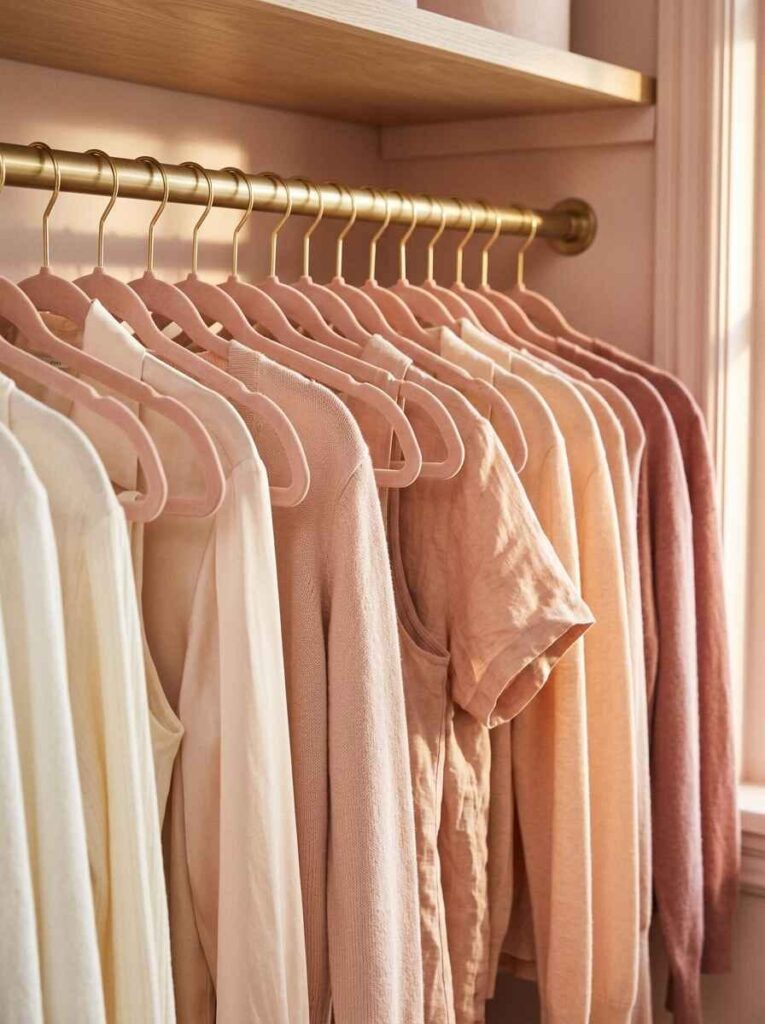
Standard plastic and thick wooden hangers take up a surprising amount of horizontal space on a clothing rod. Replacing mismatched, bulky hangers with thin, velvet-coated options reclaims a noticeable amount of rail space, allowing garments to sit closer together without crushing the fabrics.
Beyond saving physical space, uniform hangers create clean visual lines that make the entire closet look intentionally designed. The subtle grip of the velvet coating also prevents wide-neck tops, silk blouses, and delicate straps from sliding off onto the floor.
Space-saving tip: Group items by weight and fabric type. Keep heavy coats on sturdy, structured hangers, but switch all lightweight tops, shirts, and dresses over to slim velvet profiles.
3. Take Storage Up to the Ceiling
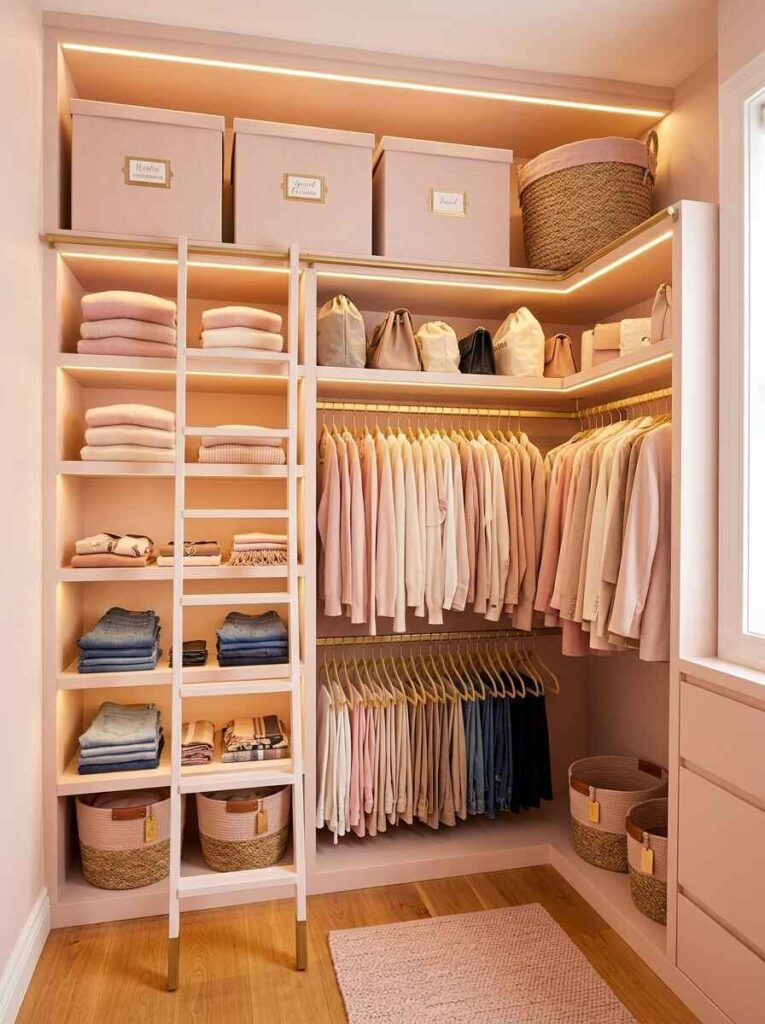
The area above the main closet shelf is often left empty or becomes an unruly dump zone for random household clutter. Building or placing additional shelves that extend all the way to the ceiling captures vertical space that would otherwise go to waste.
Because high shelves require a step stool or ladder to reach comfortably, reserve this real estate for items you only need occasionally. It is ideal for off-season wardrobes, extra guest bedding, or travel bags.
Storage feature that matters: Look for covered, stackable storage boxes or structured fabric bins that keep dust off items stored long-term near the ceiling.
Recommended Product
4. Add Shelf Dividers
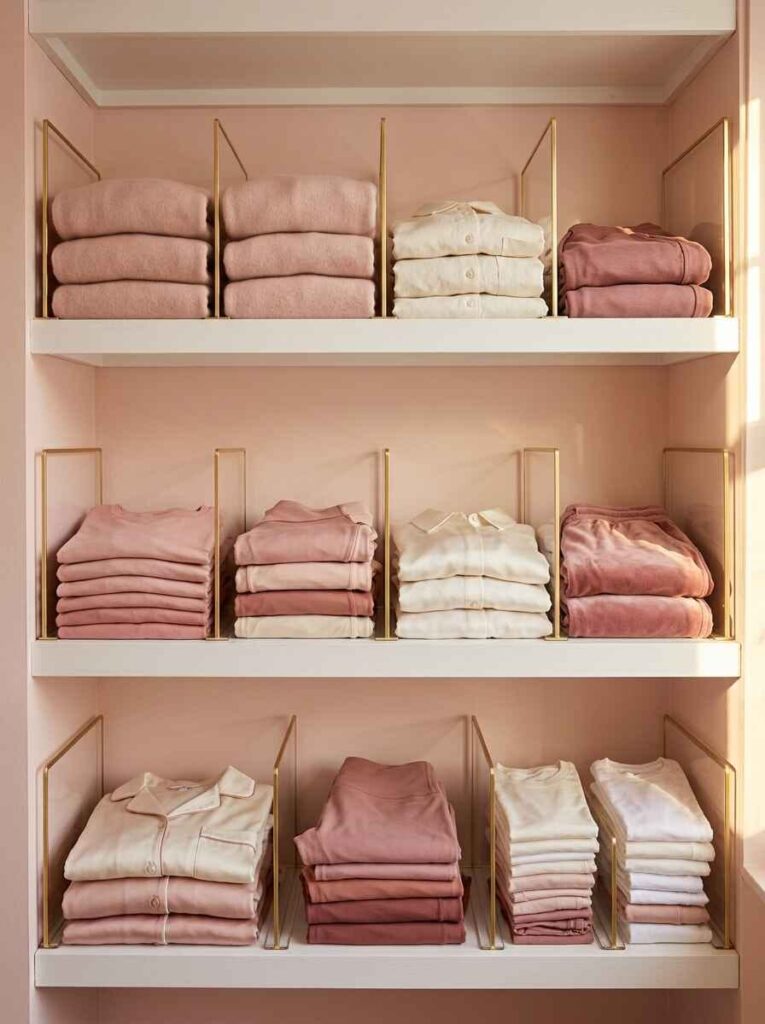
Without lateral support, stacks of folded sweaters, jeans, and t-shirts eventually lean, collapse, and merge into one another. This makes pulling a garment from the bottom of the pile frustrating and messy.
Clear acrylic or coated wire shelf dividers act as rigid vertical bookends that support tall stacks of clothing. They allow you to divide wide, open shelves into structured compartments, keeping your folded knits, denim, and t-shirts neatly sorted.
Before you buy: Check the thickness of your closet shelves. Most clip-on dividers are sized specifically for standard 0.75-inch-thick solid shelving and will not slide onto wire shelf edges or extra-thick custom boards.
Recommended Product:
5. Use the Back of the Closet Door
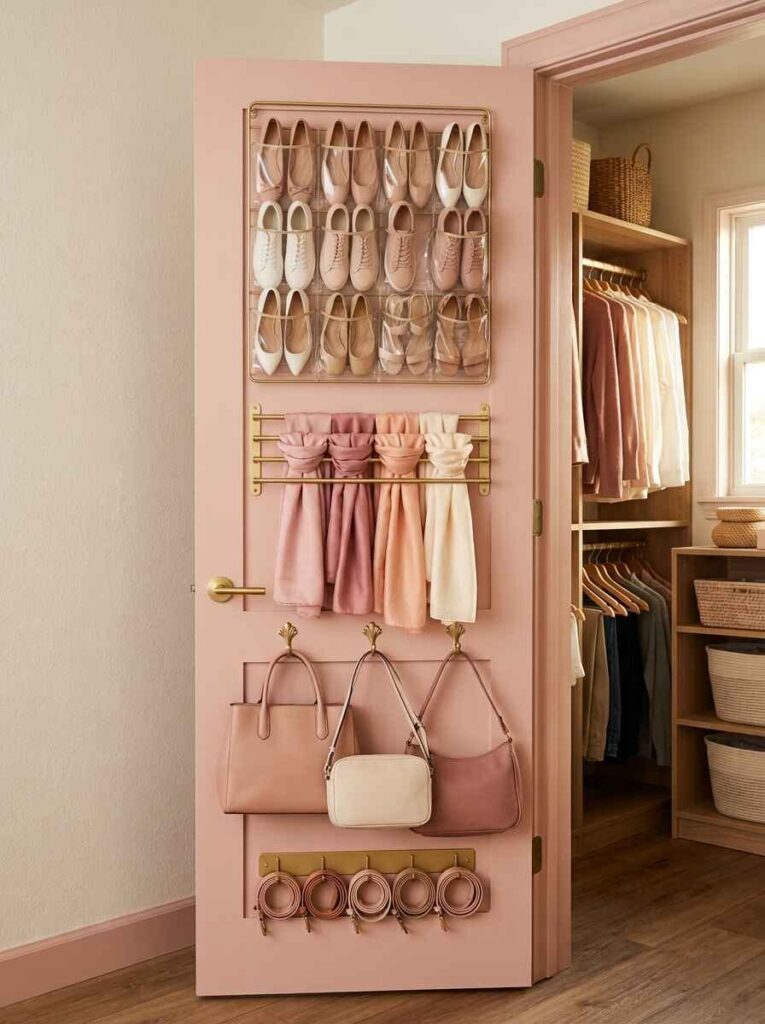
The interior surface of a closet door offers valuable storage potential that often goes completely unused. Attaching an over-the-door organizer converts this flat area into a functional vertical storage wall for smaller accessories.
Use door organizers to hold flat shoes, sandals, rolled scarves, belts, lint rollers, or small clutch bags. Keeping these daily items on the door frees up your main shelves and hanging rods for core wardrobe pieces.
Best for: Renters, reach-in closets with solid hinged doors, and accessory-heavy wardrobes.
Real-world trade-off: Over-the-door hooks can occasionally interfere with the door frame if the top clearance is tight, and heavy items can cause the door to bang when opened quickly. Choose organizers with padded brackets or mountable screw options if permitted.
6. Add a Second Shoe Storage Layer
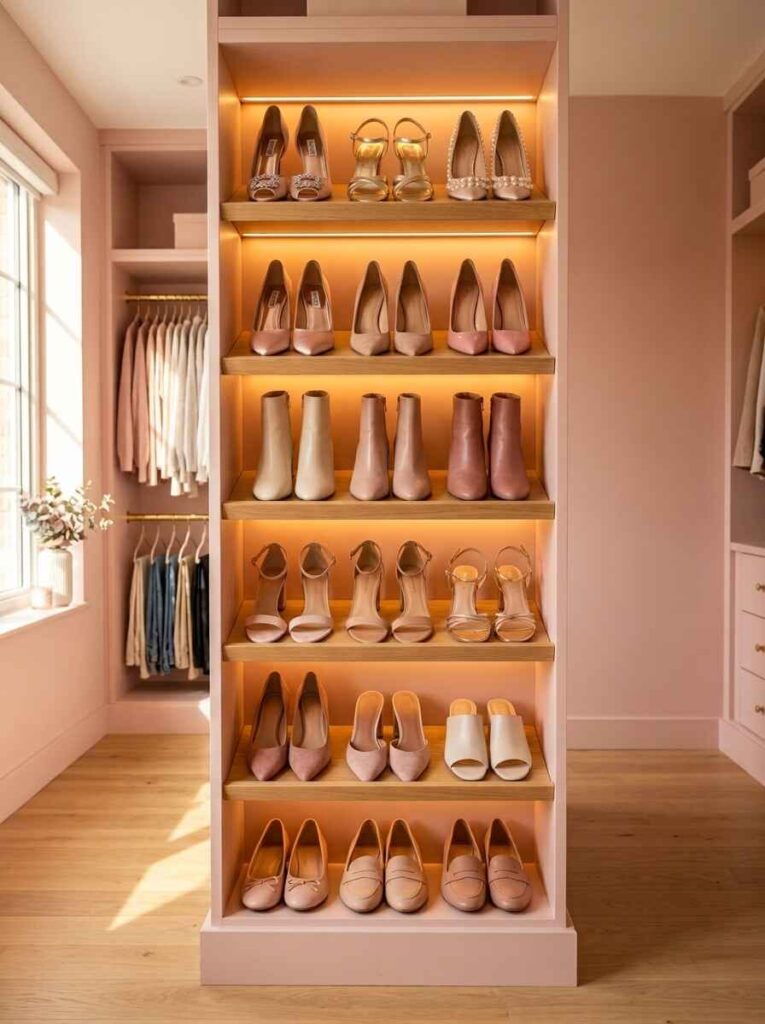
Leaving shoes scattered across the closet floor creates immediate visual chaos and wastes valuable vertical height. Stacking shoes in a double-layer arrangement keeps every pair visible while doubling your available floor storage density.
Adjustable shoe risers allow you to place one shoe directly over its partner, halving the footprint required for each pair. Alternatively, a low, two-tier freestanding shoe rack positioned under short hanging clothes keeps footwear neatly organized above floor level.
What to look for: Non-slip, height-adjustable shoe slots or stackable wire racks that accommodate both flat shoes and elevated heels.
7. Store Handbags Vertically
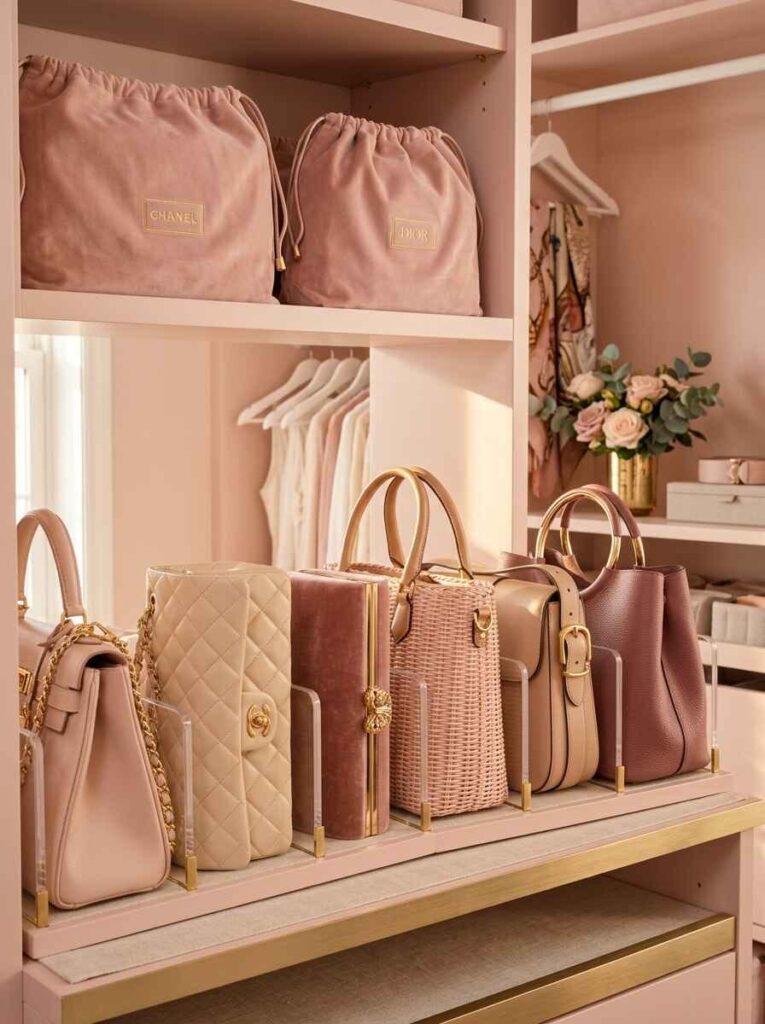
Piling handbags on top of each other causes leather to crease, damages structured handles, and makes finding the right purse difficult. Storing bags upright in an organized row preserves their shape and keeps your entire collection visible.
Use wide acrylic shelf dividers or open cubbies to support structured totes and crossbody bags vertically. For soft, unstructured cloth bags, hanging purse hooks attached to a main clothing rail offer a great alternative that keeps straps from getting tangled.
Alternative setup: If shelf space is limited, insert S-shaped hanging hooks onto your clothing rod to hang bags by their handles.
8. Use Under-Shelf Baskets
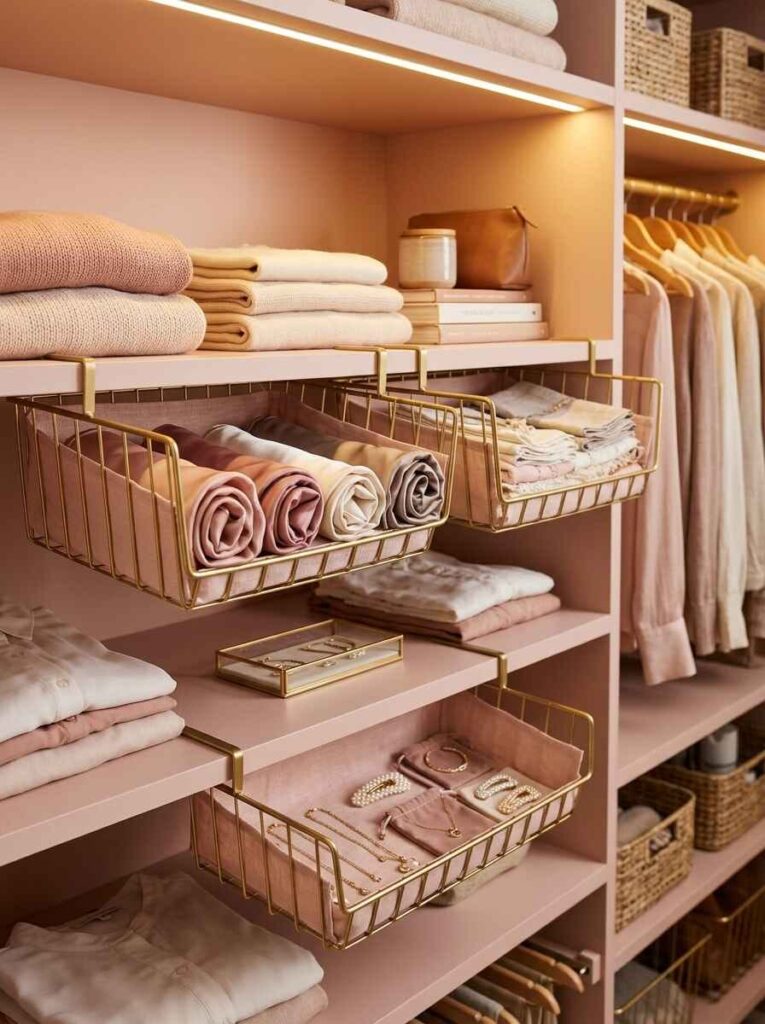
Solid shelves often leave an awkward 6-to-8-inch air gap above short items or lower folded stacks. Slide-on under-shelf wire baskets fit into this empty space without requiring tools or permanent installation.
These baskets create suspended drawers perfect for lightweight items like rolled silk scarves, leather belts, socks, underwear, or flat clutch purses. They maximize existing shelf clearance instantly while keeping smaller accessories contained and easy to grab.
Renter-friendly advantage: Under-shelf baskets slide directly onto solid shelves without drilling, making them ideal for temporary rental spaces.
9. Create a Dedicated Accessory Zone
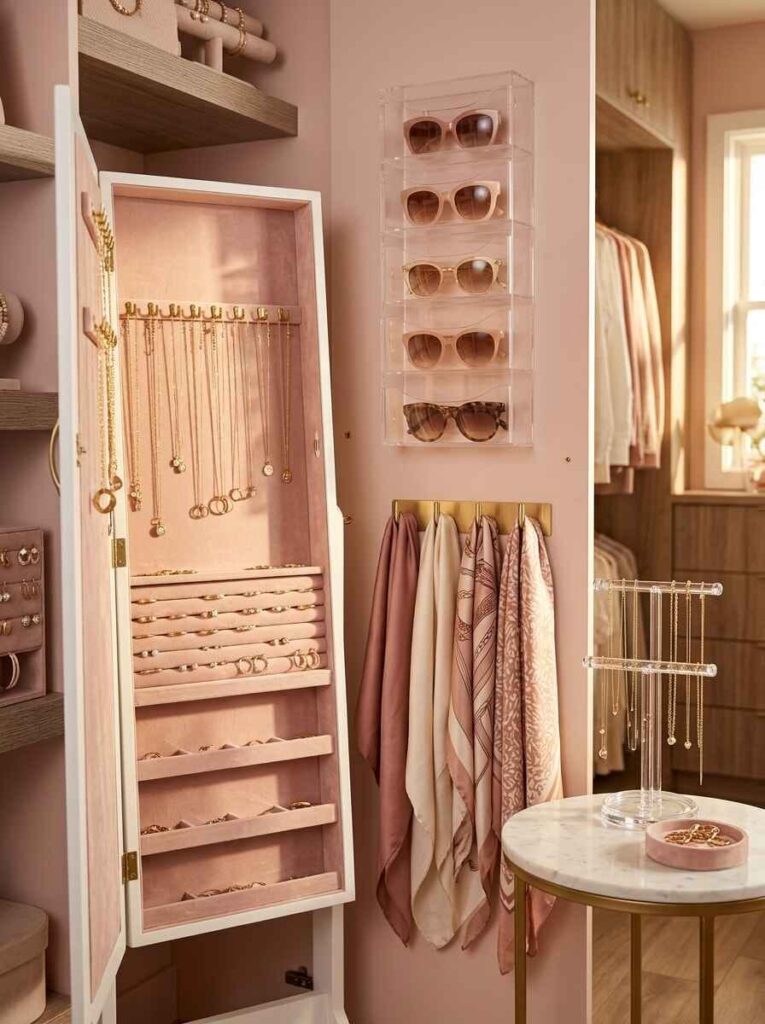
Small accessories like jewelry, watches, sunglasses, and hair clips easily get misplaced when tossed onto open surfaces. Gathering these pieces into one organized accessory hub keeps them protected and speeds up your morning routine.
Mount a shallow hanging jewelry organizer on an unused side wall, or place a felt-lined divider tray inside a shallow drawer. Having a clear, visible location for your everyday accessories prevents delicate chains from tangling and keeps small items secure.
If you are optimizing other beauty zones, our guide on small entryway organization ideas offers additional visual layout tips for compact drop zones.
Buying advice: Felt-lined or velvet-backed organizer trays with dedicated compartments work best for protecting delicate rings, watches, and necklaces.
10. Add Pull-Out or Stackable Drawers
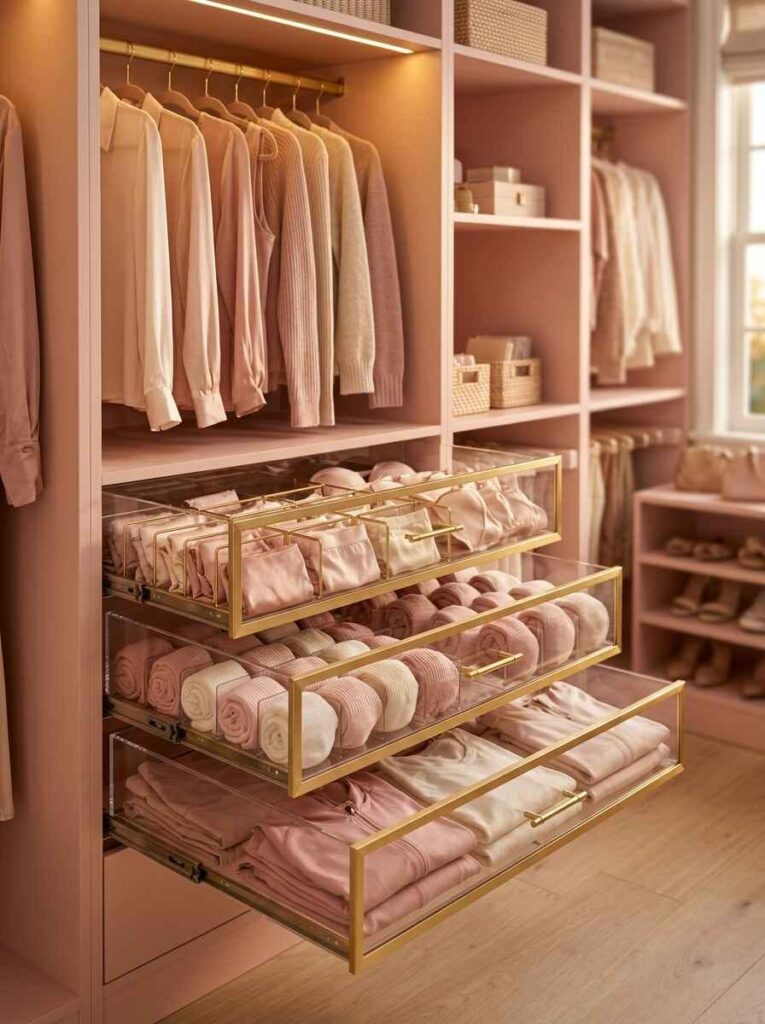
Deep closet shelves can be awkward to manage because items stored near the back tend to disappear into the shadows. Adding pull-out or stackable drawer units brings those hard-to-reach areas forward so everything stays accessible.
Clear acrylic or plastic drawer units placed on lower or mid-level shelves create enclosed, dust-free storage for socks, underwear, workout wear, and lounge clothing. Transparent drawer fronts let you see what is stored inside without opening every bin.
Keep in mind: Clear drawers look incredibly neat when carefully organized, but loose, messy items inside will remain visible. Use small internal fabric dividers to keep interior contents arranged neatly.
11. Use Matching Baskets for the Top Shelf
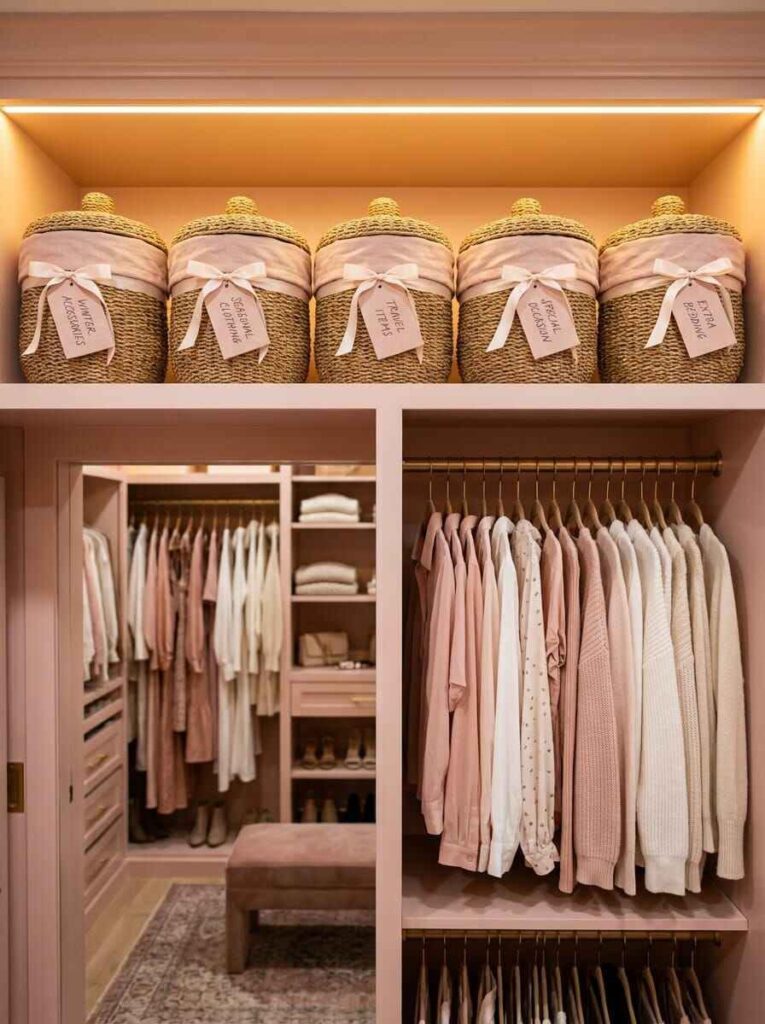
High closet shelves often look cluttered when filled with loose, mismatched items. Placing loose items inside a row of identical storage baskets gives the top of your wardrobe a clean, intentional look.
Assign each basket to a specific category to keep contents organized:
- Bin 1: Winter beanies, gloves, and knitted scarves
- Bin 2: Swimwear, sun hats, and beach accessories
- Bin 3: Travel accessories and toiletry bags
- Bin 4: Extra linens and seasonal blankets
Attaching simple hanging labels to the front of each basket eliminates the need to pull down every box just to find one item.
12. Create a Floor-to-Ceiling Shoe Wall
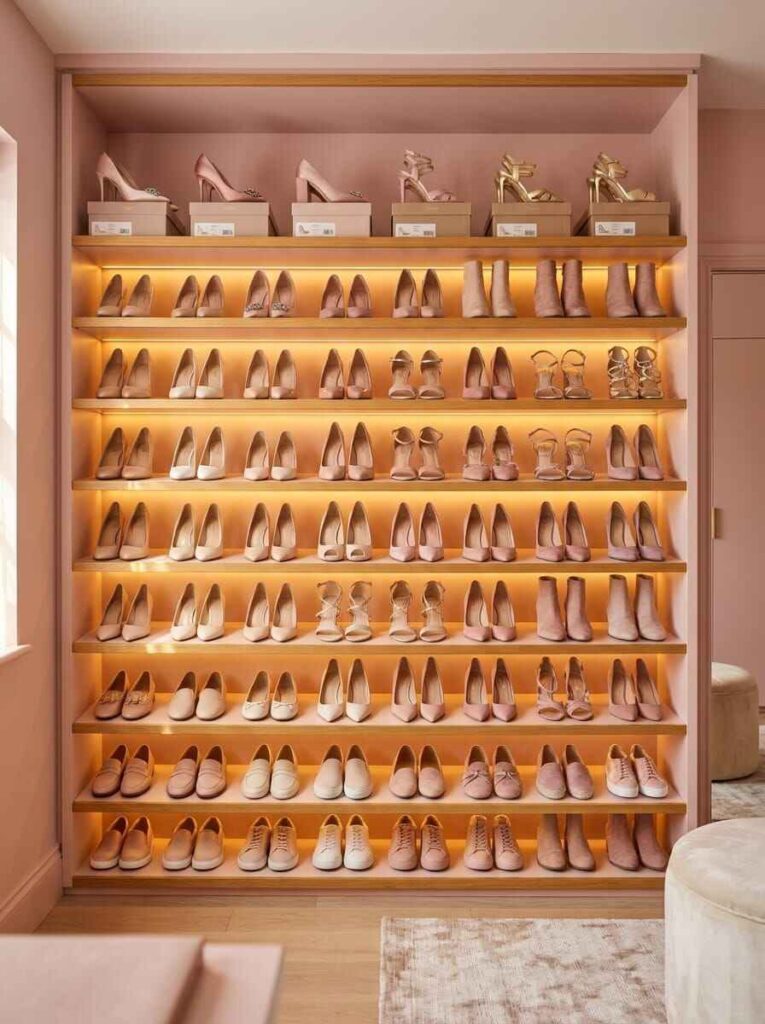
If you have a sizeable footwear collection, dedicating a narrow, full-height wall section specifically to shoe storage frees up valuable hanging rail space and main floor clearance.
Shallow, floor-to-ceiling shelves keep your entire shoe collection displayed, accessible, and in good condition. Arrange shoes systematically by style and heel height, placing everyday flats and sneakers at comfortable waist level while placing seasonal boots on lower shelves and formal heels up high.
Lighting tip: Adding stick-on, motion-sensor LED light strips beneath each shoe shelf improves visibility dramatically and makes finding the right pair effortless.
13. Add Hooks for Bags, Hats, and Everyday Pieces
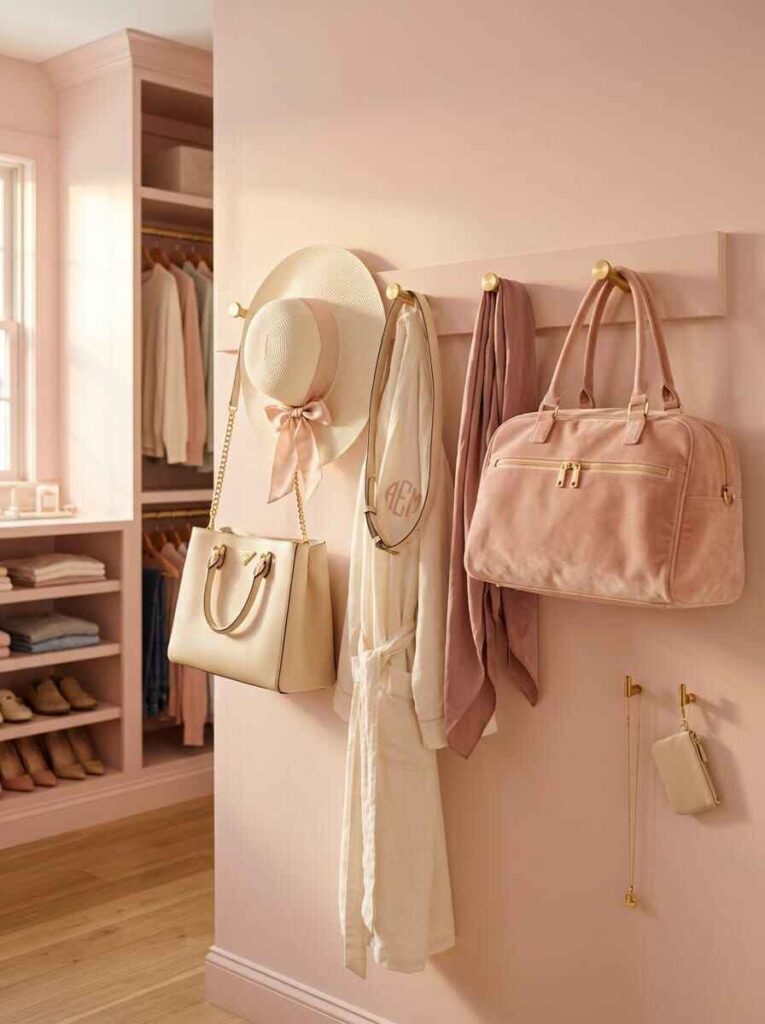
The narrow side walls inside a reach-in wardrobe are often overlooked. Installing a small row of wall hooks turns this blank wall space into functional storage for frequently used accessories.
Mount sturdy brass hooks or a wooden peg rail to hang everyday tote bags, wide-brim hats, bathrobes, or the outfit you plan to wear the next morning. Hooks make hanging up items quick and effortless, reducing the likelihood of clothes ending up on a chair or the floor.
Practical warning: Avoid overloading individual hooks with multiple heavy bag straps. Hanging too many items on one hook creates bulk that intrudes on hanging clothes nearby.
14. Organize Clothes by Category and Color
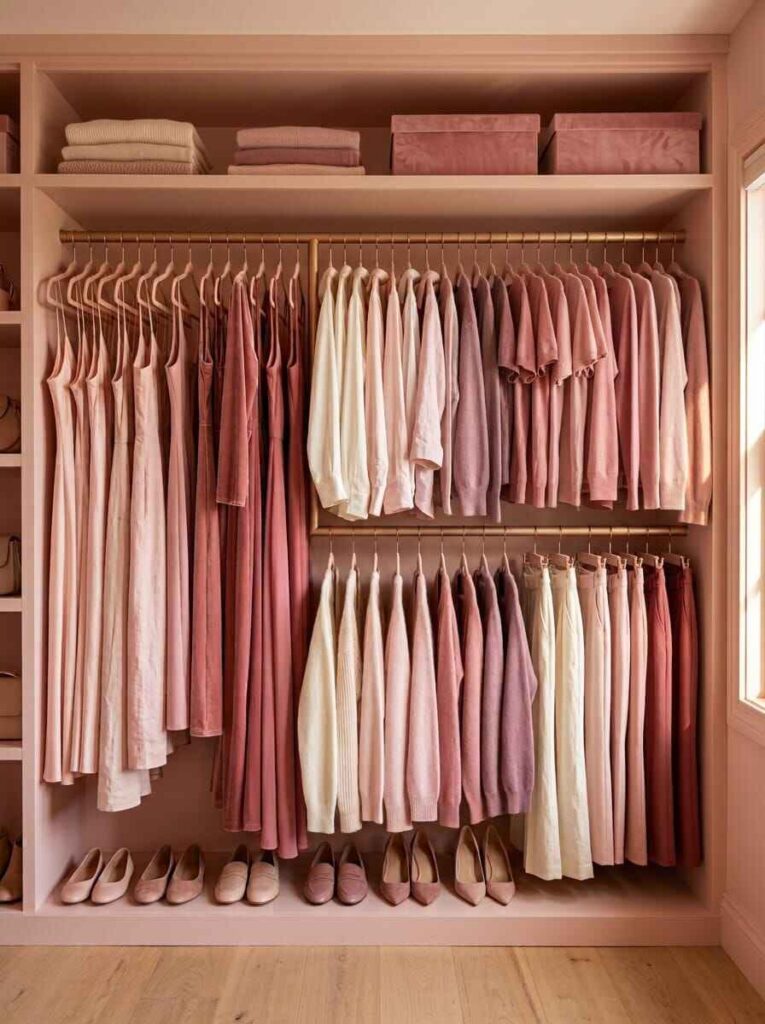
A chaotic clothing arrangement makes even an organized wardrobe feel cluttered. Sorting your garments systematically by category and then by color gradient brings instant structure to your closet.
Start by grouping similar garment types together: hang all sleeveless tops together, followed by short-sleeve shirts, long-sleeve blouses, blazers, skirts, and trousers. Then, arrange each category from light to dark (e.g., white, cream, blush, pink, burgundy, black).
This logical arrangement makes assembling daily outfits faster and immediately highlights duplicate pieces when it’s time to declutter.
Recommended Products:
15. Create a Seasonal Rotation System
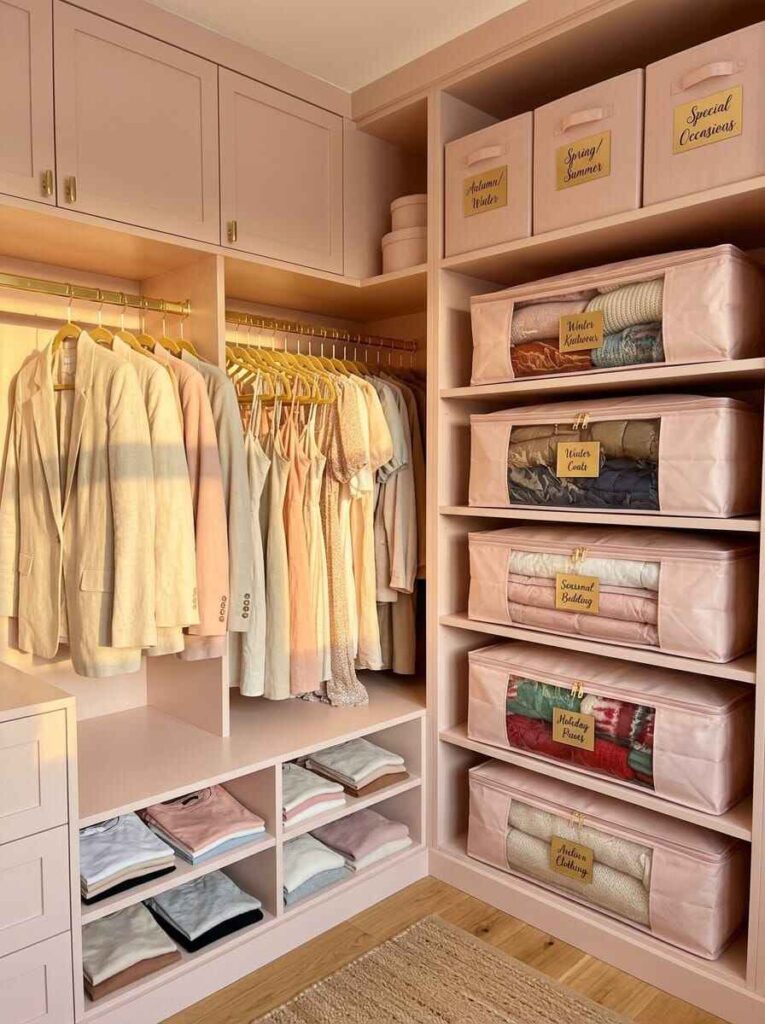
Keeping heavy winter coats alongside summer dresses year-round forces a small wardrobe to work twice as hard as necessary. Rotating your clothing seasonally frees up significant hanging space instantly.
At the end of each season, pack away off-season garments into breathable fabric storage bins or vacuum storage bags. Store these containers on top shelves, under the bed, or in secondary storage until the weather turns.
Best for: Small bedroom closets, reach-in wardrobes, and regions with distinct seasonal temperature changes.
16. Create a Daily Essentials Zone
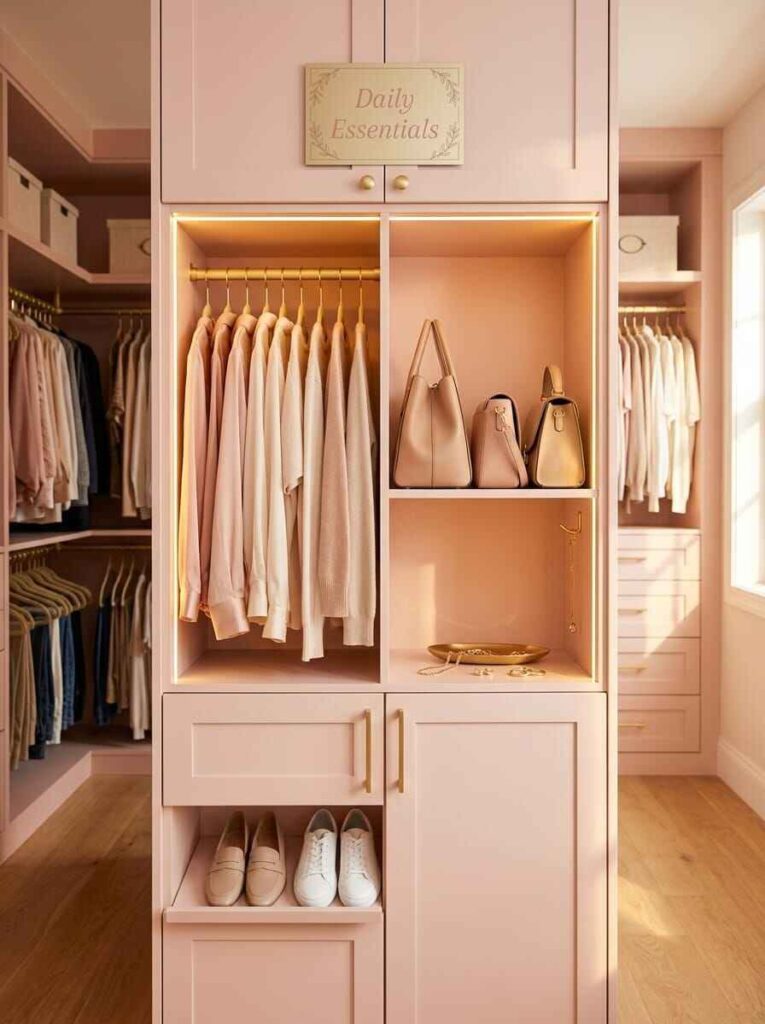
Searching through a packed closet every morning to find your go-to work shirt or everyday handbag wastes valuable time. Setting up a dedicated “Daily Essentials” section keeps your most-worn pieces right where you need them.
Designate a prime, eye-level section of your wardrobe for the 10 to 15 items you wear most often—such as work blazers, tailored trousers, your daily tote, key jewelry pieces, and comfortable shoes. Keeping these core items together speeds up your morning routine.
17. Build a Complete Small Closet Layout System
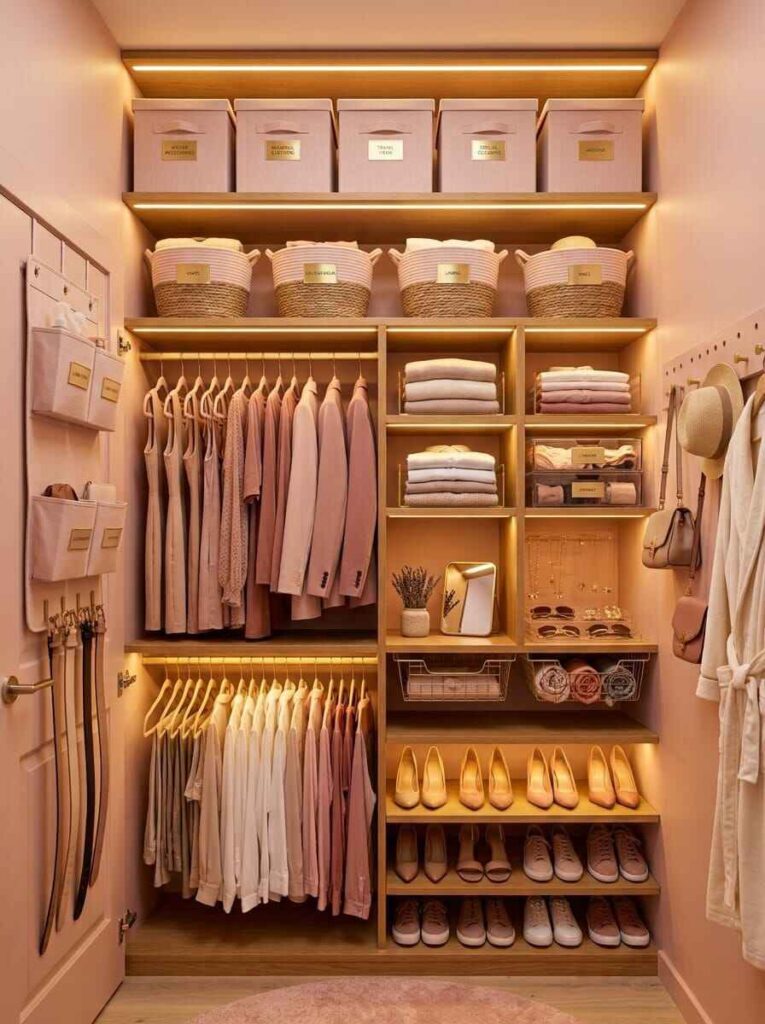
The most effective wardrobe transformations happen when you combine several individual storage strategies into one complete layout tailored to your specific clothing collection.
Rather than buying random organizers and hoping they fit, plan your closet layout by functional zones so that every single garment category has a clear home:
- Top Level: High shelves equipped with labeled fabric bins to keep seasonal clothes, extra bedding, and travel gear neatly out of sight.
- Upper Rail: Short-hanging shirts, blouses, and jackets organized on slim velvet hangers.
- Lower Rail: Secondary hanging space directly below for skirts, shorts, and folded trousers.
- Full-Height Section: A narrow side section kept open for long dresses, jumpsuits, and trench coats.
- Mid-Level Shelves: Open shelving fitted with clear acrylic dividers and pull-out drawers for folded knits, jeans, and underwear.
- Door & Side Walls: Mounted peg hooks and door racks to capture accessories, bags, belts, and hats.
- Bottom Level: Stackable shoe risers or multi-tier racks to keep everyday footwear elevated and organized off the floor.
Combining these strategies ensures every category has a clear home, keeping your closet functional and easy to maintain.
If you are reorganizing other utility areas, check out our guide on small laundry room organization ideas for additional space-planning advice.
Recommended Products
How to Organize a Small Closet Step by Step
Transforming an overcrowded closet is much easier when you approach it in a clear, logical order:
- Step 1 — Empty the Closet Completely: Pull every garment, pair of shoes, and container out of the closet. Starting with a blank canvas lets you assess your available storage dimensions accurately.
- Step 2 — Declutter Before Buying Anything: Sort your wardrobe into four distinct groups: Keep, Donate, Repair, and Store (Out of Season). Be realistic about what you wear regularly.
- Step 3 — Measure the Interior Dimensions: Measure the total width, depth, and vertical height of your closet, along with shelf clearance, door frame width, and hanging rod drop lengths.
- Step 4 — Identify Your Biggest Storage Bottleneck: Determine what causes the most daily frustration—whether it is a lack of hanging space, messy sweater stacks, or shoes on the floor.
- Step 5 — Install Vertical Storage Hardware First: Add double hanging rods, top shelves, or vertical shoe racks before placing any clothing back inside.
- Step 6 — Group Clothing into Categories: Sort your kept wardrobe into clear groups: tops, pants, dresses, jackets, and folded knits.
- Step 7 — Position Everyday Items in the Prime Zone: Place your most frequently worn clothes and accessories between eye level and waist height for effortless access.
- Step 8 — Maintain the Layout Weekly: Take five minutes every weekend to reset stray hangers, refold loose sweaters, and align shoes to keep clutter from rebuilding over time.
Small Closet Organization Mistakes to Avoid
- Buying Storage Organizers Before Measuring: Purchasing bins, drawers, or shoe racks without taking exact shelf measurements often leads to ill-fitting containers that waste space.
- Using Thick Plastic or Wooden Hangers: Bulky hangers eat up valuable rail space before you hang a single shirt.
- Building Tall, Unsupported Sweater Stacks: Stacking folded garments too high without shelf dividers causes piles to lean and fall over when you remove an item.
- Ignoring Interior Door and Side Wall Space: Leaving flat doors and interior side walls empty misses out on prime real estate for hanging bags, scarves, and shoes.
- Keeping Out-of-Season Clothing in Prime Spots: Storing heavy winter coats alongside summer clothes year-round crowds your everyday wardrobe space unnecessarily.
- Overloading Single Wall Hooks: Hanging multiple bag straps or coats on one hook creates bulky lumps that intrude into adjacent hanging space.
- Holding Onto Clothes You Never Wear: Keeping unworn garments in a tiny closet takes away prime space from the clothes you love and wear every week.
Frequently Asked Questions
What is the best way to organize a very small closet?
The best way to organize a very small closet is to maximize vertical wall height. Install a double hanging rod for short garments, switch to slim velvet hangers, use shelf dividers for folded sweaters, and attach an organizer to the back of the closet door for accessories and shoes.
How do I maximize space in a small reach-in closet?
Maximize reach-in closet space by taking seasonal clothing out of your main closet, extending storage up to the ceiling with labeled bins, stacking shoes on multi-tier risers, and keeping your most frequently worn clothes between eye and waist level.
How do I fit more clothes into a small wardrobe?
To fit more clothes, switch to ultra-thin velvet hangers, install a lower hanging rod, fold bulky knits onto open shelves using dividers, and use under-shelf wire baskets for smaller folded accessories.
How do you organize a small closet without a built-in system?
Organize a closet without built-ins by using modular tension organizers—such as adjustable hanging rails, stackable shoe racks, over-the-door storage trees, and freestanding fabric drawer units that don’t require permanent installation.
What should I store on the top shelf of a small closet?
Use the top shelf for rarely used or seasonal items—such as out-of-season clothing inside labeled fabric storage bins, extra guest bedding, travel bags, or formal footwear boxes.
Conclusion
Creating an organized, functional wardrobe does not require a large walk-in closet or an expensive custom renovation. By implementing smart small closet organization principles—such as installing double hanging rails, switching to slim velvet hangers, adding shelf dividers, and making use of vertical door surfaces—you can make even a small reach-in wardrobe feel spacious and efficient.
Start by tackling the single area in your closet that causes you the most frustration—whether that is a messy shoe pile on the floor or crowded clothing hangers—and improve that section first. Addressing your wardrobe step by step will turn your daily dressing routine into an easy, organized experience every morning!

“Urooj Fatima is the founder and lead stylist of Blush Heaven, a digital sanctuary dedicated to budget-friendly home decor and small apartment styling. Trusted by a Pinterest audience of millions each month, she specializes in creating high-end aesthetics for small spaces. Urooj is the creator of the Small Apartment Glow-Up Guide, helping women worldwide transform their rooms into cozy, blush-toned havens.”
1 thought on “17 Small Closet Organization Ideas That Maximize Every Inch”