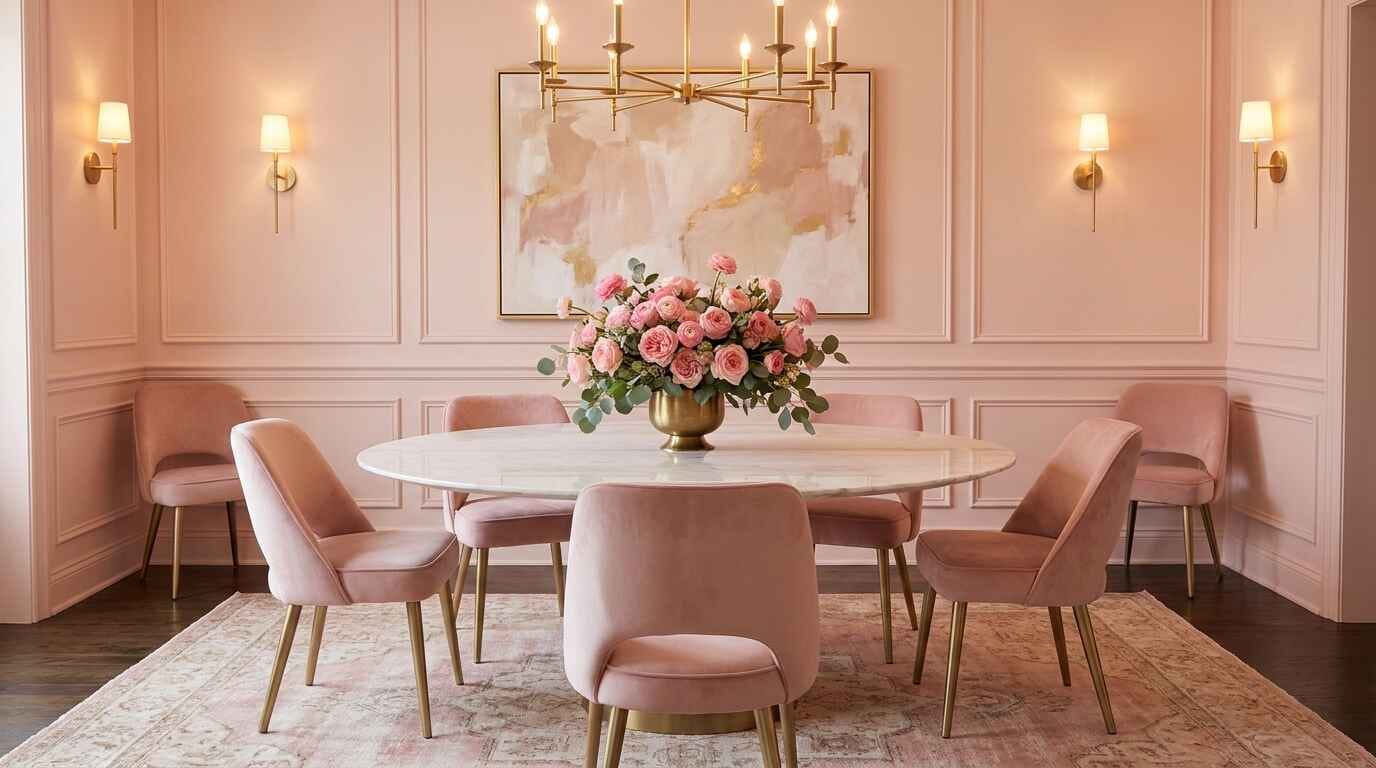
You set a lovely table, push in the chairs, and step back. Something still feels off. The walls are completely bare, and the room feels cold and unfinished. A blank dining room wall can make even the prettiest furniture feel flat and uninviting.
The dining room is where people gather to eat, talk, and relax. It deserves to feel warm and welcoming. Adding the right dining room wall art is the easiest way to give your space personality, color, and charm.
Whether your home leans modern, minimalist, rustic, or soft and cozy, you can find a look that fits. Here are 17 practical ideas to help you turn those empty walls into a beautiful feature you love every day.
17 Dining Room Wall Art Ideas
1. Large Statement Wall Art
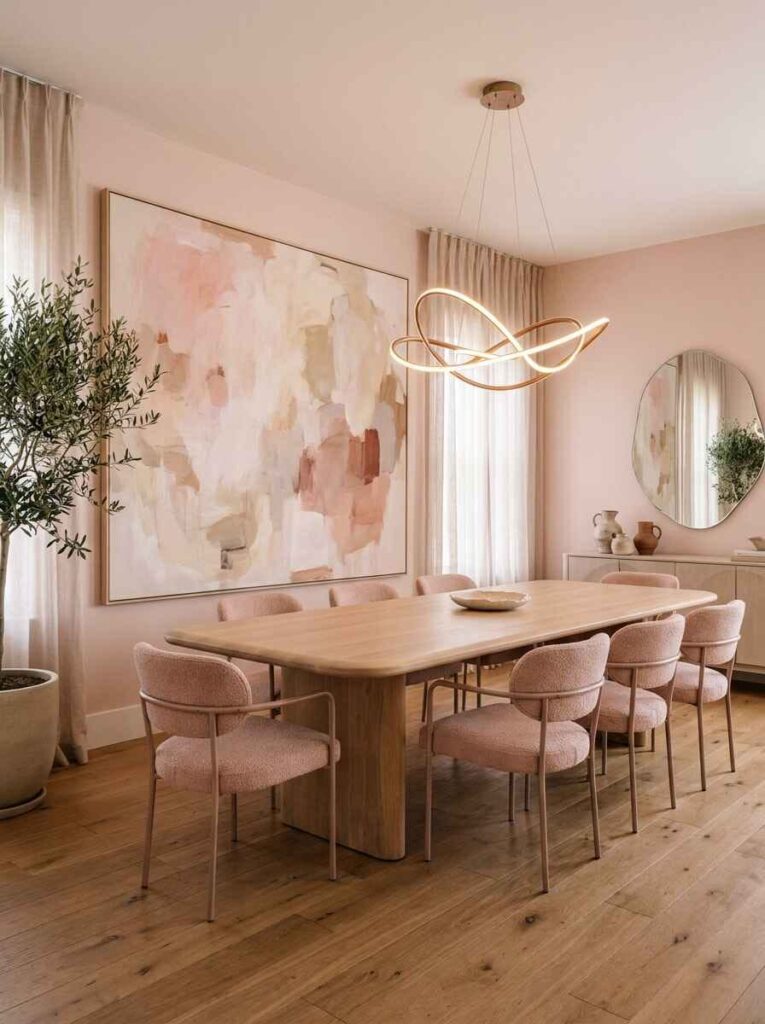
One oversized piece of art makes an instant focal point. In this dining room, a huge canvas with gentle pink, beige, and terracotta brushstrokes hangs right behind a curved oak table. The soft tones tie in with the pink chairs, while a ribbon-style light fixture brings a fresh, modern touch overhead.
A single statement piece keeps the room from looking busy. Instead of hanging lots of small frames, one big artwork fills the wall and anchors the dining table below it.
Your wall art also works best when it connects with the lighting above the table. If you’re updating both, take a look at these dining room light fixtures for ideas that complement different decor styles.
- Sizing Rule: As a general guideline, choose artwork that is around two-thirds the width of your dining table so the arrangement feels balanced.
- Best Look: Keep the frame thin or go frameless with a gallery-wrapped canvas for a clean finish.
2. Gallery Wall
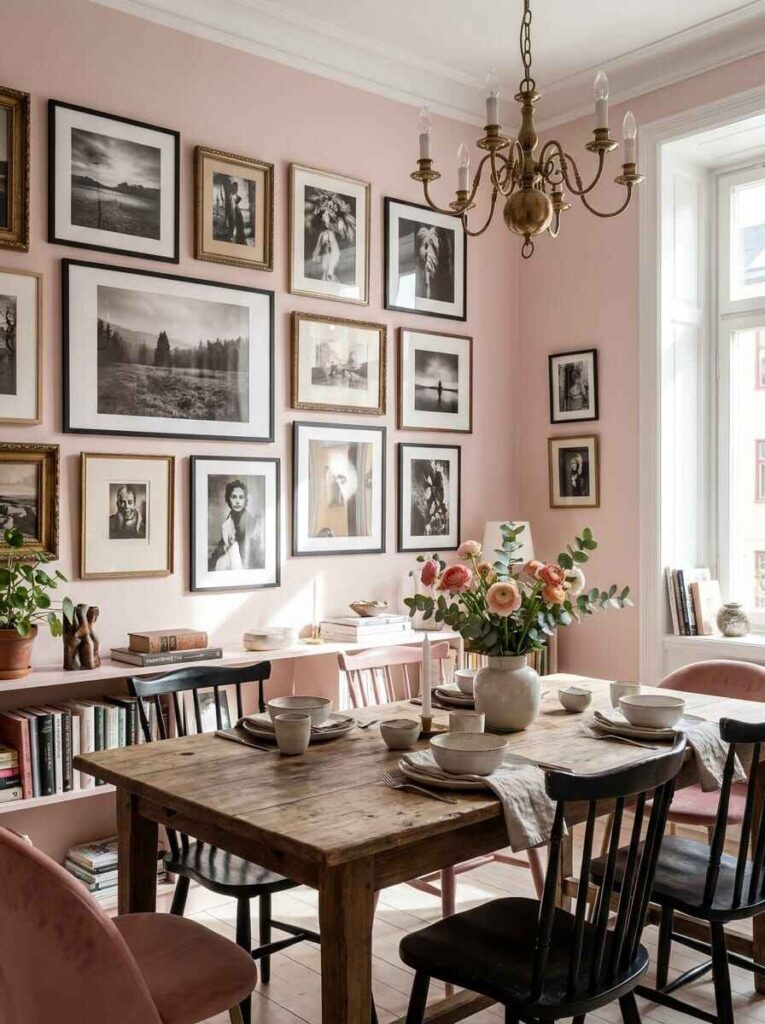
A gallery wall lets you mix different prints without making the room look messy. This room pairs a rustic wooden dining table with a salon-style wall display. The artwork mixes vintage portraits, landscape photography, and floral sketches in black and gold frames over a soft blush wall.
This layout works well because it combines different frame sizes while sticking to dark and gold finishes. It gives the dining space a relaxed, collected feel that feels personal.
- Layout Tip: Start by placing your largest frame slightly off-center, then build outward with smaller frames.
- Keep It Tidy: Leave about two to three inches between each frame so the wall feels organized.
3. Minimalist Dining Room Wall Art
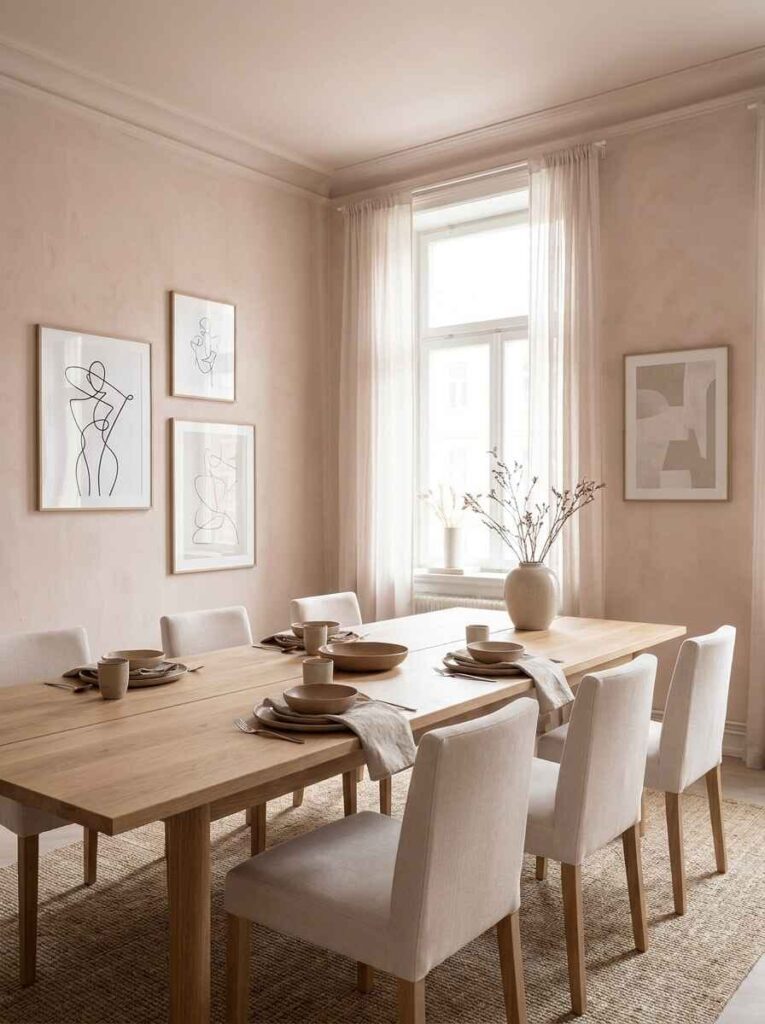
If you prefer clean lines and calm spaces, minimalist art is a great choice. Here, a light oak table and linen chairs sit against a smooth plaster wall. Three simple black line art prints hang side by side in thin white frames, letting natural light fill the room.
Minimalist prints use white space to make a room feel bigger and brighter. They bring quiet style without fighting with your light fixtures or table decor.
- Styling Tip: Stick to simple black line drawings or soft beige geometric shapes.
- Best Choice: Use matching thin frames to keep the overall look neat and uniform.
4. Botanical Wall Art
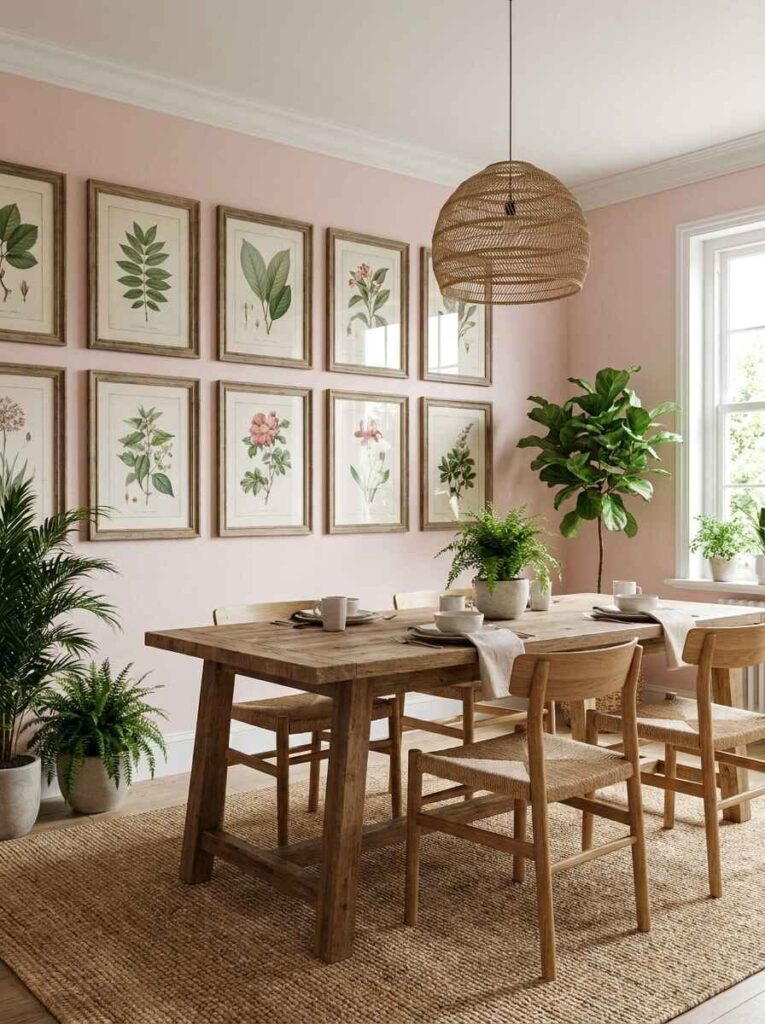
Botanical prints bring a refreshing outdoor feel to your dining table. This dining space features a rustic timber table beneath a woven pendant light, backed by an eight-piece grid of framed plant and flower illustrations in warm wooden frames. Real potted greenery sits around the room to match.
Displaying prints in a neat grid creates visual order. The green foliage drawings soften hard wood surfaces and bring calm, natural color indoors.
- Arrangement Tip: Hang your prints in two neat rows of four, keeping equal spacing between every frame.
- Frame Selection: Light oak frames work best when paired with indoor plants and woven pendant lights.
5. Abstract Dining Room Wall Art
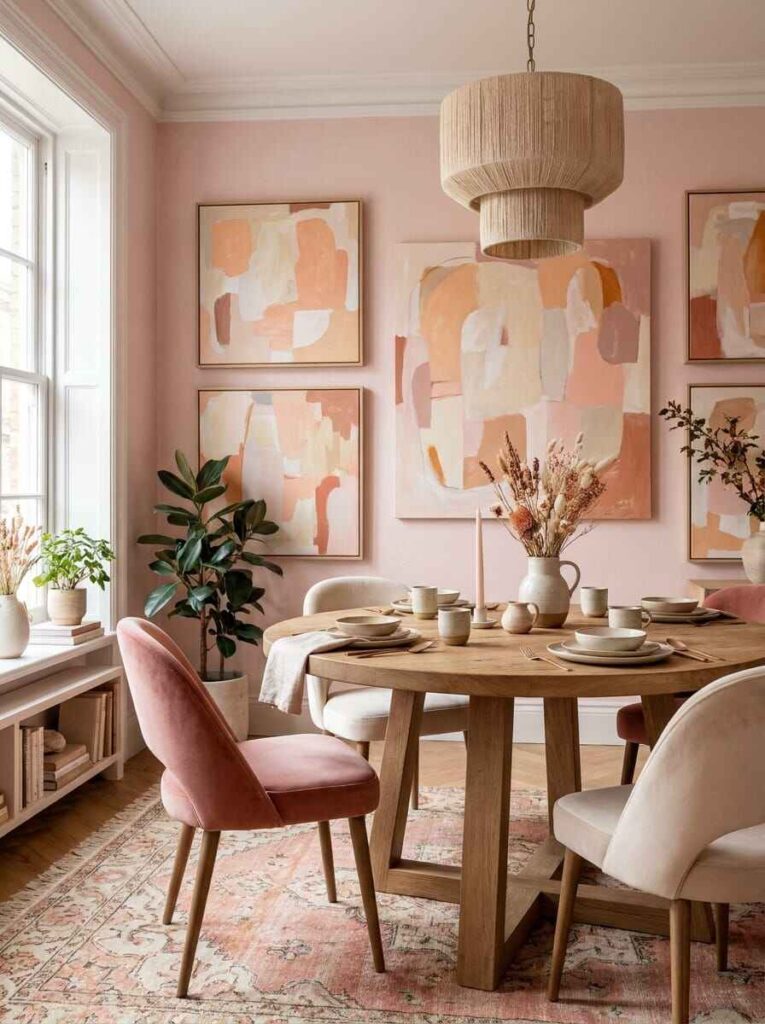
Abstract art uses shapes and color blocks to add visual interest. In this space, a round oak table and pink velvet chairs sit below a collection of four framed abstract prints. The artwork combines peach, mustard, and blush tones that match the area rug underneath.
Abstract art is flexible because it does not show a specific scene. You can simply pick pieces that share the same color family as your chairs, rug, or curtains.
If you’re also choosing a rug for the space, these dining room rug ideas can help you find a style that works beautifully with your wall art.
- Color Rule: Pull one or two shades from your dining chairs into the artwork for a cohesive look.
- Visual Flow: Group two or four square prints together to form a tidy block on the wall.
6. Black and White Wall Art
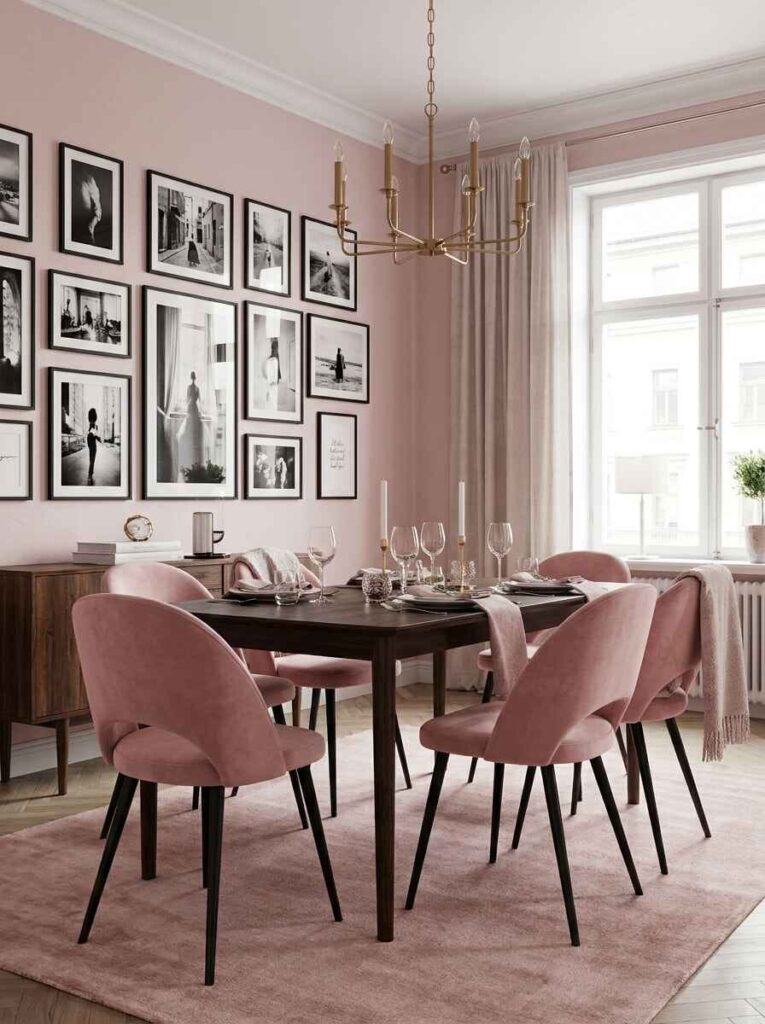
Black-and-white art is a classic choice that works well with many dining room styles. This room features a dark wood table with pink velvet chairs and a full wall of black-and-white city and portrait prints in matching black frames. A gold chandelier adds a touch of warmth above.
Monochrome art brings crisp contrast to soft wall colors. It lets you add plenty of framed pieces without clashing with the rest of the room.
- Mat Board Advice: Choose frames with wide white mat boards to give everyday photos a high-end look.
- Spacing: A neat grid layout keeps multiple photographs looking crisp and intentional.
7. Farmhouse Dining Room Wall Art
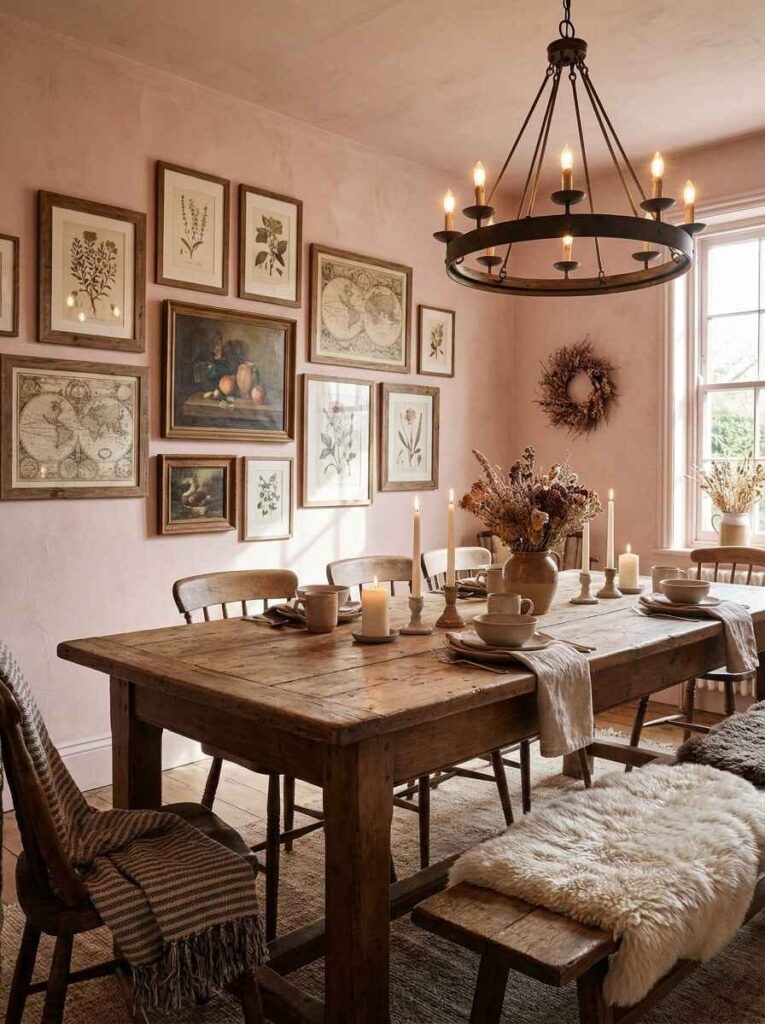
Farmhouse wall art is all about vintage warmth, muted colors, and natural character. In this cozy room, a long reclaimed wood table is set with rustic pottery, lit candles, and an iron chandelier. The wall features antique landscape paintings and old map prints in dark wood frames.
This style feels warm and lived-in. Weathered frames and classic countryside scenes match the texture of raw wood dining tables and cozy benches.
- Art Choice: Look for vintage landscape prints, historical maps, or countryside sketches.
- Texture Pairing: Combine rustic frames with dried flower bouquets and stoneware pottery on the table.
8. Vintage-Inspired Wall Art
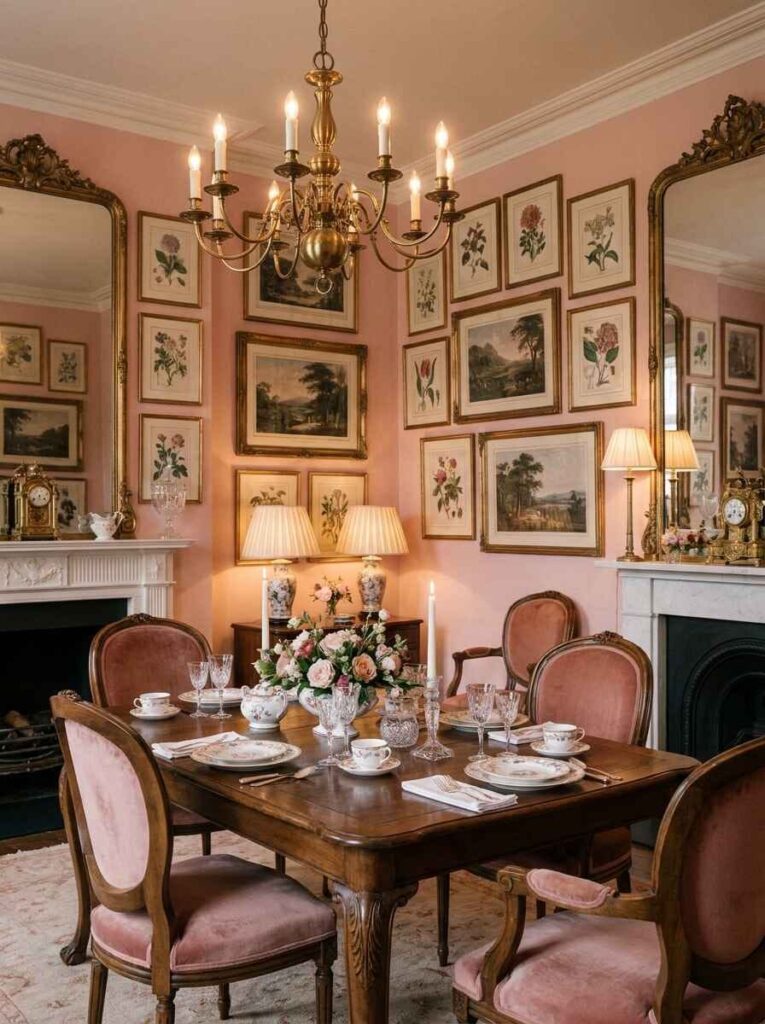
Vintage art brings depth and history into a formal dining space. This elegant setup features an ornate wood dining table, antique pink chairs, a brass candle chandelier, and walls filled with oil paintings in gilded gold frames. Twin arched gold mirrors frame the sides of the room.
Gilded frames catch the light from candles and chandeliers, giving the room a timeless feel that looks curated over years.
- Gold Accents: Pair antique gold frames with brass light fixtures to keep metal finishes consistent.
- Corner Styling: Carry your art into the room’s corners to make the space feel wrapped in art.
9. Oversized Mirror as Wall Art
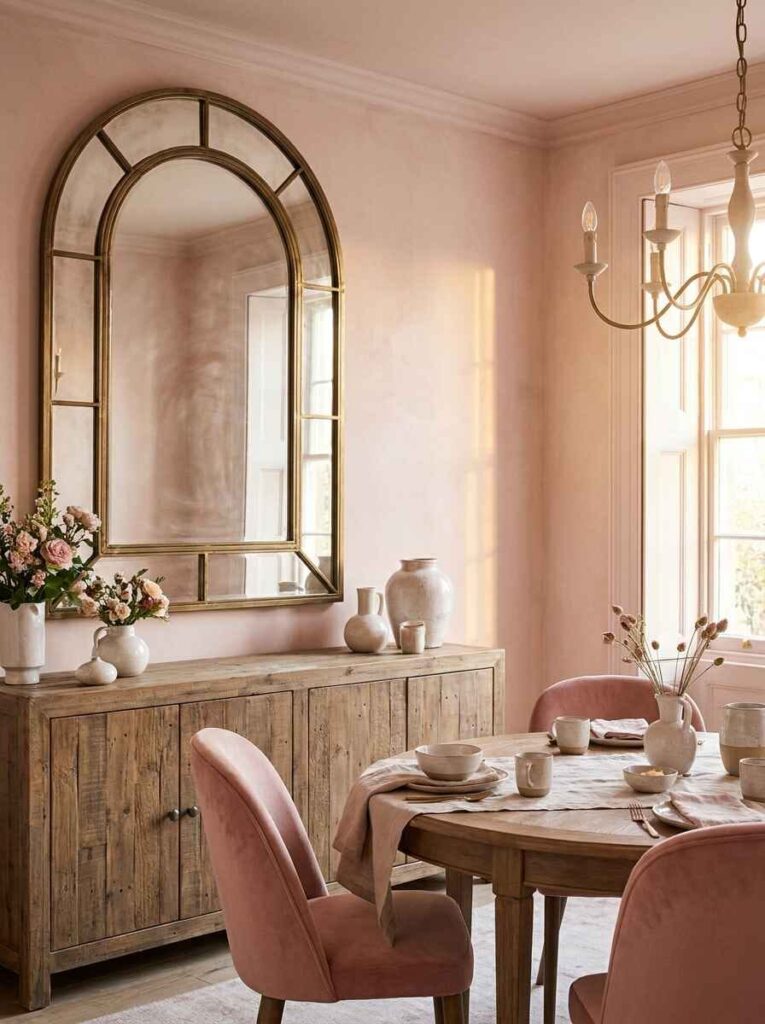
A large mirror can work just like a piece of art while serving a practical purpose. Here, a tall arched windowpane mirror sits above a wooden sideboard next to a round dining table. The mirror reflects daylight from the window and shows off the brass chandelier.
A well-placed mirror can reflect natural light and help a small or narrow dining area feel more open. The arched grid design adds architectural interest to plain drywall.
- Placement: Hang the mirror across from a window to capture the outdoor view and bring in daylight.
- Shape Choice: An arched or round mirror softens the straight lines of dining tables and sideboards.
10. Colorful Dining Room Wall Art
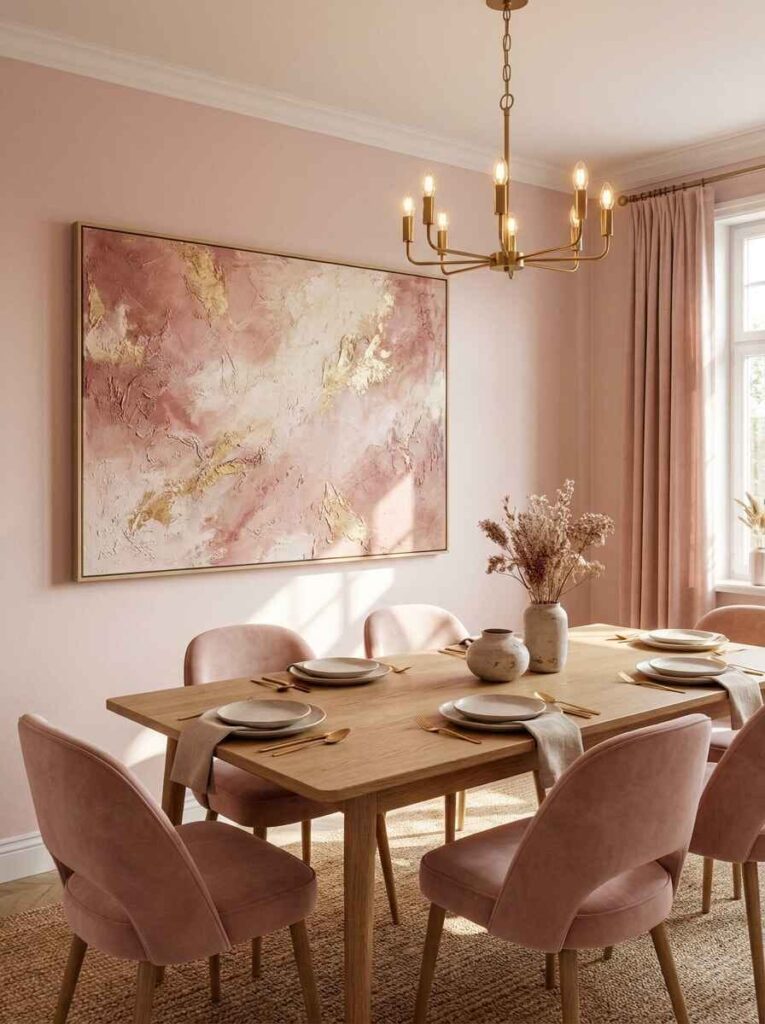
A splash of bold color on the wall instantly lifts the mood of the room. In this bright dining room, a textured canvas painted with blush pink and shimmering gold tones hangs above an oak table with pink chairs and a brass chandelier.
Artwork is an easy way to introduce brighter colors without committing to a bold wall color. If your walls and table are simple, a vibrant canvas can add personality while keeping the rest of the room understated.
- Balance Tip: Pick one main bright color from the canvas and repeat it in your table napkins or vase flowers.
- Keep It Calm: Limit your room to two or three main colors so the space stays relaxing.
11. Pink Dining Room Wall Art
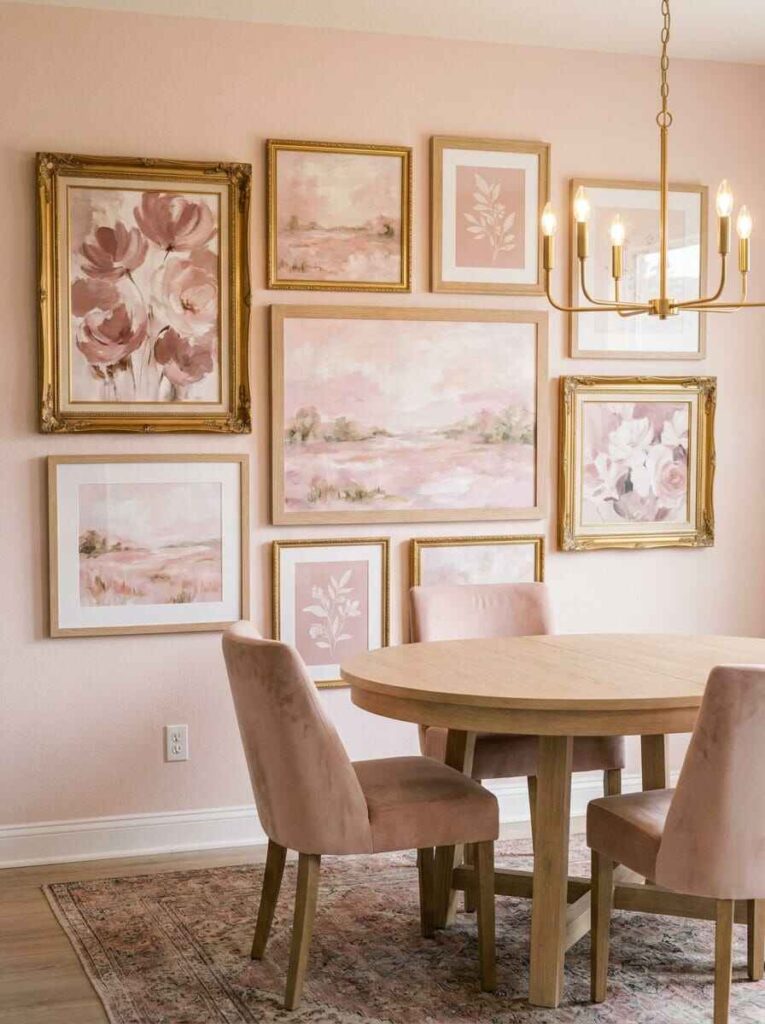
Soft pink artwork creates a gentle, welcoming dining area. This room features a round oak table, dusty-rose velvet chairs, and a gallery wall filled with pink floral paintings, watercolor landscapes, and gold frames. A brass chandelier adds a warm glow overhead.
Muted pinks like dusty rose, blush, and beige-pink feel mature and serene. They pair naturally with light woods and warm brass hardware.
- Palette Advice: Combine blush prints with creamy white mats and light oak frames for a fresh feel.
- Floral Accents: Keep a ceramic vase of real flowers on the table that match the prints on the wall.
12. Dining Room Wall Art Above a Sideboard
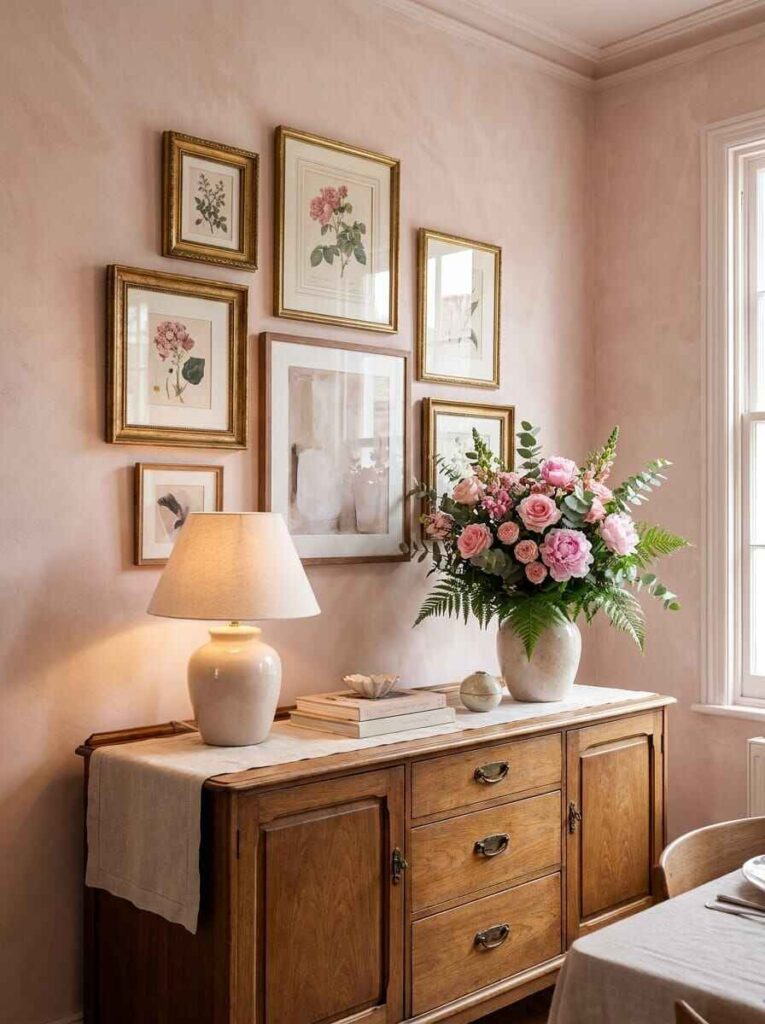
Do not limit your wall art to the space directly over the dining table. Here, an antique wooden sideboard is styled with a ceramic table lamp, a vase of fresh peonies, and a tidy arrangement of gold-framed botanical prints above it.
Decorating above a sideboard creates a secondary focal point in the room. It lets you create a layered vignette by combining wall art with tabletop lamps and vases.
- Proportion Tip: Keep the art arrangement slightly narrower than the sideboard so the furniture feels grounded.
- Layering Trick: Place a small framed print resting directly on the sideboard surface in front of a lamp.
13. One Large Framed Print
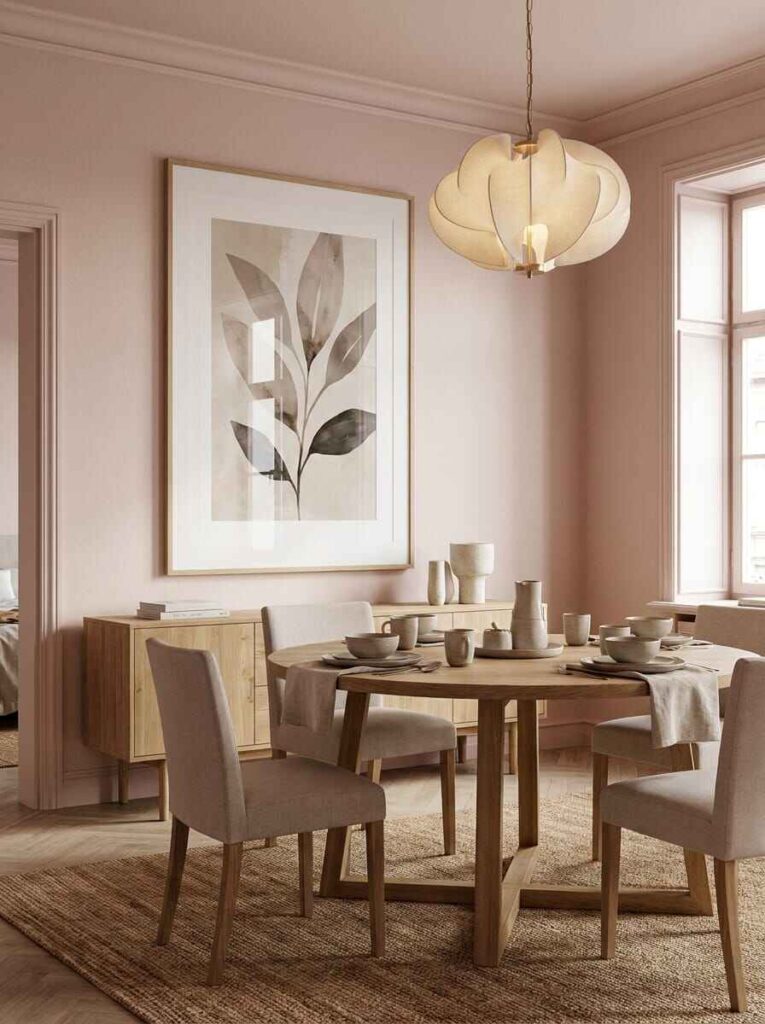
If a gallery wall feels too busy, a single large framed print provides a clean alternative. In this dining room, a large watercolor botanical branch print hangs in a light oak frame behind a round wood table and fabric chairs. A fabric pendant light hangs gently above.
One print creates a calm, focused point in the room. It lets your dining furniture and light fixtures stand out without visual competition.
- Frame Style: Use a simple light wood or white frame with a wide mat border to frame the artwork cleanly.
- Subject Matter: Large leafy branch prints or simple architectural sketches work wonderfully here.
14. Dining Room Photography Wall
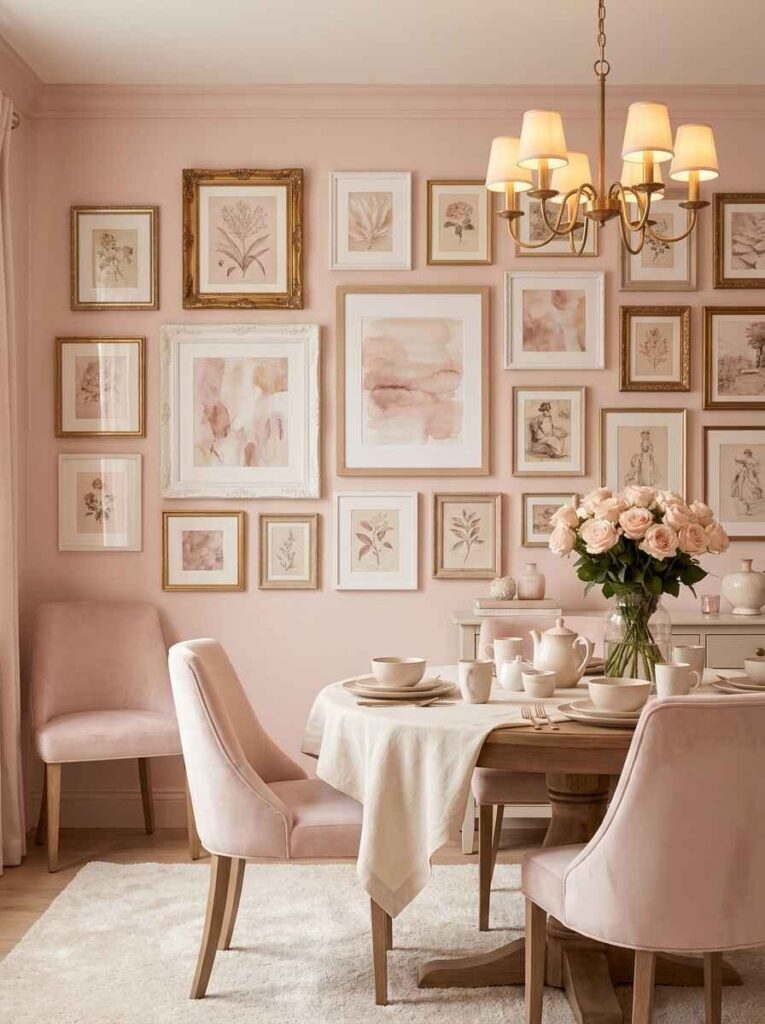
Framed photography adds real life and story to a dining space. This formal room features a round table draped in linen, pink chairs, and a carefully arranged photo wall mixing vintage portraits, travel scenes, and watercolor accents in matching frames.
Photography brings a personal, human touch to dinner parties. It makes great dinner conversation when guests notice photos from trips, historical places, or favorite cities.
- Theme Idea: Pick a clear theme like travel destinations, classic architecture, or nature landscapes.
- Cohesion: Use matching mat boards across all photos to tie different pictures together.
15. Cozy Textured Wall Decor
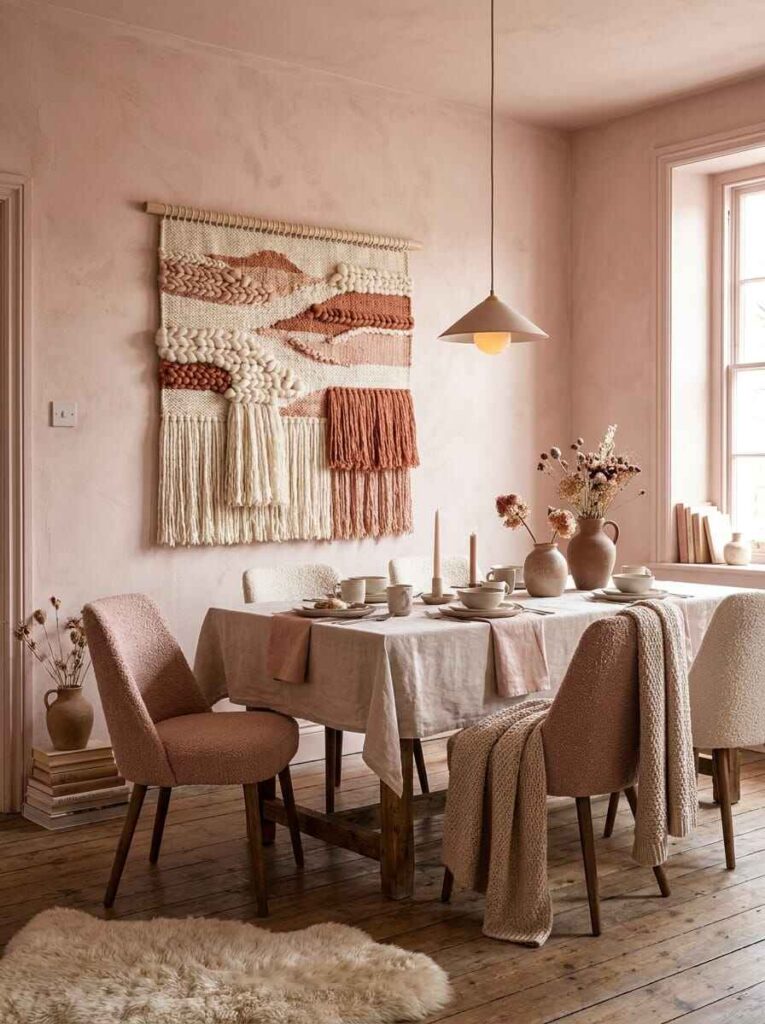
Art does not always have to be paper under glass. This cozy dining room showcases a large woven textile wall hanging made from thick wool in cream and terracotta tones. It hangs above a wooden table set with linen cloths, ceramic pottery, and dried flowers.
Woven tapestries and fiber art can help soften the acoustics of a room while adding soft, tactile warmth that flat frames cannot match.
- Material Choices: Look for woven yarn pieces, macrame hangings, or natural seagrass wall baskets.
- Color Tip: Match the wool fibers to your table linens and chair cushions for a unified room.
16. Elegant Dining Room Wall Art
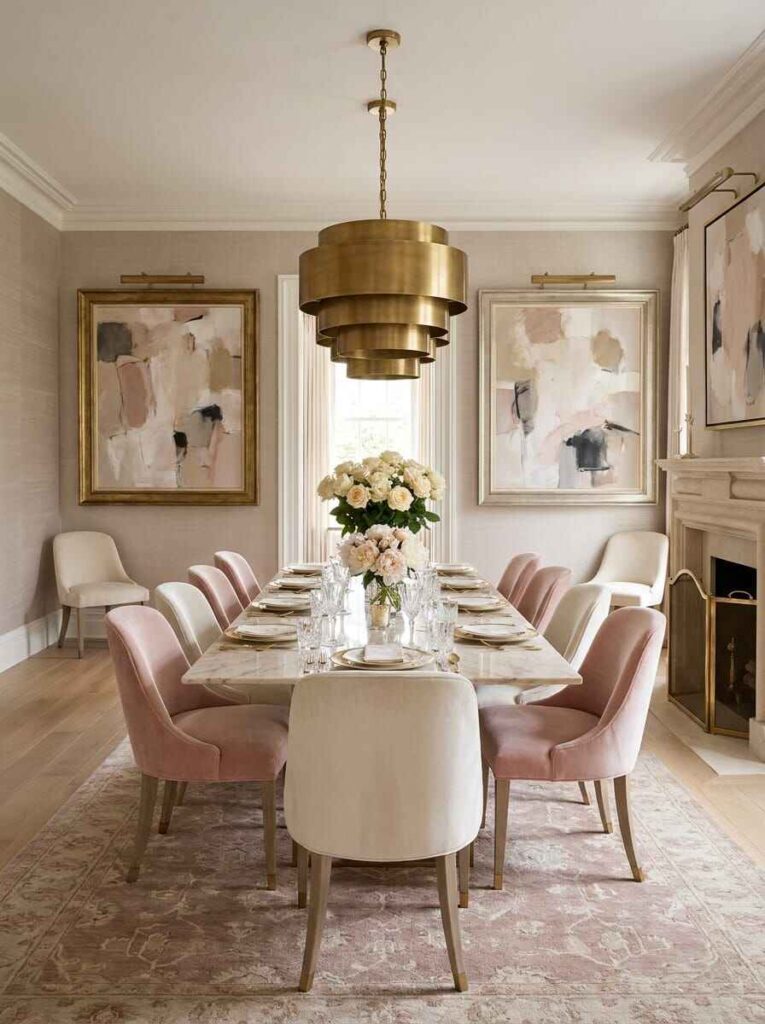
For a formal dining room, paired artworks bring balance and polish. In this high-end dining space, two large matching abstract paintings in gold frames hang with dedicated picture lights above a marble-topped table and blush chairs. A tiered brass chandelier completes the room.
Hanging art in pairs creates pleasing symmetry. It balances wide dining tables that might look unbalanced under a single smaller frame.
- Lighting Tip: Add dedicated picture lights above your frames to illuminate the artwork during evening meals.
- Frame Finish: Warm brushed brass or muted gold frames give formal dining rooms an upscale touch.
17. Personalized Dining Room Wall Art
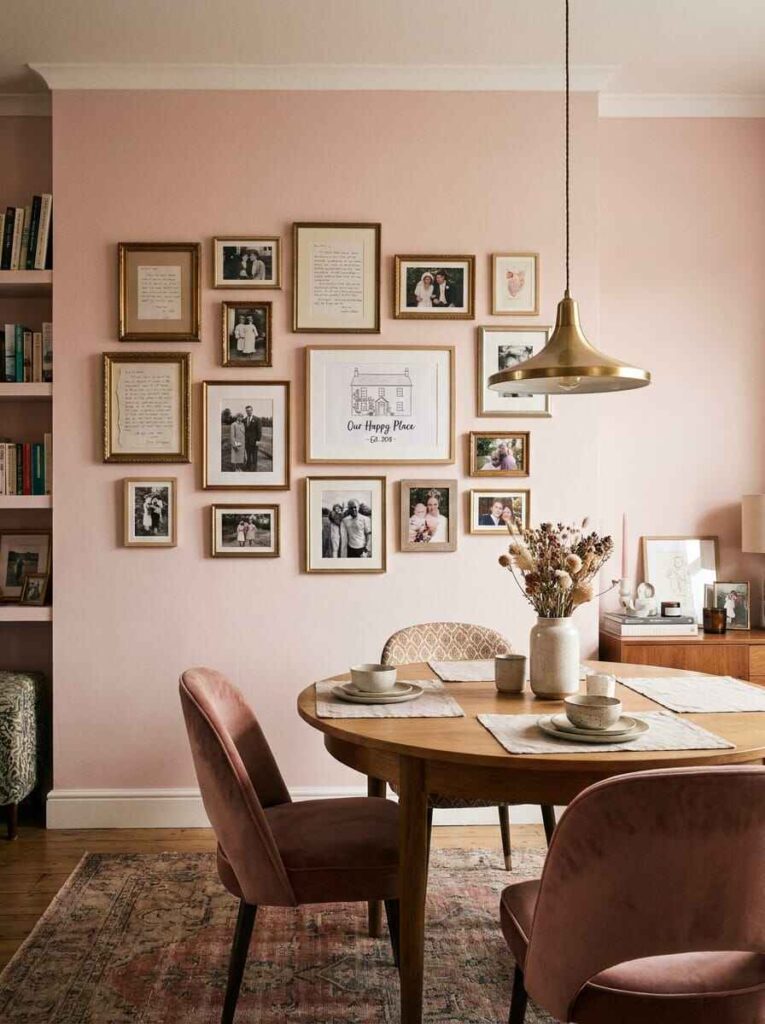
The most welcoming homes are those that celebrate the people living there. This cheerful dining area features a round oak table, pink velvet chairs, and a gallery wall filled with framed family photos, wedding memories, and a custom home illustration.
Personalized walls turn your dining space into a cozy family hub. Sticking to simple wooden and gold frames keeps family snapshots looking stylish rather than messy.
- Matting Tip: Print photos in black-and-white or sepia tones to make pictures from different years blend together.
- Centerpiece Idea: Place a meaningful typography print or home drawing right in the center of the gallery.
How to Choose Dining Room Wall Art
Consider the Wall Size
Look at how much open space you have. A large empty wall needs an oversized canvas or a multi-frame gallery wall. If you are hanging a single piece or a pair, artwork around two-thirds the width of the table can help create a balanced arrangement. This visually connects the artwork with the furniture and keeps it from feeling disconnected from the dining area.
Match the Room’s Color Palette
Your wall art should talk to the rest of the room. Take color cues from:
- Dining chair fabric
- The area rug under the table
- Window curtains
- Dinnerware and centerpiece vasesPick artwork that shares at least one or two colors with these items to keep the room cohesive.
Think About the Dining Table
Artwork should always connect visually with the dining table. If you are hanging a single piece or a pair, aim for the art to span about two-thirds of the table’s total width. This anchors the furniture and keeps the art from looking like it is floating randomly.
Choose the Right Frame
Frames act like borders for your decor:
- Natural Wood: Adds warmth and suits farmhouse, rustic, or casual rooms.
- Black: Brings sharp contrast and works well for modern or monochrome styles.
- White: Blends with the wall for a light, minimalist look.
- Gold or Brass: Adds classic charm and looks great in formal dining rooms.
Common Dining Room Wall Art Mistakes to Avoid
- Choosing Artwork That Is Too Small: A tiny frame on a big empty wall looks like an afterthought. Make sure your art covers enough visual space to balance the table below.
- Hanging Artwork Too High: Art is often hung near the ceiling where no one can enjoy it. Hang your pieces so the center sits around eye level when standing, or slightly lower so it looks comfortable while seated.
- Using Too Many Unrelated Styles: Mixing modern neon posters with antique oil paintings can make the room feel chaotic. Pick one clear decorating direction and stick with it.
- Ignoring the Room’s Existing Colors: Hanging art that clashes with your chair cushions or rug creates visual tension. Always pull at least one shared tone from the room into the prints.
- Overcrowding Every Empty Wall: You do not need to fill every single wall with frames. Leaving one or two walls bare lets the eye rest and gives your main art wall the attention it deserves.
FAQs About Dining Room Wall Art
What kind of art looks good in a dining room?
Abstract prints, botanical sketches, landscape paintings, and family photography all look wonderful when framed properly.
What should I put on my dining room wall?
You can hang a large canvas, a curated gallery wall, a decorative mirror, or a cozy woven wall tapestry.
How big should wall art be above a dining table?
Your artwork should generally measure about two-thirds the width of your dining table to maintain proper balance.
How do I decorate a large dining room wall?
For a large dining room wall, try an oversized piece of artwork, a balanced gallery wall, or a pair of large framed prints. Choose an arrangement that fills enough of the wall without making the space feel crowded.
Should dining room wall art match the furniture?
It does not need to match exactly, but the colors and frame finishes should complement your table, chairs, and light fixtures.
Where should I hang wall art in a dining room?
The best spots are centered above the dining table, over a storage sideboard, or across from a bright window.
Conclusion
Decorating your walls is the secret to turning an ordinary eating area into a space you love. The right dining room wall art brings color, warmth, and personality to empty walls, creating a welcoming backdrop for family meals and friendly dinners.
Remember to consider your wall size, pick colors that connect with your chairs and rug, and hang your pieces where they balance the table. Whether you choose one large abstract canvas, a tidy botanical grid, or an eclectic family photo wall, pick art that brings you joy. Choose your favorite idea from this guide, hang your first frame, and enjoy your fresh, beautiful dining room!
“Urooj Fatima is the founder and lead stylist of Blush Heaven, a digital sanctuary dedicated to budget-friendly home decor and small apartment styling. Trusted by a Pinterest audience of millions each month, she specializes in creating high-end aesthetics for small spaces. Urooj is the creator of the Small Apartment Glow-Up Guide, helping women worldwide transform their rooms into cozy, blush-toned havens.”