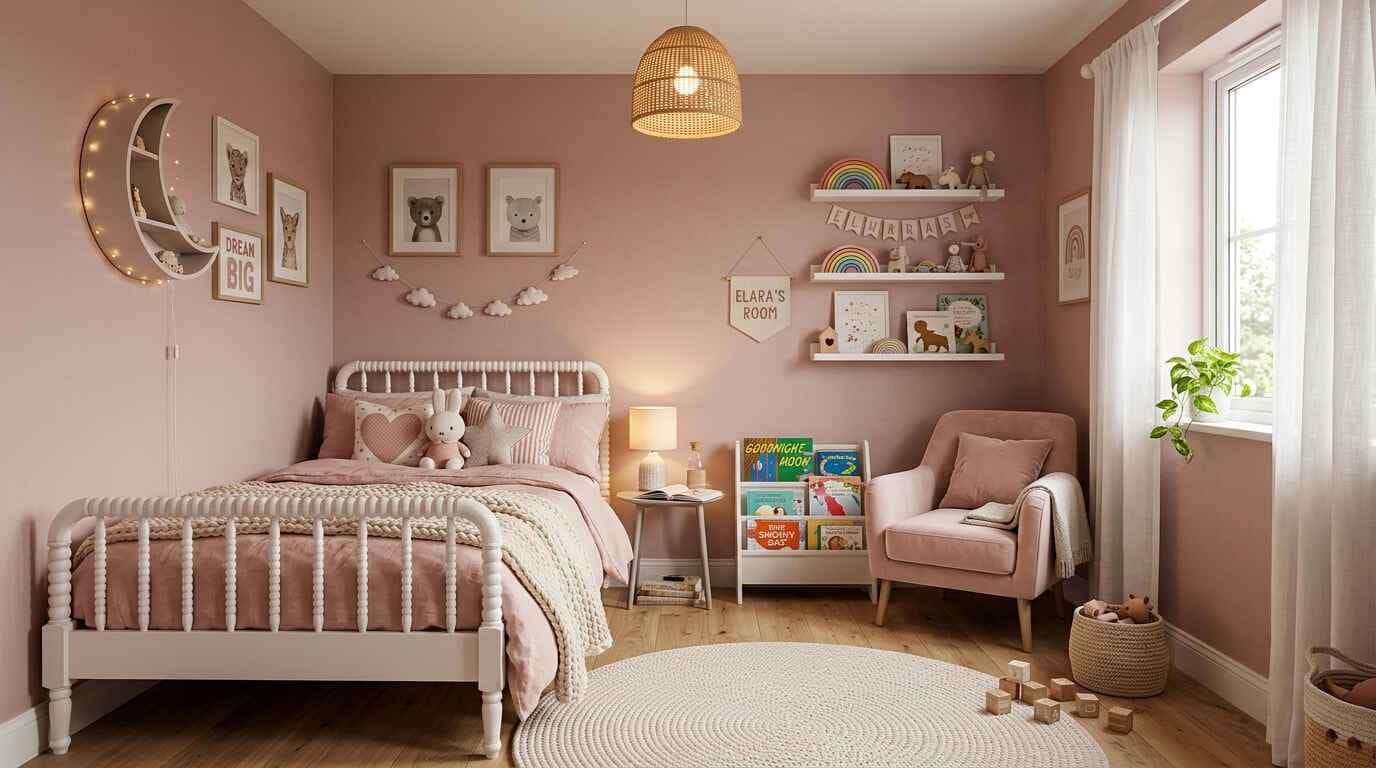
Decorating a child’s bedroom is an exciting project, but finding the right balance between style and everyday function can be tricky. A child’s space needs to do a lot at once. It should provide a restful spot for sleeping, an open area for play, a quiet zone for learning, and plenty of organized storage to keep daily clutter under control.
The goal is to design a bedroom that sparks imagination while staying easy to manage. Whether you are decorating a spacious bedroom, setting up a shared room for siblings, or organizing a compact apartment nook, thoughtful layout and decor choices make a huge difference.
Here are 17 practical kids room ideas to help you create a space that feels cheerful, organized, and comfortable as your child grows.
17 Kids Room Ideas
1. Create a Colorful Kids Room
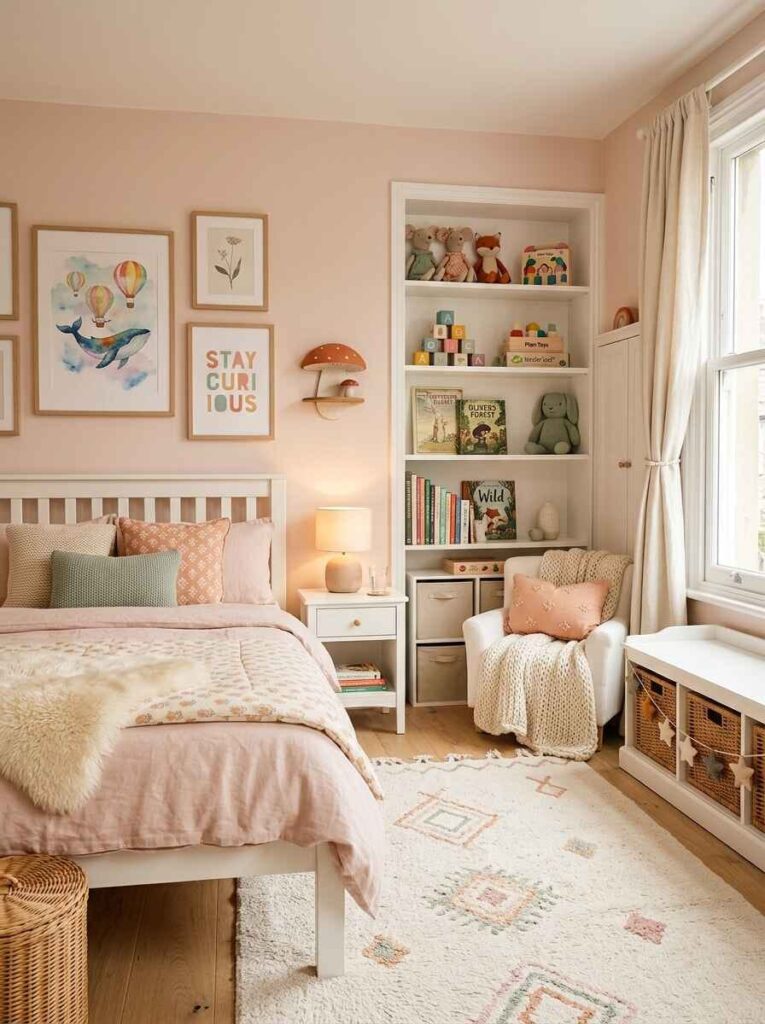
Color brings energy and personality to a space, but painting every wall a saturated shade can sometimes feel overstimulating. A simple way to build a balanced palette is to select two or three core colors and set them against a soft, neutral foundation.
- Palette Balance: Try pairing a dominant tone like soft terracotta, warm ochre, or sky blue with subtle accent shades like sage green or pale yellow.
- Easy Updates: Keeping larger furniture pieces in neutral wood or white finishes lets you swap out colorful bedding, curtains, and wall art whenever your child’s preferences change.
2. Use Soft Pastel Colors
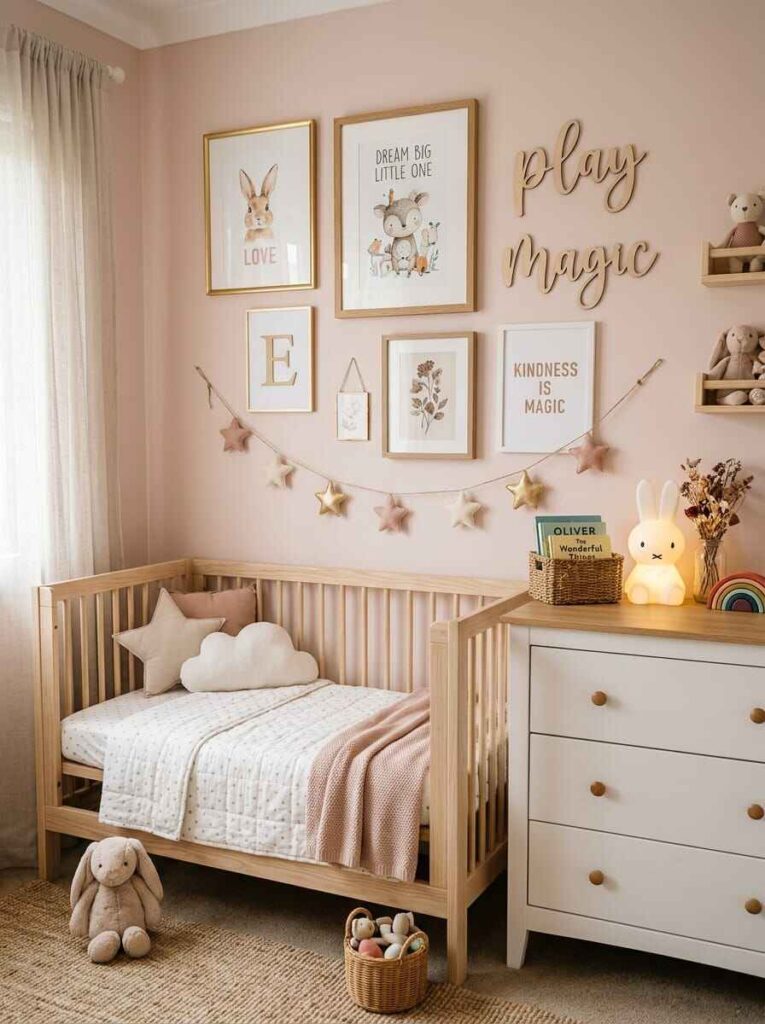
If you prefer a calm, quiet atmosphere that helps with bedtime routines, pastel shades are a great option. Tones such as dusty rose, soft blue, pale lavender, mint, and warm cream bounce natural light around the room and create a peaceful environment.
Pastels pair easily with natural wood tones, light linen textiles, and woven accents. Adding warm lighting and varied textures—like knit blankets or a soft rug—prevents pastel spaces from feeling flat or sterile.
3. Create a Cozy Reading Corner
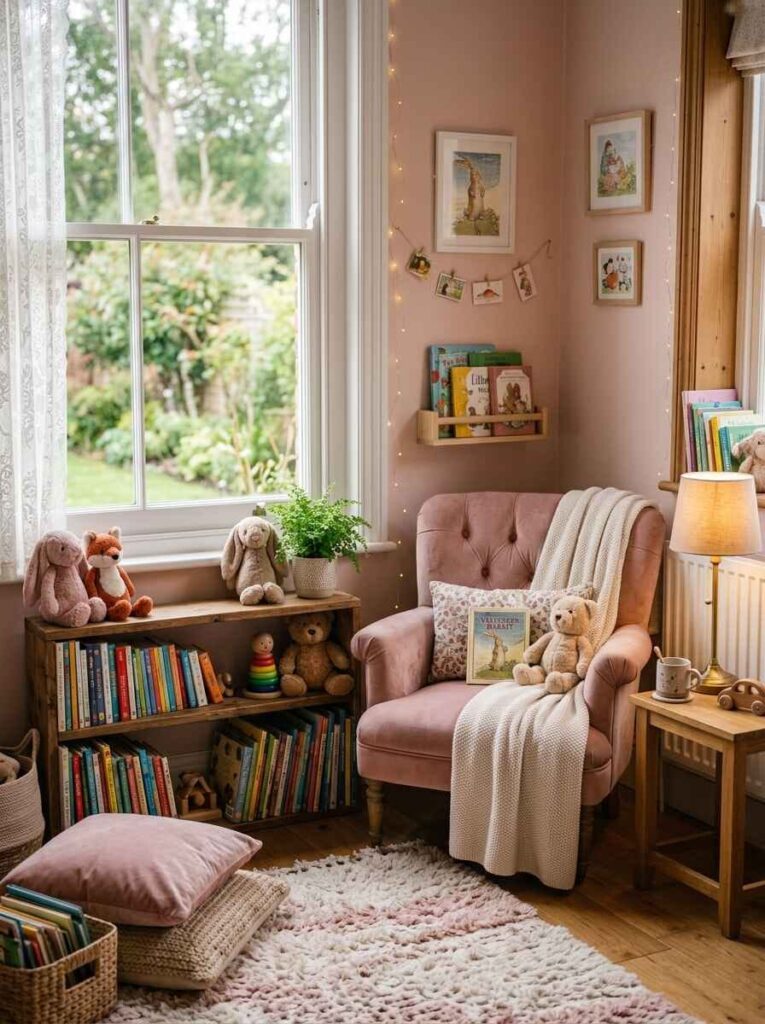
Setting up a dedicated reading nook is an inviting way to encourage independent reading habits. An unused corner beside a window or wardrobe can quickly become a quiet reading retreat with just a few basic pieces.
- Comfortable Seating: Place a low armchair, a beanbag, or a plush floor cushion layered with a washable throw blanket in the corner.
- Front-Facing Shelves: Install low picture ledges where book covers face outward. When children can clearly see the illustrated covers, they can find and grab their favorite stories without help.
4. Add a Dedicated Play Area
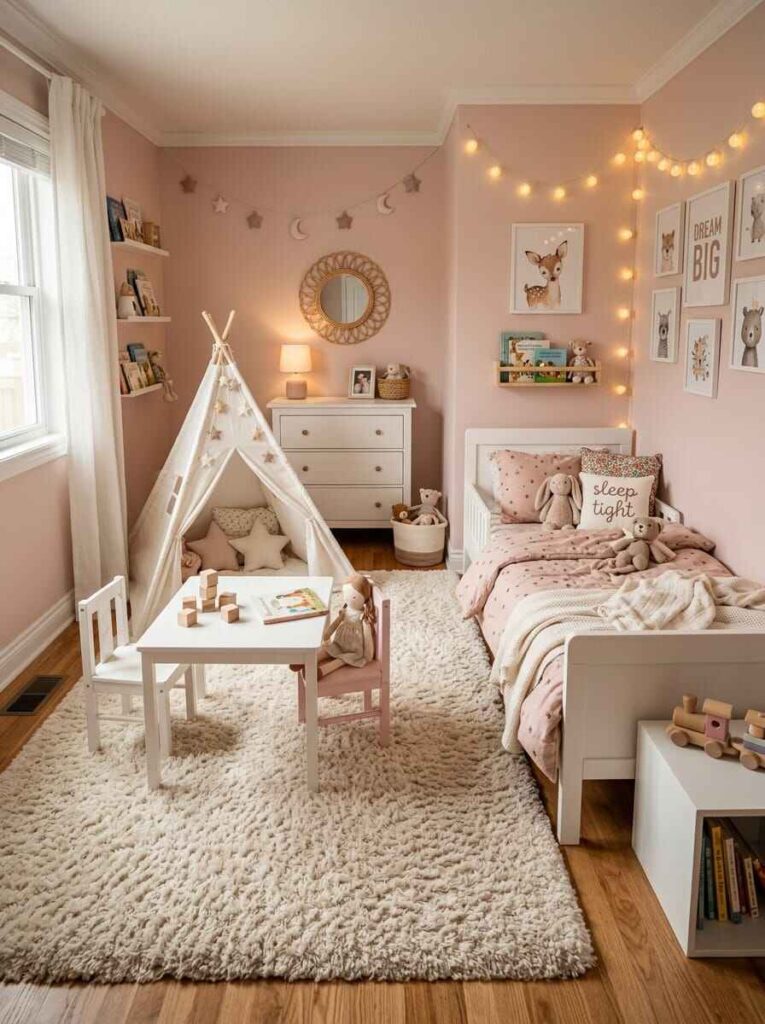
Creating a clear play zone helps keep toys contained in one area, leaving the bed space calm for sleep. Even a small corner of the room can work well as an activity hub.
Define the play zone with a durable floor mat or a flat-weave area rug. Adding a child-sized activity table gives them a flat surface for drawing, building blocks, and puzzles. Keeping favorite toys in low, open bins nearby makes tidying up straightforward when playtime is over.
5. Use Wall Shelves for Storage
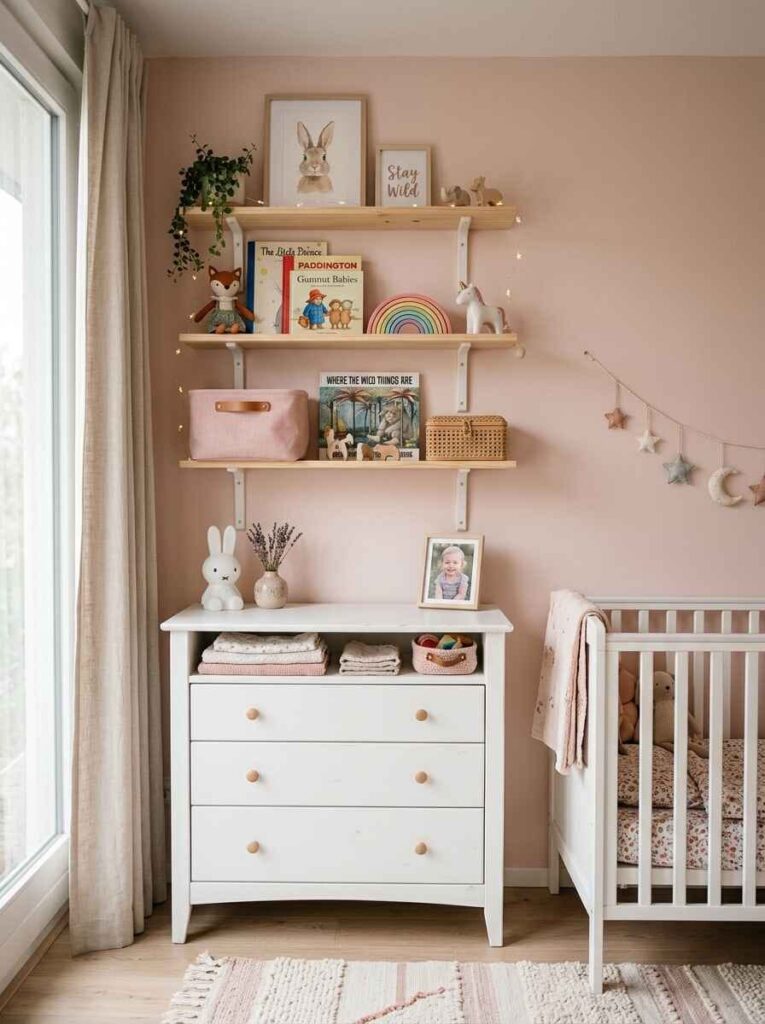
Using vertical wall space helps keep floor areas open for active play. Floating wall shelves and display ledges turn bare walls into practical storage for books, small toys, framed prints, and nightlights.
- Shelf Height: Place lower shelves at your child’s height so they can reach everyday items on their own. Higher shelves work well for keepsakes, piggy banks, or decorative decor.
- Secure Mounting: Always anchor wall-mounted shelves directly into studs or use sturdy wall anchors to keep everything safely in place.
6. Make a Small Kids Room Feel Bigger
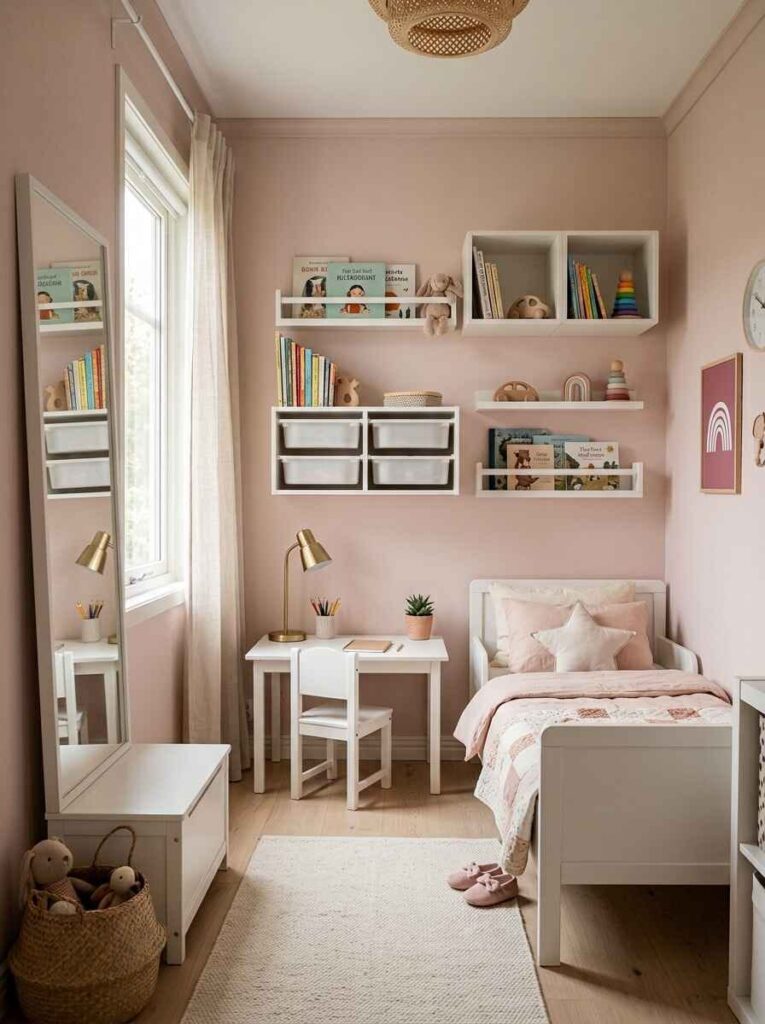
Decorating a smaller bedroom is all about choosing furniture with the right proportions. Heavy, oversized dressers and bulky bed frames can make a compact room feel tight and crowded.
Choosing furniture with raised legs lets light flow underneath, which visually opens up the floor. Placing the bed against a wall frees up central floor space, while hanging window curtains close to the ceiling draws the eye upward to give the impression of taller walls.
7. Create a Kids’ Art Display
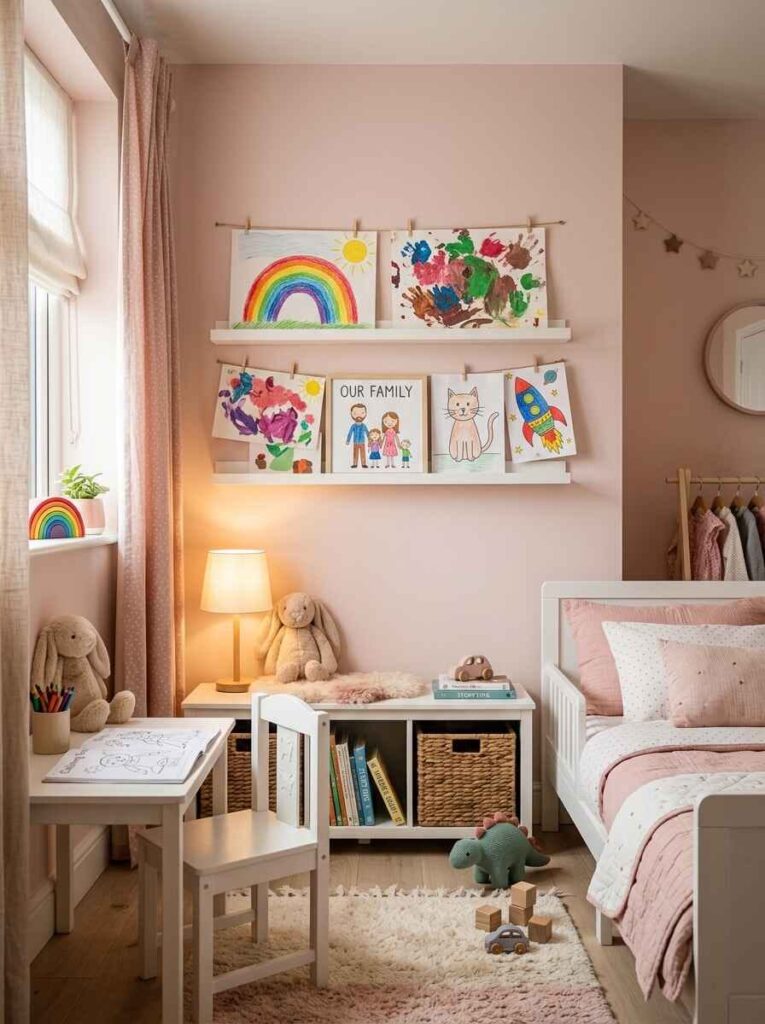
Children love seeing their drawings and school projects on display, but taping loose paper directly to walls can look disorganized. A dedicated art gallery gives their work a spotlight while keeping the room neat.
- Display Options: Hang slim display ledges, use a wire cable with wooden clips, or frame a large cork bulletin board on the wall.
- Simple Rotation: Using clips or open ledges makes it easy to rotate in new paintings and crafts each week without damaging the wall surface.
8. Decorate Around a Favorite Theme
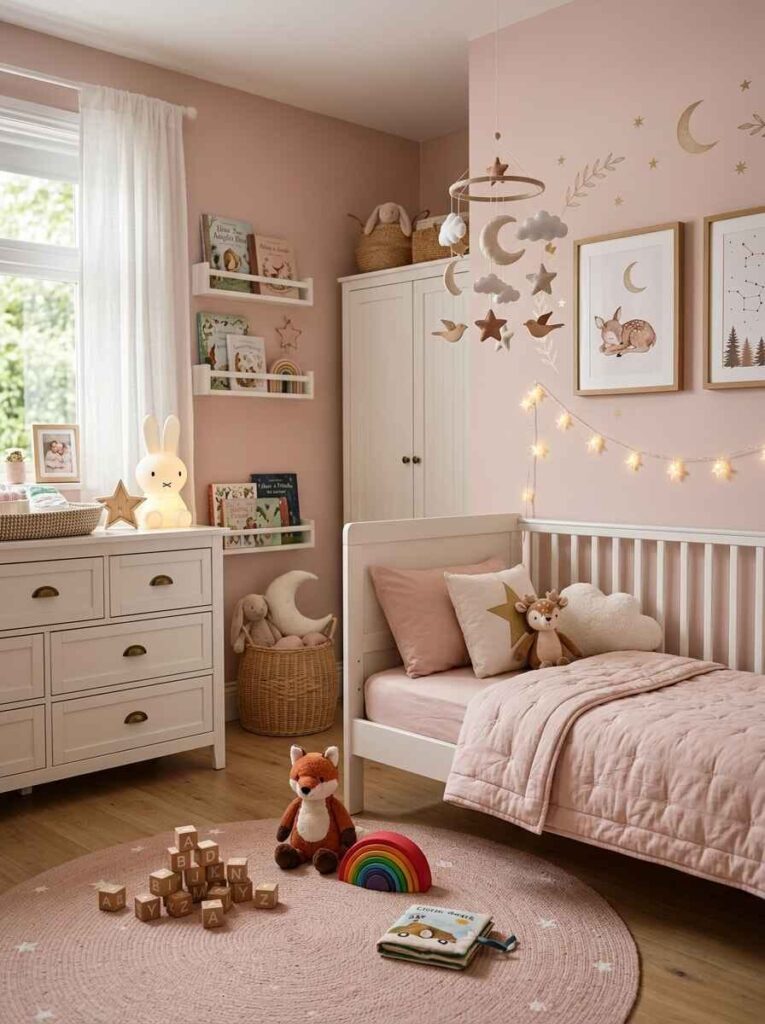
Whether your child is into space, animals, nature, or ocean life, decorating around a theme makes the space exciting. However, children’s interests change quickly as they grow, so flexibility is key.
A practical approach is keeping large furniture pieces—like the bed, dresser, and wardrobe—simple and neutral. Bring the theme in through easily swappable accents like wall decals, star garlands, patterned bed sheets, and themed throw pillows that can be updated down the road without a full room makeover.
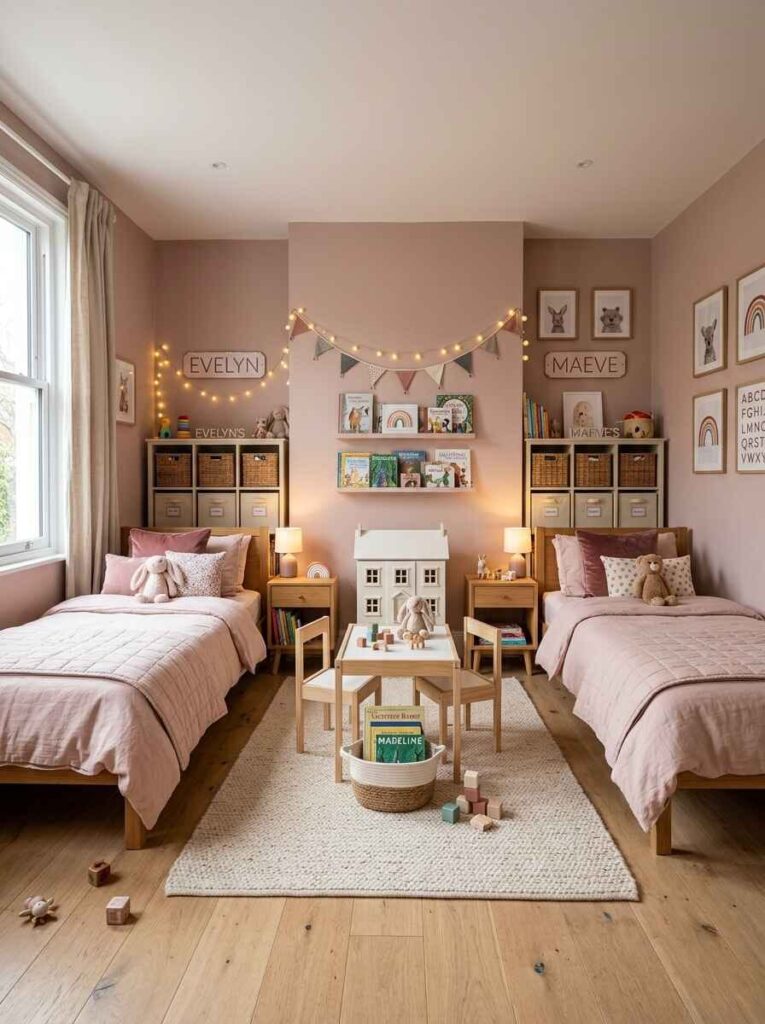
Designing a shared bedroom for siblings involves creating personal identity within a unified space. Symmetrical layouts with twin beds placed side-by-side or arranged in an L-shape along the walls help the room feel organized.
- Personal Zones: Give each child their own bedside lamp, individual wall art, and a separate storage drawer or bin for their personal items.
- Cohesive Styling: Using matching bed frames with coordinating bed linens allows each child’s personality to show while keeping the room looking tidy.
10. Add a Cozy Area Rug
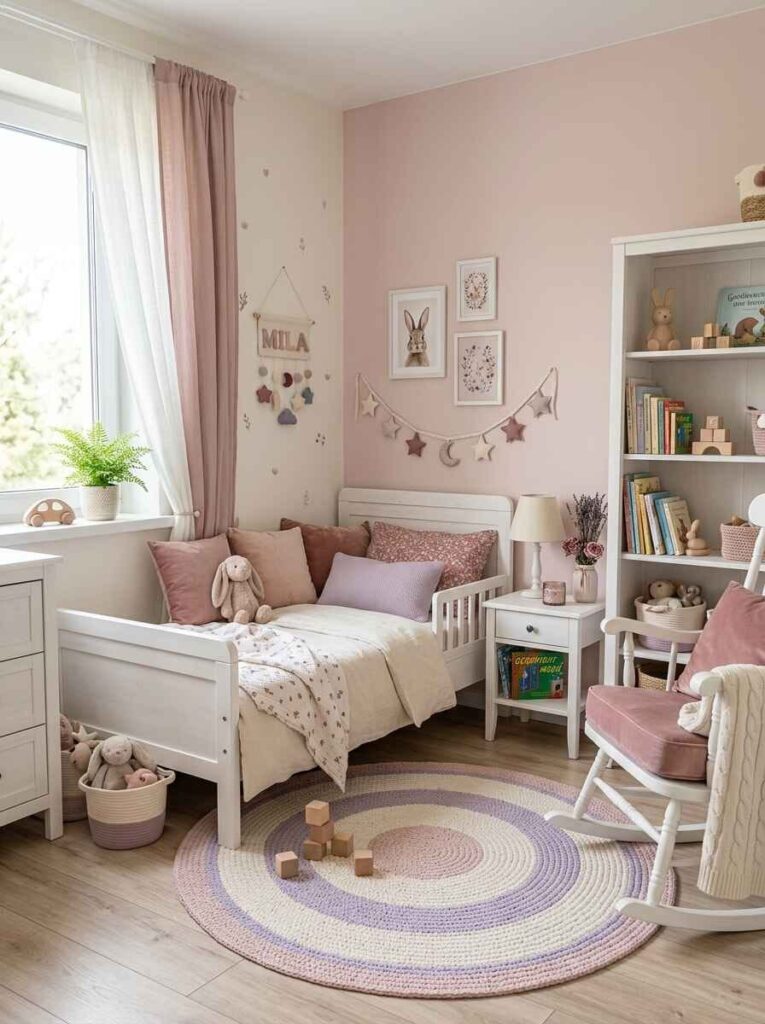
Hardwood, laminate, and tile floors can feel chilly and hard during playtime. An area rug brings warmth underfoot, softens the sound of dropped toys, and provides a comfortable surface for floor activities.
Choose a low-pile or flat-weave rug that is easy to vacuum and spot-clean. For practical sizing and material guidance across different rooms, explore our guide on 11 Dining Room Rugs to Make Your Space Feel Cozy & Stylish
. Make sure to place a non-slip rug pad underneath to keep the rug firmly in place and ensure it clears all door swings.
11. Create a Homework Corner
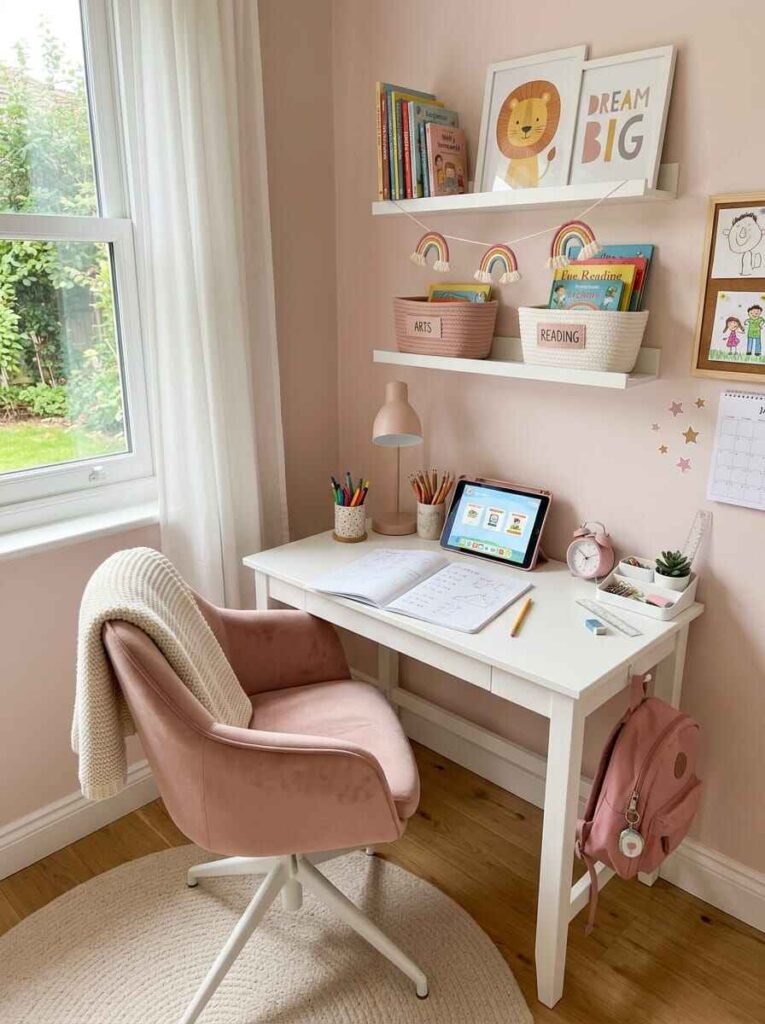
As kids reach school age, having a quiet, dedicated spot for homework, drawing, and crafting helps build good study routines. Placing a compact desk near a window brings in natural light and separates schoolwork from play zones.
- Desk Setup: Pick a simple desk paired with a supportive chair scaled to your child’s height.
- Organization: Keep the desktop clear by using pencil cups and small organizer trays. If you are also setting up your own work nook at home, you can borrow helpful styling ideas from our guide on 17 Home Office Ideas for Women.
12. Use Under-Bed Storage
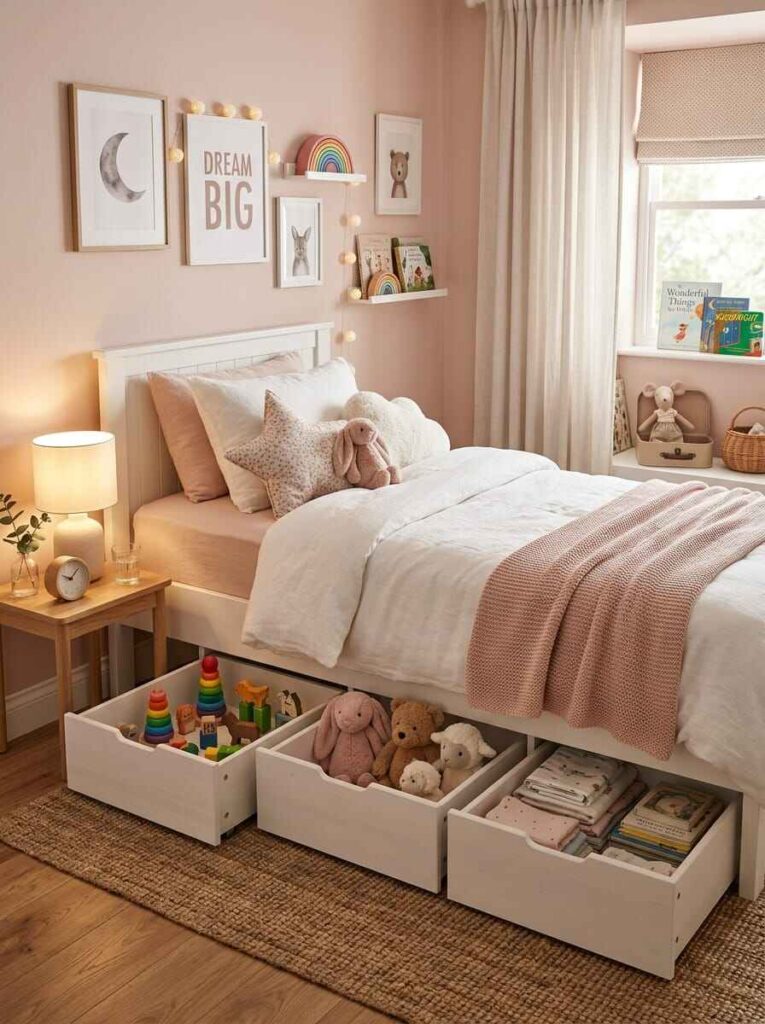
The space under the bed is one of the most useful storage areas in a bedroom. Using this space keeps extra blankets, off-season clothes, and less frequently used toys out of the way.
Choose rolling wooden drawers that match the bed frame, or use shallow fabric storage boxes with zippered tops to keep dust out. Keeping everyday toys in easy-to-reach bins and reserving under-bed bins for occasional items keeps cleanup routines manageable.
13. Add Fun Wall Decor
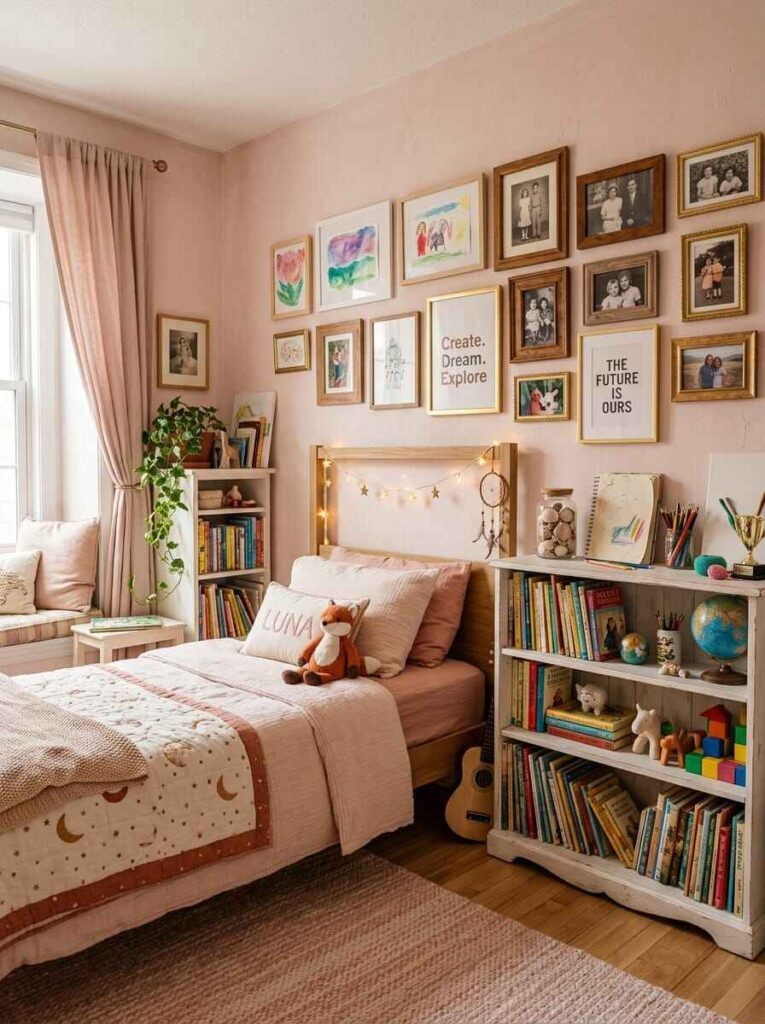
Wall decor adds character to the room without taking up any floor space. A mix of framed prints, growth charts, fabric banners, and illustrative maps makes the walls engaging and warm.
Using consistent frames—such as light wood, white, or matte black—keeps the wall arrangement looking cohesive. Mixing typography prints with animal art or nature sketches creates a cheerful look that feels balanced rather than busy.
14. Create a Nature-Inspired Kids Room
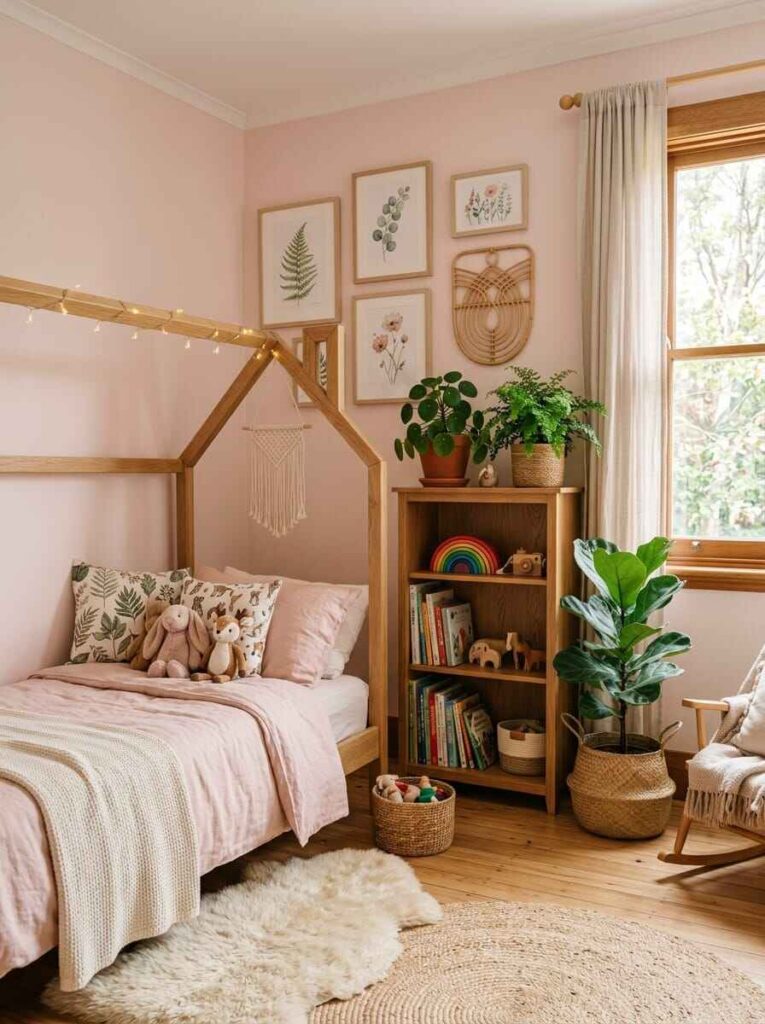
A nature-inspired theme brings an earthy, calming feel to a child’s bedroom. Soft forest greens, warm ochres, muted terracotta, and light natural woods form a relaxing backdrop that works well across different age groups.
Incorporate organic textures like woven seagrass baskets, linen bedding, and jute accents. Adding botanical prints, animal illustrations, or a child-safe plant on a high shelf introduces an outdoor feel inside.
15. Use Open Baskets for Easy Toy Storage
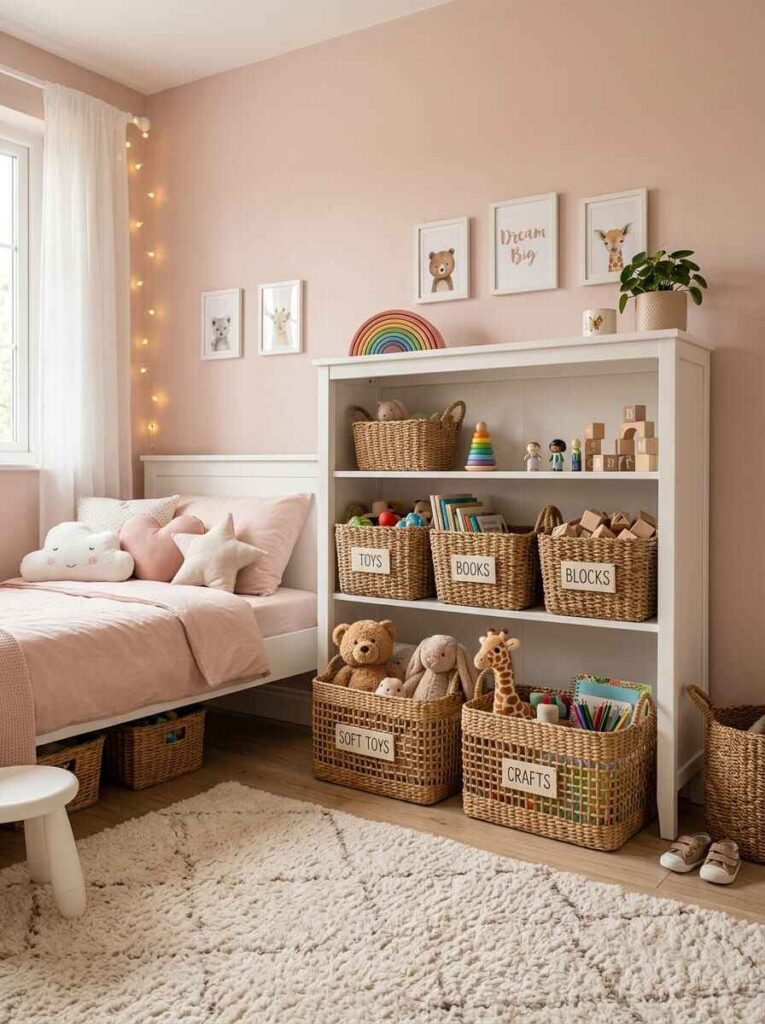
Complicated storage bins with heavy lids or tight latches can make cleanup frustrating for young kids. Open woven baskets and soft fabric bins make putting toys away quick and intuitive.
- Broad Categories: Group items into general categories like building sets, soft toys, cars, and craft supplies.
- Visual Labels: Label bins with picture icons for younger children or simple words for older kids, placing the most-used bins on low, accessible shelves.
16. Add a Cozy Canopy or Play Tent
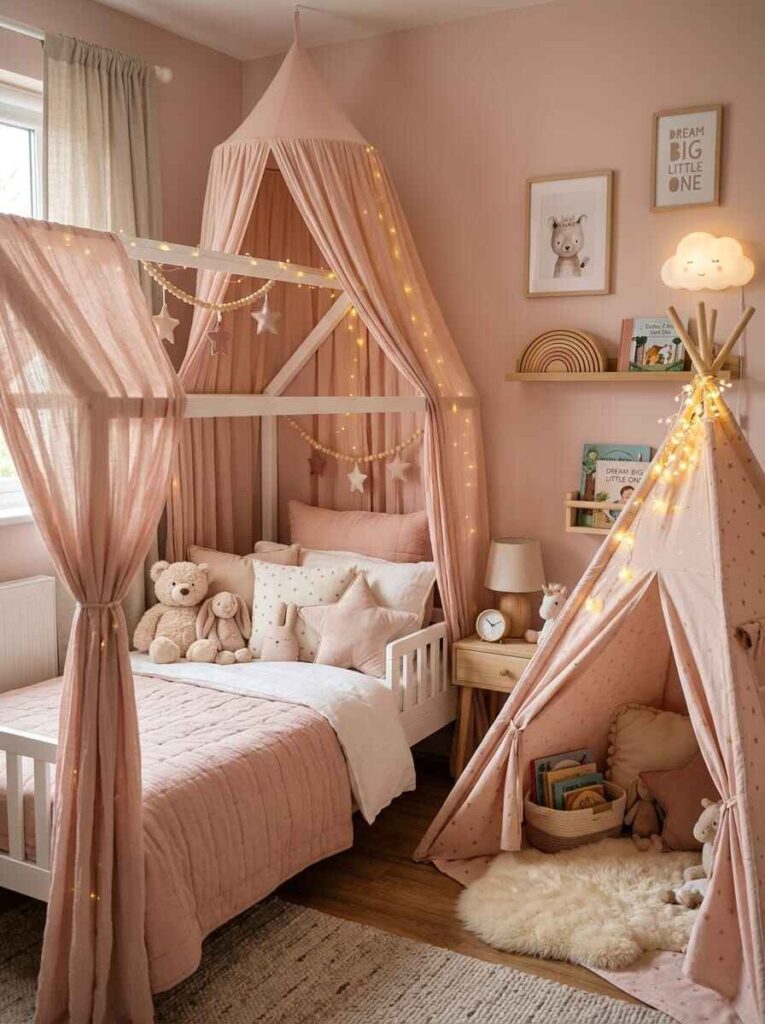
Children naturally enjoy small, cozy hideaways for quiet play, imaginative games, or relaxing with a picture book. A canvas play tent or a soft fabric bed canopy brings a welcoming sense of comfort to the room.
Place a teepee in a corner with a soft floor mat, fairy lights, and accent pillows. If floor space is tight, draping a lightweight fabric canopy directly over the head of the bed creates a similar cozy nook without using extra floor area.
17. Personalize the Room
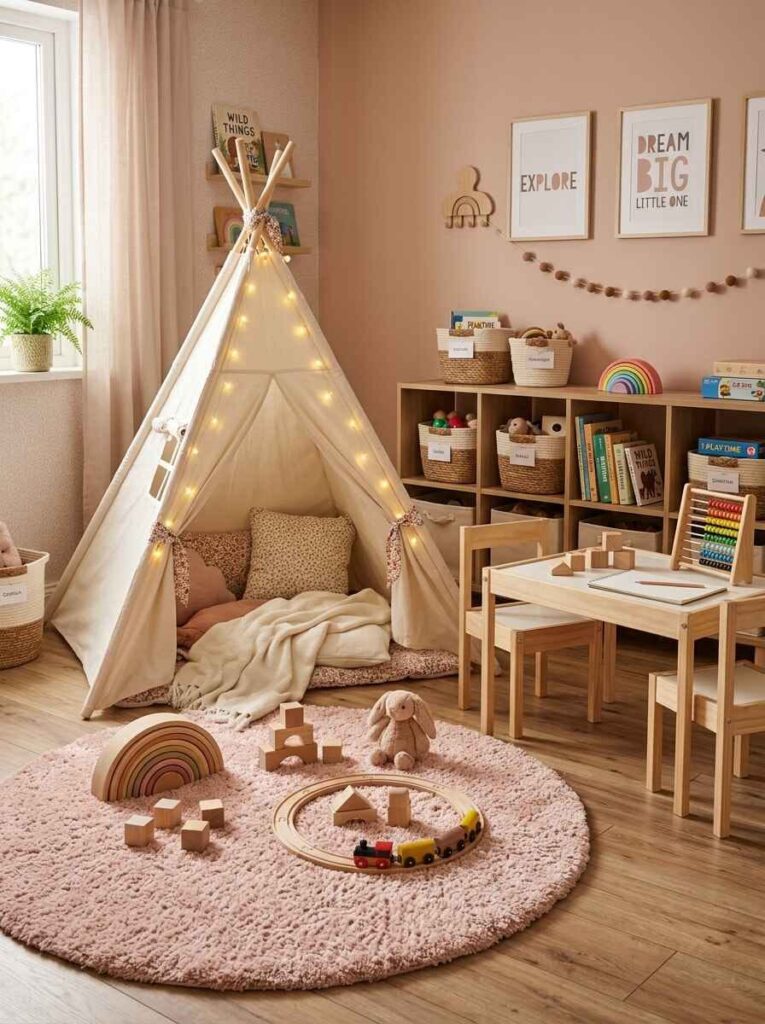
While design principles help with layout and function, the best rooms reflect the personality of the child living in them. Involving your child in simple decor decisions gives them a sense of ownership over their room.
Let them choose an accent pillow in their favorite color, display their handmade crafts on a shelf, or frame postcards from family trips. Personal details make the space feel unique, lived-in, and genuinely comfortable.
Common Kids Room Decorating Mistakes to Avoid
- Choosing Oversized Furniture: Large, heavy furniture pieces eat up valuable floor area, leaving little space for movement and play. Prioritize furniture that fits the room’s actual scale.
- Displaying Too Many Toys at Once: Having every toy out simultaneously can cause visual clutter and overwhelm kids during playtime. Keep a core selection accessible and rotate extra toys from a closet every few weeks.
- Using Inaccessible Storage: High shelves and hard-to-open bins prevent children from putting away their own belongings. Keep daily toy bins on low shelves within easy reach.
- Committing to Overly Permanent Themes: Painting elaborate murals or buying cartoon-specific beds can date quickly as tastes evolve. Use neutral furniture as a base and bring in themes through easily swappable decor.
- Overlooking Soft, Layered Lighting: Relying only on a bright ceiling fixture can make evenings feel clinical. Add soft bedside table lamps, dimmable nightlights, or string lights for a calmer bedtime routine.
- Forgetting to Anchor Heavy Furniture: Young kids can pull on drawers or climb shelves. Always anchor tall dressers, wardrobes, and bookcases securely to wall studs for safety.
Frequently Asked Questions
How can I make my child’s room look nice?
Keep large furniture neutral and use a simple two- or three-color palette for bedding and accessories. Open baskets, framed artwork, and uncluttered surfaces keep the space looking tidy and intentional.
What colors are best for a kids room?
Soft pastels, warm neutrals, muted greens, and gentle blues work well because they create a calm sleeping environment while providing a flexible background for colorful toys and art.
How do I decorate a small kids room?
Use vertical wall space with floating shelves, choose furniture with raised legs to keep the floor visible, and use rolling under-bed bins to store off-season items out of sight.
How can I organize toys in a kids room?
Use open, low-level bins on accessible shelving units. Group toys into broad categories, use simple labels, and rotate excess toys occasionally so fewer items are out at once.
How can I make a kids room feel cozy?
Layer soft textures with a low-pile area rug, knit throw blankets, and plush floor cushions. Warm 2700K lighting, soft nightlights, and a dedicated reading corner also add welcoming comfort.
Create a balanced layout with matching bed frames, and give each child their own bedside light, dedicated storage bin, and personalized wall print to define their individual space.
Conclusion
Designing a functional, inviting children’s room is all about balancing comfort, smart storage, and personal style. You do not need an endless budget or a massive floor plan to build a room your child will love.
By selecting versatile furniture, accessible toy storage, gentle layered lighting, and personal decor touches, you can bring these kids room ideas to life in a way that adapts naturally as your family grows.
Start with the practical essentials, involve your child in the fun styling choices, and enjoy creating a cozy space they look forward to spending time in every day.
“Urooj Fatima is the founder and lead stylist of Blush Heaven, a digital sanctuary dedicated to budget-friendly home decor and small apartment styling. Trusted by a Pinterest audience of millions each month, she specializes in creating high-end aesthetics for small spaces. Urooj is the creator of the Small Apartment Glow-Up Guide, helping women worldwide transform their rooms into cozy, blush-toned havens.”
1 thought on “17 Kids Room Ideas That Feel Fun, Cozy & Stylish”