Introduction:
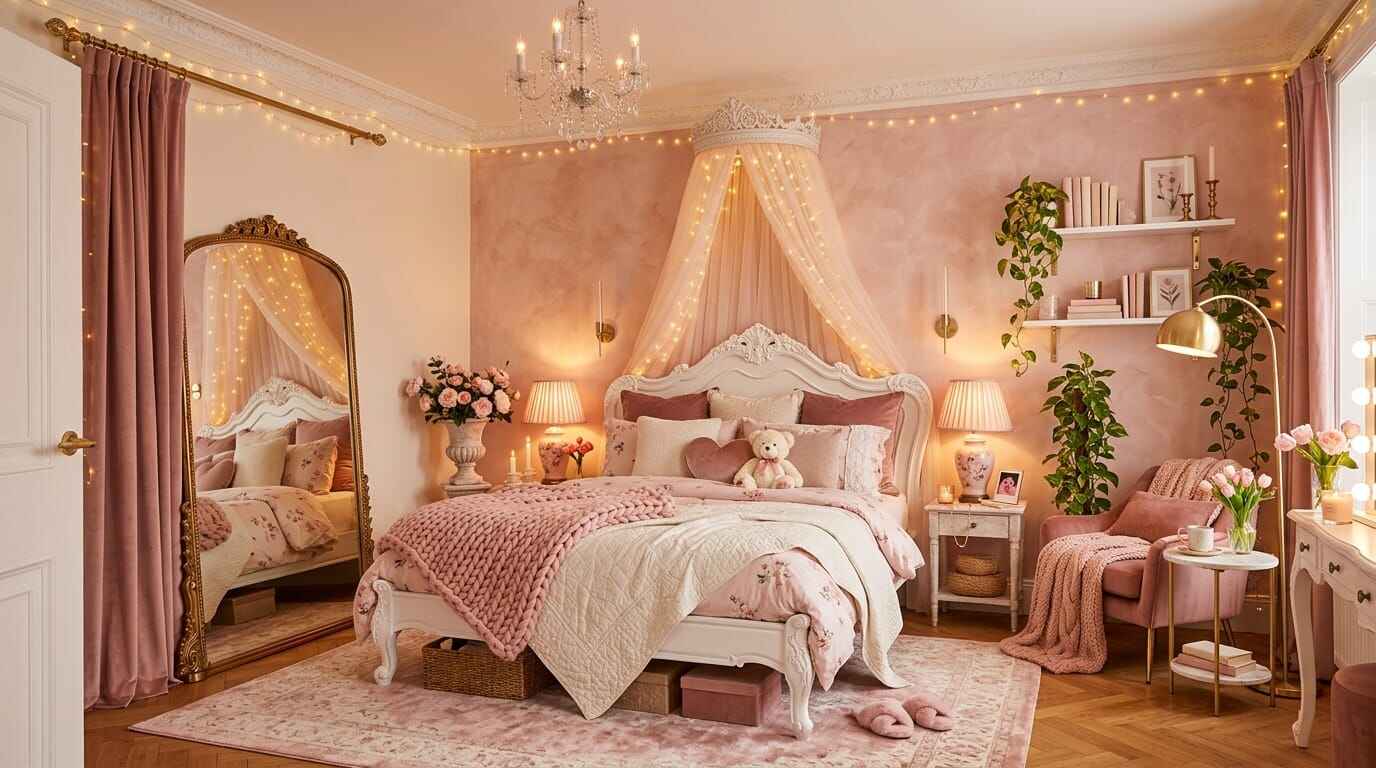
Small bedrooms often feel cramped — not because they’re genuinely too small, but because they’re overcrowded or poorly planned. A tight floor plan doesn’t limit your options as much as you might think. A few thoughtful choices around color, lighting, and furniture scale can completely change how a room feels to live in.
You don’t need a renovation or a big budget. You need to shift focus from square footage to how you’re using the space you already have.
Why Decorating a Small Bedroom Matters
In a small room, every design decision carries more weight. There’s no excess space to absorb visual clutter or oversized furniture — which actually forces better choices.
Getting the layout right means the room stays calmer and easier to maintain. Less visual noise genuinely helps your brain switch off at the end of the day, which is exactly what a bedroom is supposed to do. And when the proportions feel right, even a compact room stops feeling like a compromise and starts feeling like a considered, comfortable space.
15 Small Bedroom Decor Ideas
1. Choose Light Colors to Open Up the Room
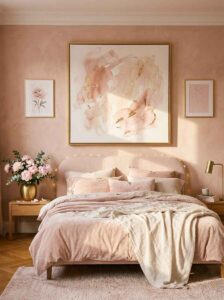
Paint color affects how your walls interact with light — and in a small room, that relationship matters.
Dark, saturated tones absorb light and pull the walls inward. Soft, reflective shades like warm white, cream, beige, or pale blush push light around the room instead, blurring the boundaries between the walls and making the ceiling feel higher than it is.
Designer Tip If you love moody, rich color, don’t avoid it entirely — just contain it. Paint one accent wall behind your headboard in a deeper tone and keep the other three walls a clean ivory or white. You get the contrast without sacrificing brightness.
2. Use Layered Bedding Instead of Extra Furniture
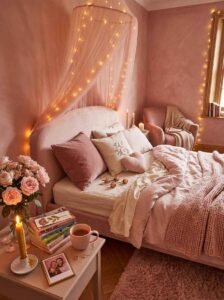
When floor space is limited, your bed needs to do most of the visual work. Rather than relying on extra furniture to style the room, build interest through your bedding layers instead.
Start with a neutral duvet cover, then add a waffle-weave blanket, a chunky knit throw at the foot, and a mix of sleeping and decorative pillows in varied textures — velvet, linen, cotton. The richness comes from the combination of materials, not the quantity of pieces.
This approach creates a layered, considered look without taking up a single inch of floor space. It also means the bed becomes the natural focal point of the room, which is exactly where you want the eye to land.
You will like to read: 14 Soft Pink Bedroom Aesthetic Ideas for a Cozy & Elegant Space
3. Add Warm Ambient Lighting
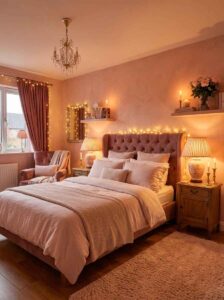
A single overhead ceiling light is one of the most common reasons a small bedroom feels less comfortable than it should. It floods the room with flat, even brightness that flattens textures and makes the space feel functional rather than restful.
Replace cool white bulbs with warm white options at 2700K, and add light sources at different heights — bedside lamps, wall sconces above the headboard, or soft fairy lights tucked along the back edge of a shelf. This spreads a gentler glow around the room, softens the corners, and creates the kind of atmosphere that actually makes you want to be in there.
Practical Note You don’t need to replace all your fixtures at once. Swapping the bulbs in your existing lamps to 2700K warm white makes a noticeable difference the same evening you do it.
You will like to read: 15 Cozy Bedroom Lighting Ideas to Create a Warm & Relaxing Space
4. Hang Curtains Higher Than the Window
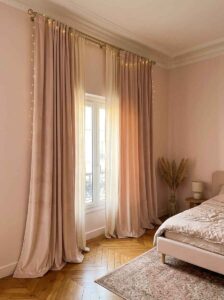
Where you position your curtain rod changes how tall your room feels — more than almost any other single detail.
Hanging the rod directly above the window frame cuts the wall in half visually and makes low ceilings feel even lower. Mounting it 4 to 6 inches below the ceiling line, and using floor-length curtains that reach all the way down, draws the eye vertically and adds the impression of height.
Choose lightweight linen in white or cream. Heavy, dark curtains in a small room tend to absorb too much light and make the space feel smaller during the day.
5. Decorate with One Large Mirror
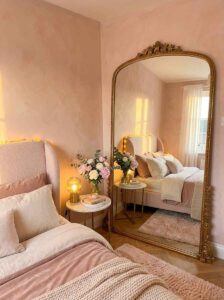
A single large mirror does more for a small bedroom than a collection of smaller ones. It bounces light across the room, adds depth, and creates the visual impression of more space — without touching the floor plan at all.
Position it across from or beside your primary window so it catches incoming daylight and redirects it into darker corners. A large arched mirror leaning against the wall works well if you’d rather not drill anything.
What to Avoid Placing a mirror directly opposite the head of the bed can feel disorienting in the middle of the night. Angle it slightly toward the door or wardrobe instead.
6. Install Floating Shelves for Vertical Storage
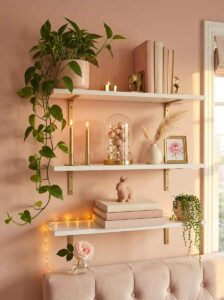
Floor space is limited. Wall space usually isn’t. Floating shelves let you add storage and styling without narrowing any walkways.
Mount two or three shelves above the bed or beside a window. Style them with a trailing plant, a small stack of books, a candle, and a framed print — and leave some gaps. Empty space on a shelf reads as intentional curation, not forgetfulness.
Avoid packing shelves from edge to edge. A shelf that’s too full competes visually with the room rather than complementing it.
7. Create a Reading Corner in an Empty Corner
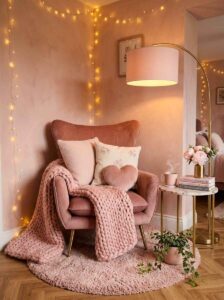
An empty corner doesn’t make a room feel larger — it just makes it feel unfinished. Giving that corner a purpose actually makes the whole room feel more considered and multi-functional.
A compact accent chair in boucle or velvet, a slim arched floor lamp, and a small side table are all you need. Keep the chair footprint under 30 inches wide so it doesn’t crowd the room. A small round rug underneath grounds the setup and defines the zone without fencing it off.
You will like to read: 15 Bedroom Reading Nook Ideas for a Cozy Reading Corner You’ll Love
8. Choose Furniture with Visible Legs
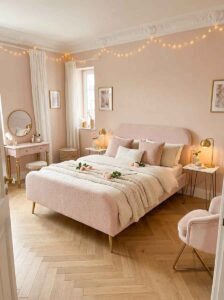
Furniture that sits flat on the floor creates a visual barrier that stops the eye from moving across the room. Pieces with raised legs — even just a few inches off the ground — let you see the floor running continuously underneath, which makes the room feel more open.
This applies to bed frames, nightstands, accent chairs, and dressers. It’s a small detail but one of the most consistently effective tricks in small-space design.
Sizing Note When buying a bed frame with legs, confirm the clearance underneath is at least 7 inches if you plan to use under-bed storage boxes.
9. Add an Area Rug to Define the Space
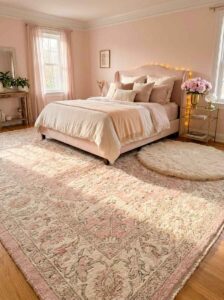
A bed floating on bare floor can look unanchored and oddly disconnected from the rest of the room. A rug brings the whole layout together.
Choose one large enough to extend at least 24 inches past the sides and foot of the mattress so your feet land on it when you get up. A rug that only sits partially under the bed — or just beside it — tends to make the floor plan look fragmented.
Neutral cream, warm beige, or a faded vintage pattern in soft pink or terracotta all work well over most floor types.
10. Decorate Your Nightstand Thoughtfully
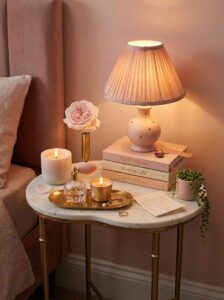
Your nightstand is the last thing you see before you sleep and the first thing you see when you wake up. If it’s buried under phone chargers, receipts, and miscellaneous items, it sets a chaotic tone for the whole room.
Keep it simple: a lamp, a candle on a small tray, and a book. That’s genuinely enough. If you need to keep more items close by, a nightstand with a small drawer keeps them accessible without putting them on display.
The Rule of Three Group accessories at varying heights — a tall lamp, a medium candle, a low dish — rather than lining everything up at the same level. The slight variation in height makes even a minimal surface look styled.
11. Use Multi-Functional Furniture
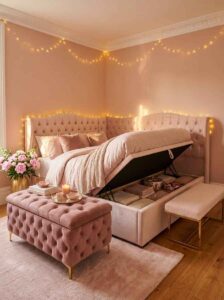
Every piece of furniture in a small bedroom should justify its floor space. If something only serves one purpose, it’s worth asking whether a dual-function alternative would work better.
A storage bed with built-in drawers or a hydraulic lift base gives you a significant amount of hidden storage without adding anything to the footprint. A storage ottoman at the foot of the bed acts as a seat, a footrest, and a place to stash extra blankets — three functions in one piece.
These choices aren’t about compromise. A well-chosen storage bed genuinely looks just as good as a standard frame, and the extra storage eliminates the need for an additional dresser in rooms where space is tight.
12. Bring in Soft Greenery
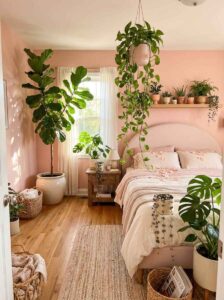
A room without any living elements can feel slightly static, regardless of how well it’s styled. A plant or two adds organic texture, a bit of color contrast, and a sense of life that accessories can’t replicate.
In a small bedroom, placement matters. A tall snake plant in a corner takes up almost no floor space while adding height. A trailing pothos on a floating shelf brings the eye upward. If floor space is genuinely too tight for a pot, a small stem in a bud vase on the nightstand works just as well.
Low-Maintenance Note Snake plants, ZZ plants, and pothos all handle low-light bedrooms well and need watering only every week or two — practical choices if you don’t want plant care to become a chore.
13. Keep Wall Decor Simple
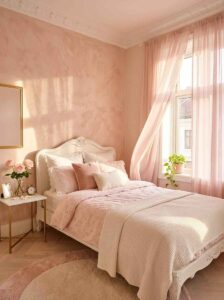
More wall art doesn’t mean a more styled room. In a small bedroom, a wall covered in frames of different sizes and styles creates visual noise that makes the space feel busier than it is.
One or two larger pieces in simple light wood or thin gold frames tend to work better than a full gallery wall. Leave open wall space around the artwork so it has room to breathe. The negative space between pieces is part of the composition.
Placement Tip Hang artwork so the center of the frame sits at roughly eye level — around 57 to 60 inches from the floor. Art hung too high looks disconnected from the furniture below it.
14. Hide Clutter with Decorative Storage
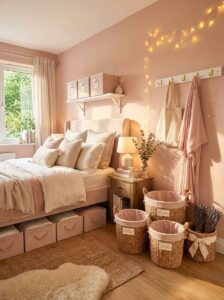
Every bedroom has things that need to be nearby but don’t need to be on display — chargers, extra socks, journals, hair tools. Left out on surfaces, they gradually undo the rest of your styling work.
Woven wicker baskets, fabric storage bins with soft linings, and lidded boxes all solve this without looking utilitarian. Tuck a couple under the bed frame or stack them in a corner. Labeled fabric containers inside a wardrobe or on a shelf keep daily essentials accessible and out of sight at the same time.
15. Finish with Personal Decorative Touches
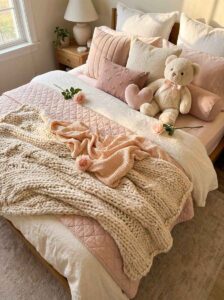
A room styled purely for aesthetics can feel like a showroom — impressive but not particularly welcoming. The details that make a bedroom feel like yours are usually the smallest ones.
A framed photo on the desk. A ceramic vase from a local market. A scented candle you actually burn. These things cost almost nothing, but they shift the energy of a room from styled to inhabited.
Keep them minimal and meaningful rather than filling shelves with generic decor to make surfaces look complete. A few genuinely personal objects carry more warmth than a shelf full of purchased accessories ever will.
Best Color Palettes for Small Bedrooms
| Base Wall Color | Accent Color | Furniture Tone | Why It Works |
|---|---|---|---|
| Soft White | Ivory / Cream | Natural Light Oak | Reflects maximum daylight; clean and open |
| Beige | Warm Taupe | Textured Linen | Monochromatic warmth without feeling flat |
| Blush Pink | Clean White | Brushed Gold / Brass | Soft and romantic without feeling heavy |
| Sage Green | Pure White | Bleached Wood | Calming and organic; brings an outdoor freshness inside |
| Warm Taupe | Soft Cream | Warm Walnut | Sophisticated and layered; works well in low-light rooms |
Common Small Bedroom Decorating Mistakes
Too much furniture: Trying to fit a king bed, two large nightstands, a full dresser, and a desk into a small room blocks every walkway. Prioritize the pieces you actually need and leave breathing room between them.
Dark paint on all four walls: One deep accent wall reads as intentional. All four walls painted dark in a small room reads as dim. Keep three walls light and save the drama for the wall behind the bed.
Undersized rugs: A small rug beside the bed looks unanchored. Size up so the rug extends past the sides and foot of the mattress — it makes the whole floor plan feel more cohesive.
Cool overhead lighting: Blue-toned bulbs create an atmosphere closer to a workspace than a bedroom. Warm white at 2700K throughout the room makes a significant difference to how restful the space feels.
Blocking windows: Positioning tall furniture or a bulky headboard in front of a window cuts off natural light. Keep the area around window glass as clear as possible.
FAQs
How do you decorate a very small bedroom? Work vertically rather than horizontally. Mount floating shelves above furniture instead of adding more floor pieces, choose a bed with built-in storage to reduce the need for a separate dresser, and use a large mirror to add depth. Keeping surfaces clear and light colors on the walls does most of the heavy lifting.
What colors make a small bedroom look bigger? Warm whites, soft creams, light beiges, pale blush, and muted sage all reflect light well and make a room feel more open. The goal is choosing tones that blur the boundary between walls rather than defining it sharply.
How can I make my bedroom feel cozy? Layered bedding, warm lighting at 2700K, and a few soft textures — a knit throw, a velvet pillow, a plush rug — create the kind of warmth that photographs and expensive furniture can’t. Start with the lighting and the bedding before anything else.
How do I decorate a rental bedroom? Focus on changes that don’t touch the walls or floors permanently. A large area rug covers most flooring, full-length curtains hung on tension rods add color and softness, and a leaning mirror gives you the depth effect without drilling. Rich bedding and warm lamps do the rest.
What furniture works best in a small bedroom? Pieces with slim, visible legs, built-in storage, and a small footprint. A storage bed eliminates the need for extra dressers. A narrow nightstand with a lower shelf keeps surfaces clear. A compact accent chair with raised legs adds function without crowding the room.
Conclusion
A small bedroom can feel just as considered and comfortable as a larger one — it just requires more deliberate choices. Light colors, warm lighting, furniture with visible legs, and a few personal details get you most of the way there without spending much.
Pick one or two ideas from this list and start there. Change the bulbs tonight. Clear the nightstand. Size up the rug. Small shifts accumulate quickly, and the room will start to feel different before you’ve touched everything on the list.
“Urooj Fatima is the founder and lead stylist of Blush Heaven, a digital sanctuary dedicated to budget-friendly home decor and small apartment styling. Trusted by a Pinterest audience of millions each month, she specializes in creating high-end aesthetics for small spaces. Urooj is the creator of the Small Apartment Glow-Up Guide, helping women worldwide transform their rooms into cozy, blush-toned havens.”