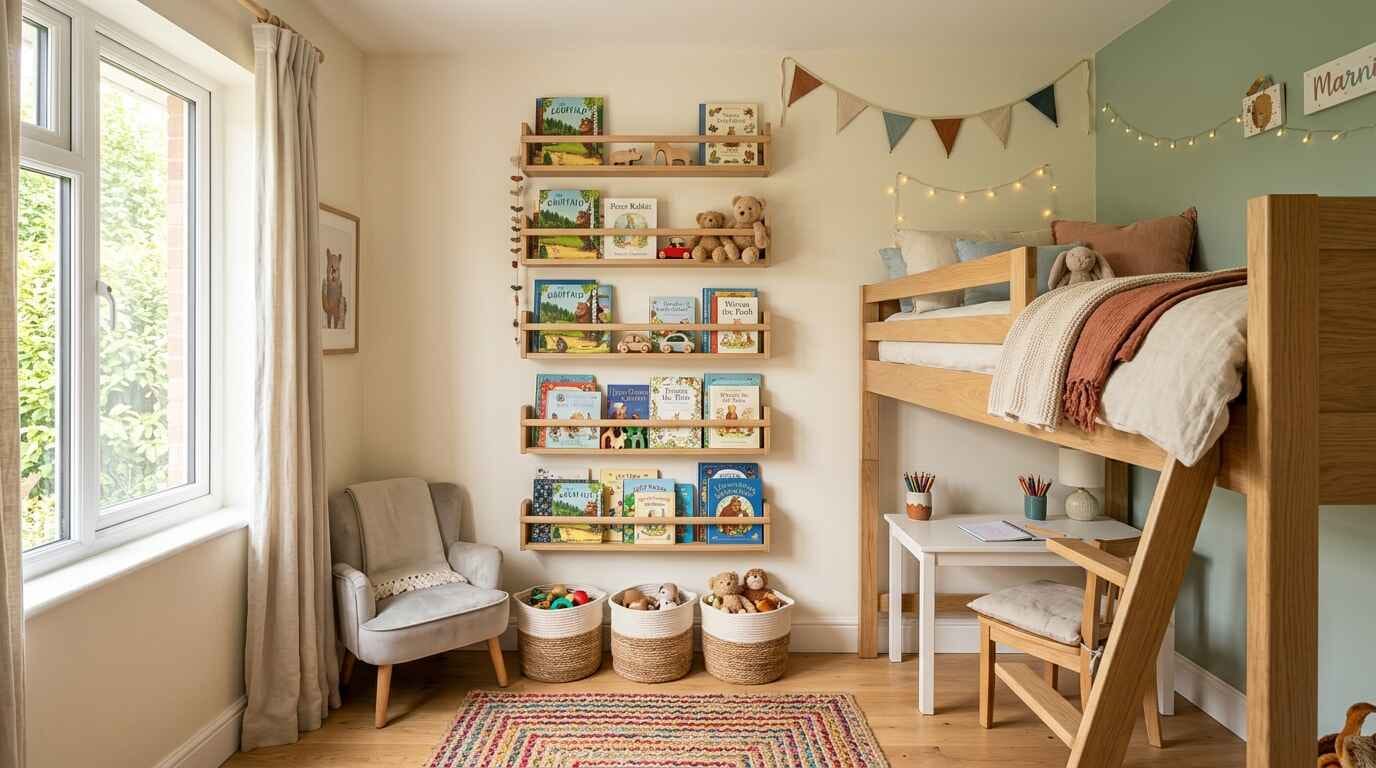
Small children’s rooms can quickly feel crowded when toys, books, clothes, and school supplies compete for limited floor space. But a compact bedroom does not have to feel cramped or boring. With thoughtful layouts, vertical storage, and multifunctional furniture, you can create more room for play while keeping everything organized and easy to reach.
A compact bedroom never needs boring limitations. Thoughtful layouts create wonderful room for play. Clever vertical storage frees up floor boards. Dual-purpose furniture solves tight space problems instantly. If you’re planning a complete children’s bedroom makeover, explore our kids bedroom ideas for more inspiration on layouts, decor, and storage.
I love designing creative children’s spaces. Smart organization gives kids independence every day. Rooms should feel cozy, tidy, and fun. You do not need expensive structural remodels. Strategic layout adjustments make a remarkable difference.
Here are 15 practical small kids room ideas. These practical ideas can help you make better use of every square foot. Let us create a bright, functional bedroom!
15 Small Kids Room Ideas
1. Use Vertical Wall Storage
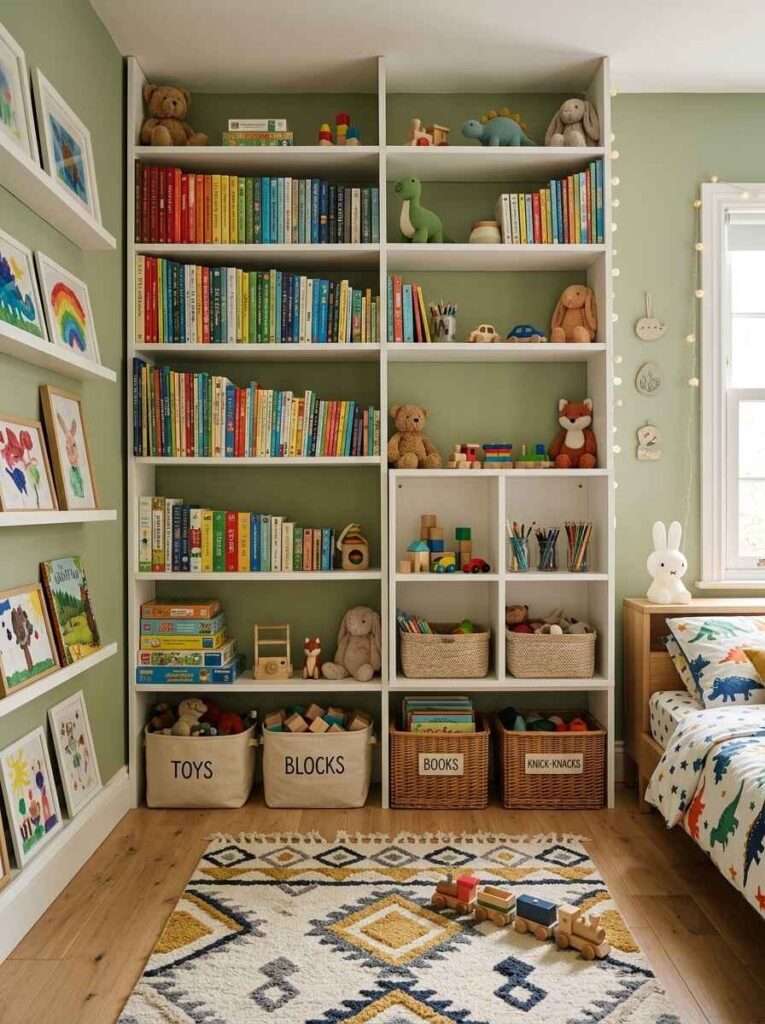
Floor space remains precious in compact bedrooms. Tall storage units draw the eye upward. Here, a floor-to-ceiling white bookcase lines walls. Deep lower cubbies hold heavy canvas totes. Labels mark spots for blocks and books. Open upper shelves display plush stuffed animals. Picture ledges on side walls show art.
Tall bookcases provide substantial storage without taking up much floor space. They clear floor pathways for morning play. I place heavy wooden building blocks low. This lets toddlers reach favorite items safely. Keep decorative items and less frequently used belongings on higher shelves, away from younger children.
- Lower Access: Keep everyday toys on bottom shelves.
- Wall Anchors: Bolt tall bookcases securely to studs.
2. Choose a Loft or Raised Bed
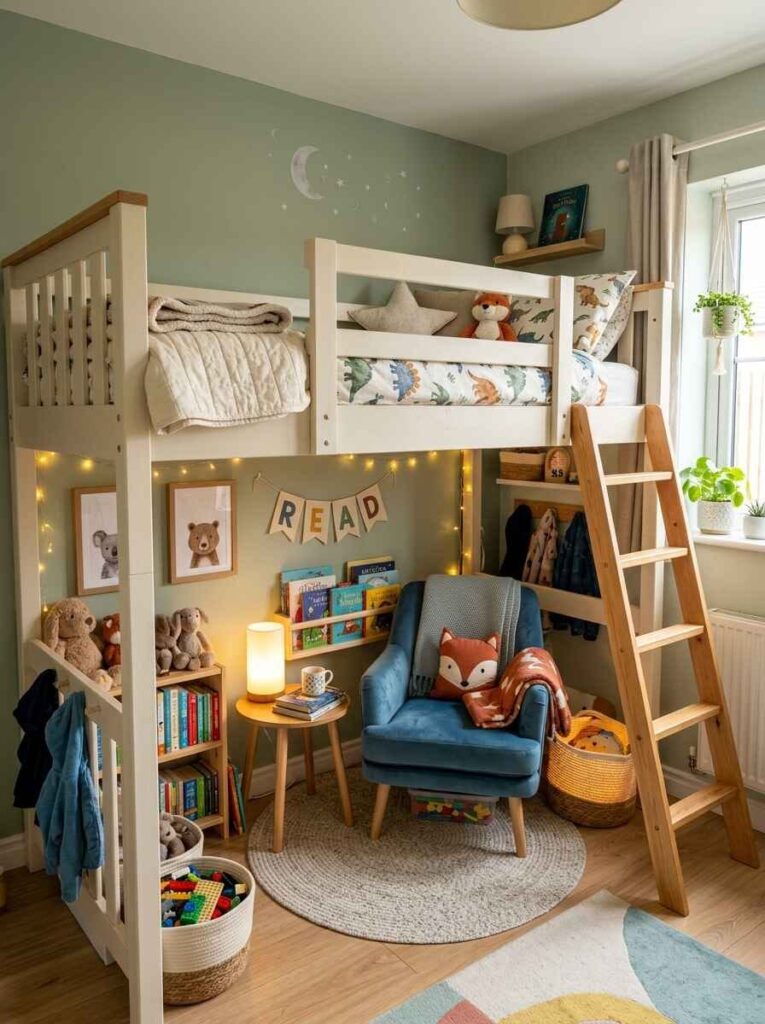
Lifting the mattress doubles your available floor. This solid white loft frame utilizes height. An upper bunk holds cozy patterned bedding. A sturdy wooden ladder offers safe climbing. Underneath, a plush velvet armchair rests comfortably. Floating shelves display bedtime stories within reach. Warm string lights create a magical glow.
Elevated beds create valuable secondary functional zones. Kids love having their private secret hideaway. You can add a homework study desk. Alternatively, tuck a soft reading chair underneath. For younger children, choose a bed designed for their age and follow the manufacturer’s guidance for guardrails, mattress height, and maximum weight.
- Under-Bed Den: Tuck comfy seating under high bunks.
- Safety Rails: Select frames with secure guard rails.
3. Add Storage Under the Bed
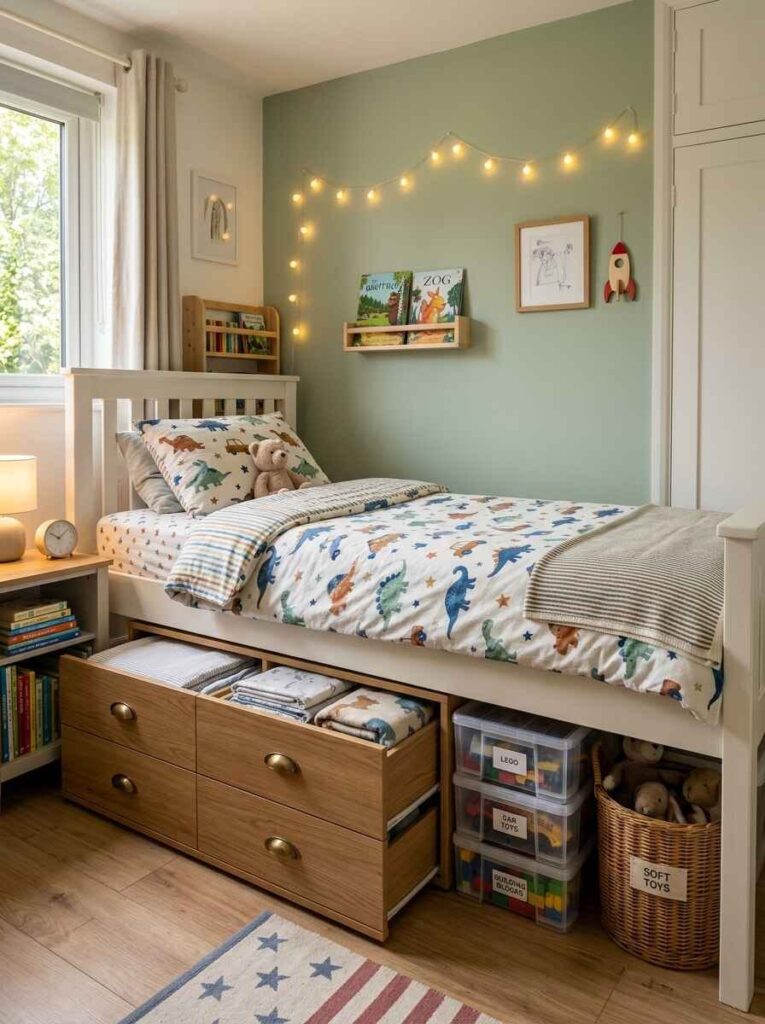
Space beneath standard beds often collects dust. Transform that forgotten gap into functional storage. Here, an off-white twin bed sits centered. Deep wooden drawers slide smoothly from underneath. Clear plastic bins hold colorful construction bricks. A round woven hamper holds soft toys. Striped rugs cushion little feet every morning.
Under-bed compartments keep seasonal clothing tucked away. They easily store extra blankets and sheets. Rolling drawers pull out smoothly across flooring. Clear plastic storage bins allow instant toy visibility. This keeps everyday clutter out of sight while making frequently used items easy to access.
- Rolling Bins: Choose wheeled containers for easy sliding.
- Tidy Categorizing: Label drawer fronts with picture icons.
4. Create a Small Kids’ Homework Station
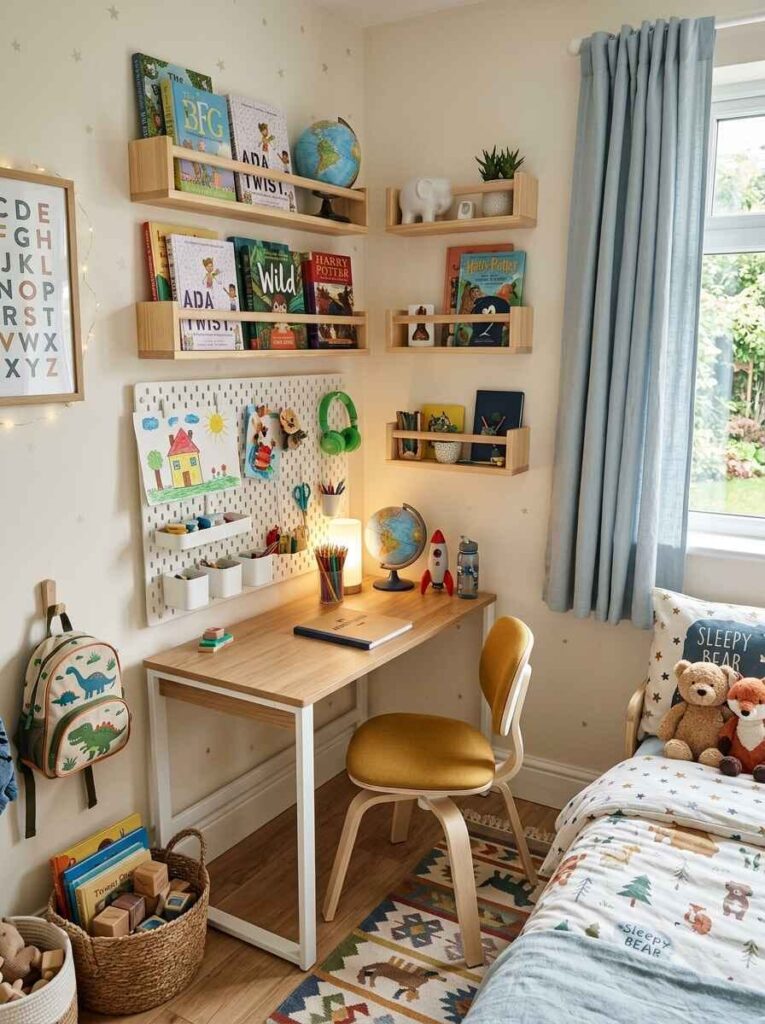
School-age children need a quiet study corner. This sunny corner holds an efficient station. A slim wood-and-metal desk hugs baseboards. A modern metal pegboard mounts above it. Hanging cups hold markers, scissors, and rulers. Wooden corner shelves display favorite chapter books. A yellow desk chair swivels with ease.
A homework desk does not require grandeur. Slim computer desks save valuable floor clearance. Vertical wall organizers keep desktop surfaces clear. Pegboards hold headphones, notebooks, and supply cups. This builds productive homework habits early on.
| Study Desk Feature | Specific Choice | Practical Kids Benefit |
| Desk Frame | Narrow Wooden Writing Table | Fits tight corners without blocking beds |
| Wall Storage | Metal Multi-Hook Pegboard | Clears art supplies off writing spaces |
| Book Ledges | Tiered Corner Floating Shelves | Utilizes empty corners for books |
5. Use a Wall-Mounted Desk
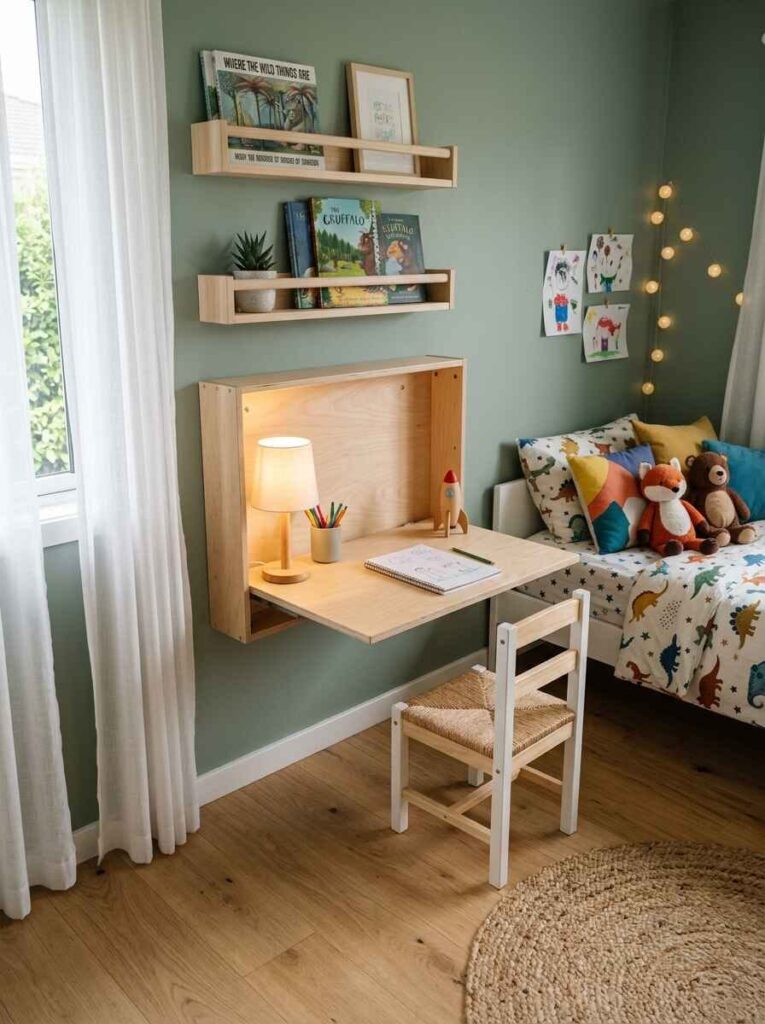
When floor space is scarce, mount upwards. This sage green wall features smart cabinetry. A compact drop-down desk hangs securely mounted. The front leaf folds flat for homework. Interior cubbies hold glowing lamps and cups. Two pine book ledges sit right above. A small wooden chair slides away easily.
A wall-mounted desk keeps the floor open when homework is finished. Fold-down designs can disappear against the wall, giving children more room for play during the rest of the day. You can mount them at customized heights. They adjust as your growing child gets taller.
- Drop-Down Design: Fold desks shut to regain space.
- Custom Height: Mount desktops matched to chair heights.
6. Choose Multifunctional Furniture
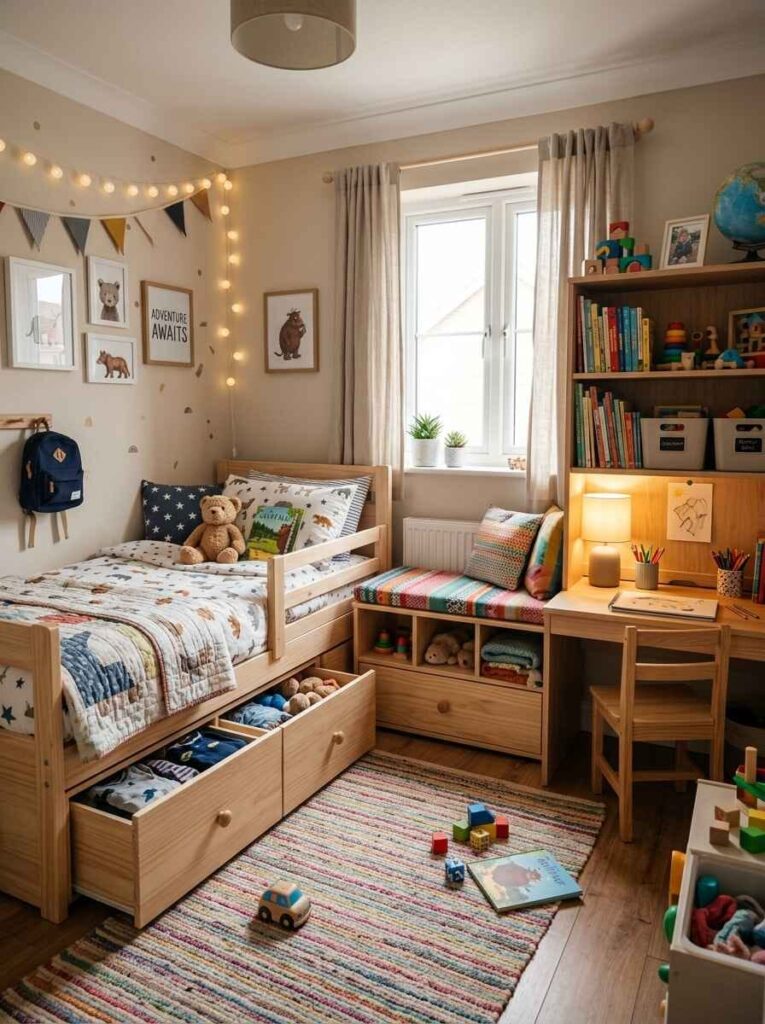
Every piece of furniture must earn space. This coordinated timber set demonstrates exceptional efficiency. A captain’s bed features wide rolling drawers. Connected toy cubbies form a padded bench. A matching student desk integrates upper shelving. Star-patterned bedding pairs with colorful floor rugs. Soft fairy lights frame playful wall prints.
Multifunctional furniture eliminates unnecessary individual dressers. A storage bench provides cozy seating too. Integrated desks offer bookshelves and writing tops. One coordinated footprint replaces three separate units. This leaves wide center zones completely unblocked.
- Bench Seating: Use storage benches for extra seating.
- Captain’s Beds: Choose frames with built-in drawers underneath.
7. Create a Small Kids’ Reading Nook
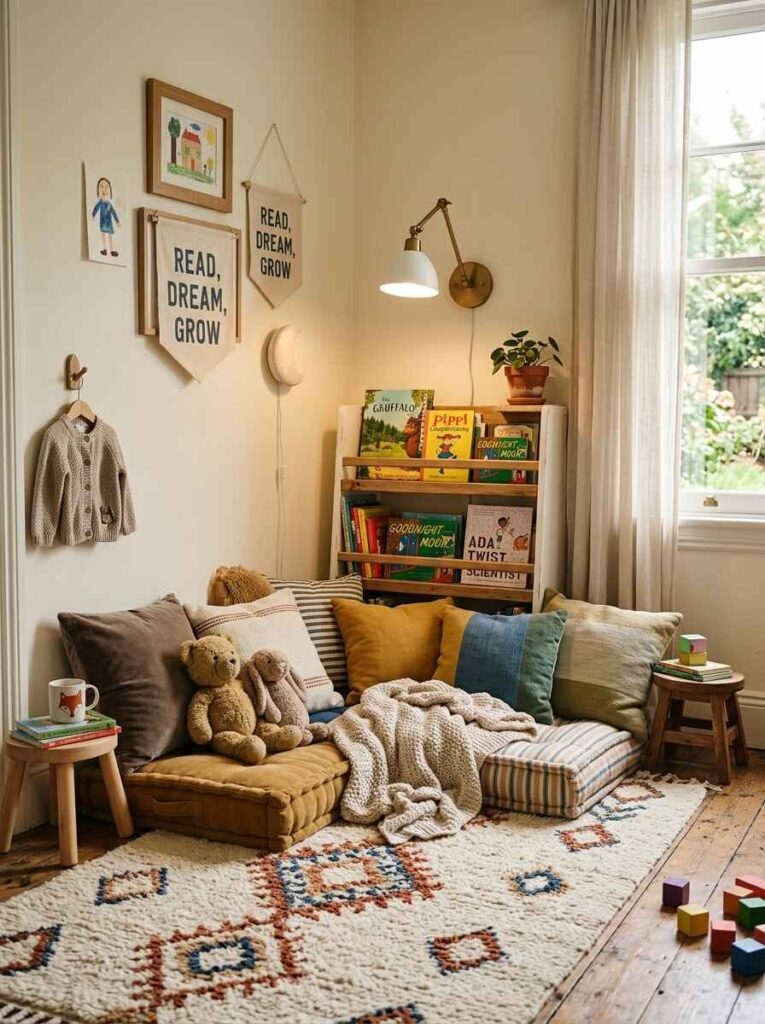
Encourage reading with a dedicated quiet corner. In this room corner, comfort gathers softly. Thick mustard floor cushions create relaxed seating. Soft linen pillows rest against plain walls. A low forward-facing bookcase displays cover art. An adjustable brass sconce lights the pages. Stuffed animal friends sit ready for stories.
An unused corner can become a cozy reading nook without taking valuable floor space from the rest of the room. Floor cushions provide soft seating without frames. Kids easily move cushions during active play. Forward-facing book ledges make selecting stories effortless. This invites independent reading time every afternoon.
- Floor Pillows: Stack large plush cushions in corners.
- Wall Lighting: Mount swing-arm sconces to save tables.
8. Use Baskets for Easy Toy Storage
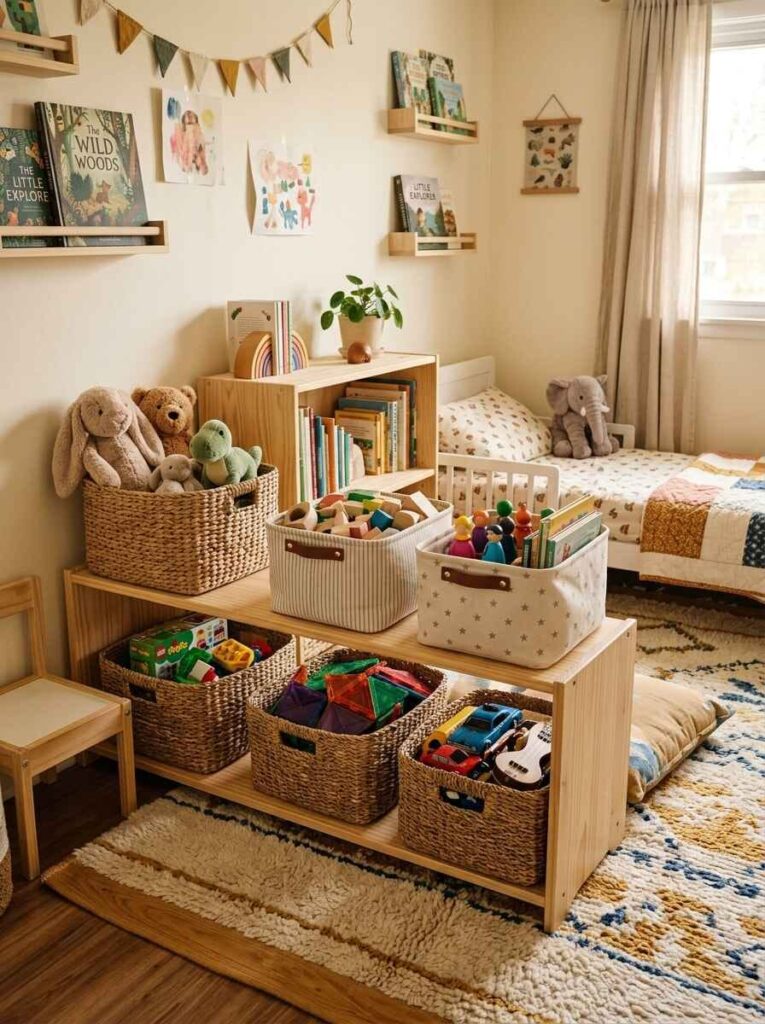
Complicated storage systems can be difficult for young children to use consistently. Simple open baskets make cleanup fast and easy. A low wooden shelving unit stands accessible. Sturdy woven wicker baskets hold toy cars. Soft canvas bins store plush stuffed animals. Wooden blocks sit neatly inside middle bins. Low surfaces hold favorite picture storybooks.
Open bins allow quick sorting after playtime. Kids simply toss toys into assigned spots. Woven fibers add warm natural texture indoors. Keep bins light so children carry them. This teaches personal responsibility from early ages.
| Bin Material | Recommended Toy Contents | Storage Durability |
| Woven Rattan | Wooden Blocks, Toy Trains | Rigid, sturdy, long-lasting structure |
| Canvas Fabric | Stuffed Animals, Dress-Up Clothes | Soft, lightweight, completely collapsible |
| Felt Bins | Dolls, Board Books, Card Games | Gentle on delicate polished furniture |
9. Maximize Kids’ Closet Storage
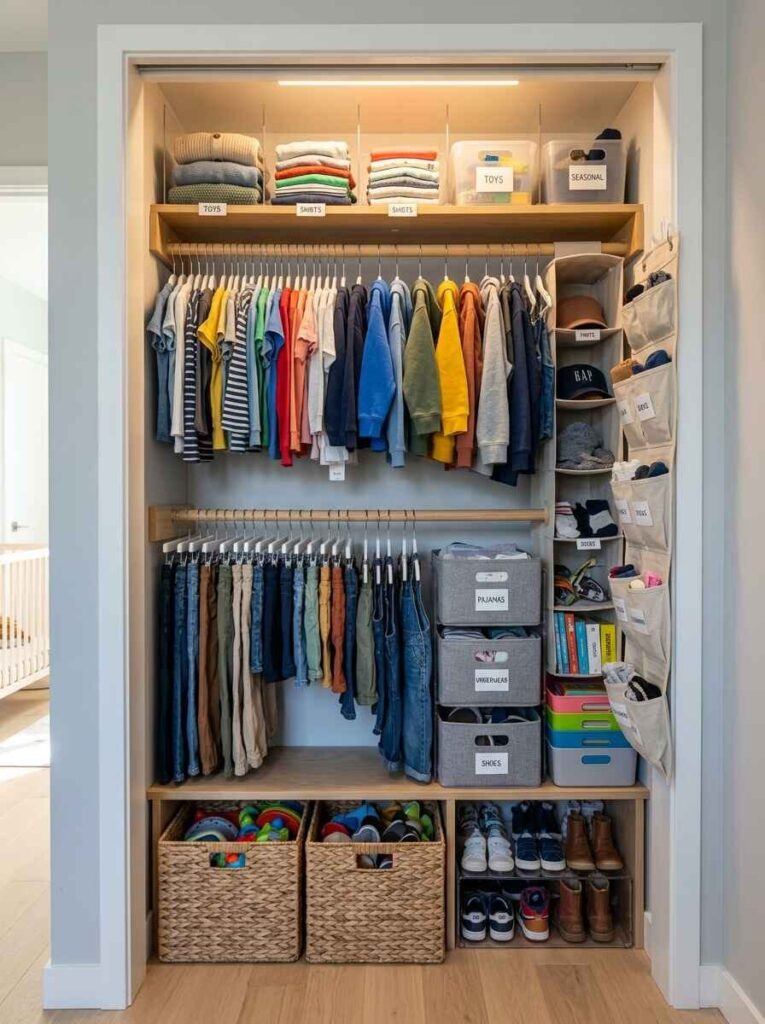
Closets often possess massive unused vertical height. This organized wardrobe showcases brilliant interior planning. Two hanging rods double the clothing space. Sweaters and hoodies hang on top racks. Pants hang low for child reach. A vertical canvas organizer holds shoes neatly. Labeled fabric boxes store pajamas and socks.
Kids clothes do not require long drops. Installing a lower secondary rod doubles capacity. Kids choose their daily school clothes independently. Upper shelves hold out-of-season winter jackets. This organization clears dressers out of bedrooms.
- Double Rods: Hang two parallel tiers of clothing.
- Canvas Cubbies: Store folded shirts in fabric organizers.
10. Use Light Colors to Make the Room Feel Bigger
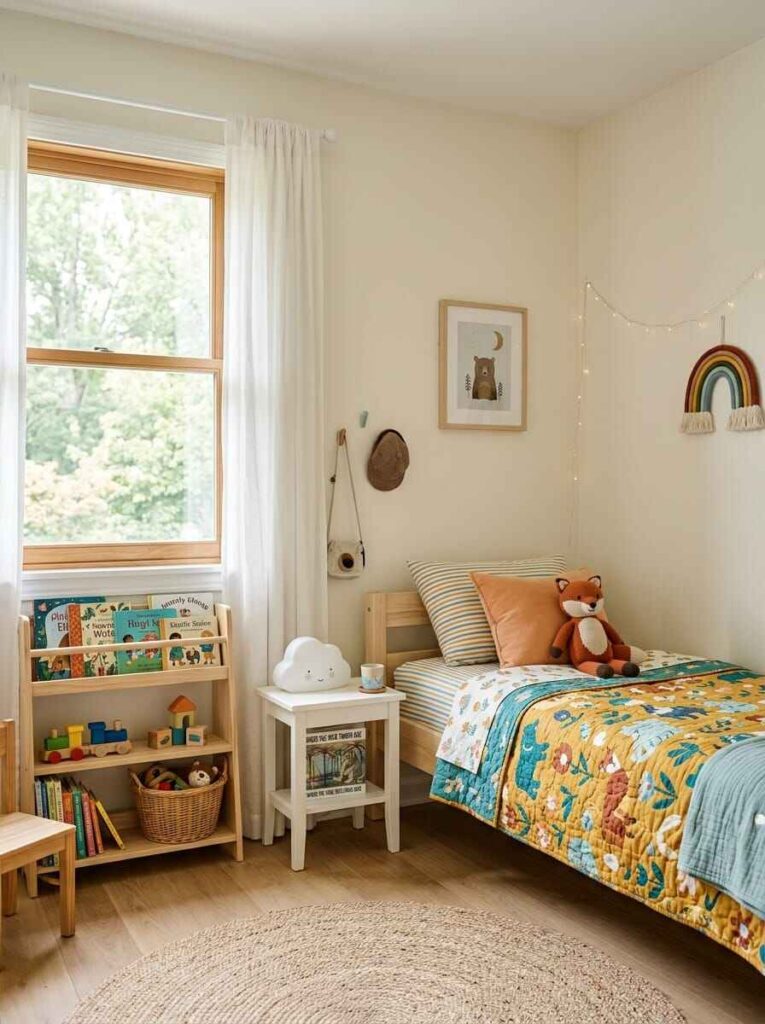
Dark paint shades absorb natural incoming sunlight. Pale wall colors expand compact rooms visually. In this sunny bedroom, light shades shine. Soft ivory walls bounce light through windows. Natural pine furniture keeps the mood airy. A cheerful patterned quilt adds playful color. A low front-facing bookshelf displays colorful books.
Soft whites, pale blues, warm creams, and other light neutrals can make a compact bedroom feel brighter and more spacious. They create a bright, spacious visual foundation. Children’s personality still shines through vibrant accessories. Colorful bedding, rugs, and wall posters pop. The room feels open rather than enclosed.
- Airy Walls: Paint walls soft off-white or cream.
- Color Accents: Layer bright quilts for cheerful personality.
11. Add Mirrors to Reflect Light
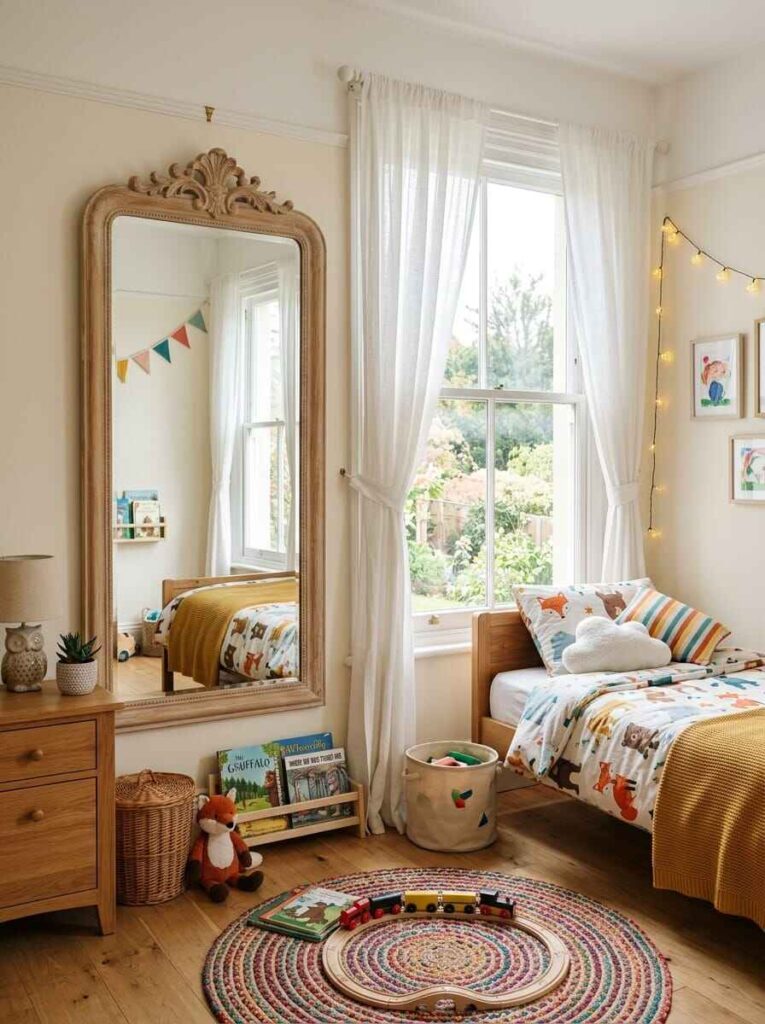
Mirrors bounce natural light across dim corners. Here, a carved floor mirror sits beside a large sash window, reflecting natural light and the leafy garden outside. White sheer curtains soften incoming morning rays. A round woven rug centers train tracks. Cheerful bunting hangs overhead across picture walls.
Reflective surfaces create a sense of depth. They brighten compact layouts during winter afternoons. Always secure leaning mirrors firmly to walls. For active playrooms, choose shatterproof acrylic mirrors. Place them across from windows for maximum illumination.
- Window Alignment: Position mirrors opposite large exterior windows.
- Wall Fasteners: Anchor heavy mirror frames firmly behind.
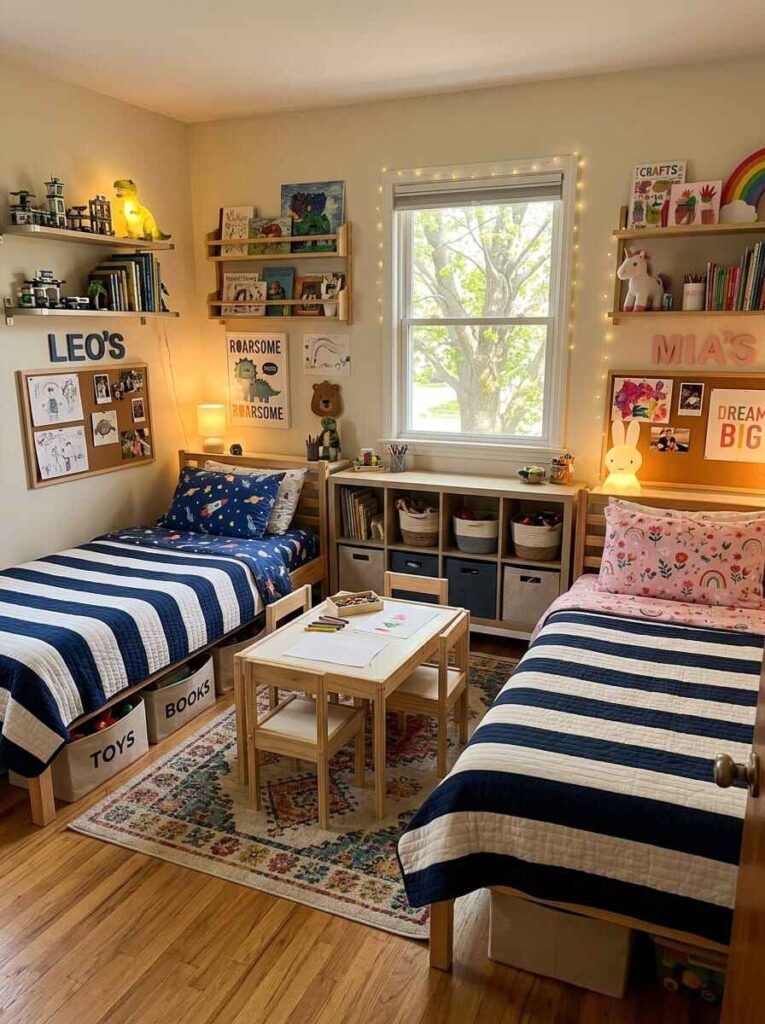
Sharing bedrooms requires careful organization of boundaries. This shared layout provides balance and order. Two wooden twin beds line opposite walls. Individual wooden name plaques hang above beds. Each child gets a personal cork display. A low cubby credenza rests between them. A shared craft table centers the rug.
Giving each child personal territory reduces conflict. Use personalized bedding to express unique tastes. Dedicated wall pinboards hold personal school artwork. A central shared table fosters friendly collaboration. Open floor space between beds feels balanced.
| Shared Bedroom Zone | Furniture Piece Used | Child Benefit |
| Personal Sleeping | Twin Bed with Name Plaque | Gives personal identity and ownership |
| Creative Display | Wall Cork Pinboard | Displays school ribbons and private art |
| Shared Play | Central Wood Activity Table | Offers space for joint board games |
13. Use Wall Space for Kids’ Artwork
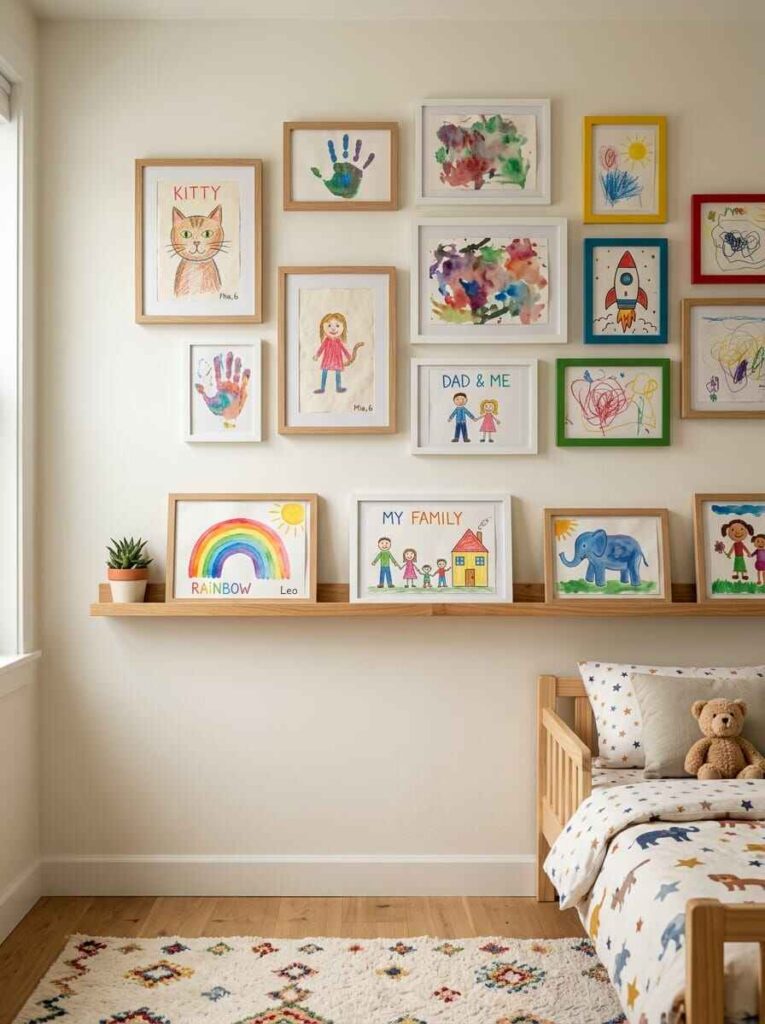
Children produce stacks of wonderful school masterpieces. Tape on walls looks messy very quickly. This gallery wall displays creative drawings proudly. Matching light oak and white frames hang. A long picture ledge anchors the bottom. Framed finger paintings sit beside rainbow illustrations. A simple bed sits comfortably alongside frames.
Picture ledges let you swap drawings weekly. No new nail holes are ever needed. Displaying their artwork gives children a simple way to personalize the room and take pride in their space. It decorates walls without taking floor space. The bedroom looks intentional, colorful, and polished.
- Picture Ledges: Rest framed drawings on shallow wall ledges.
- Easy Rotation: Swap school projects out as seasons change.
14. Keep Toys Organized With Built-In Storage
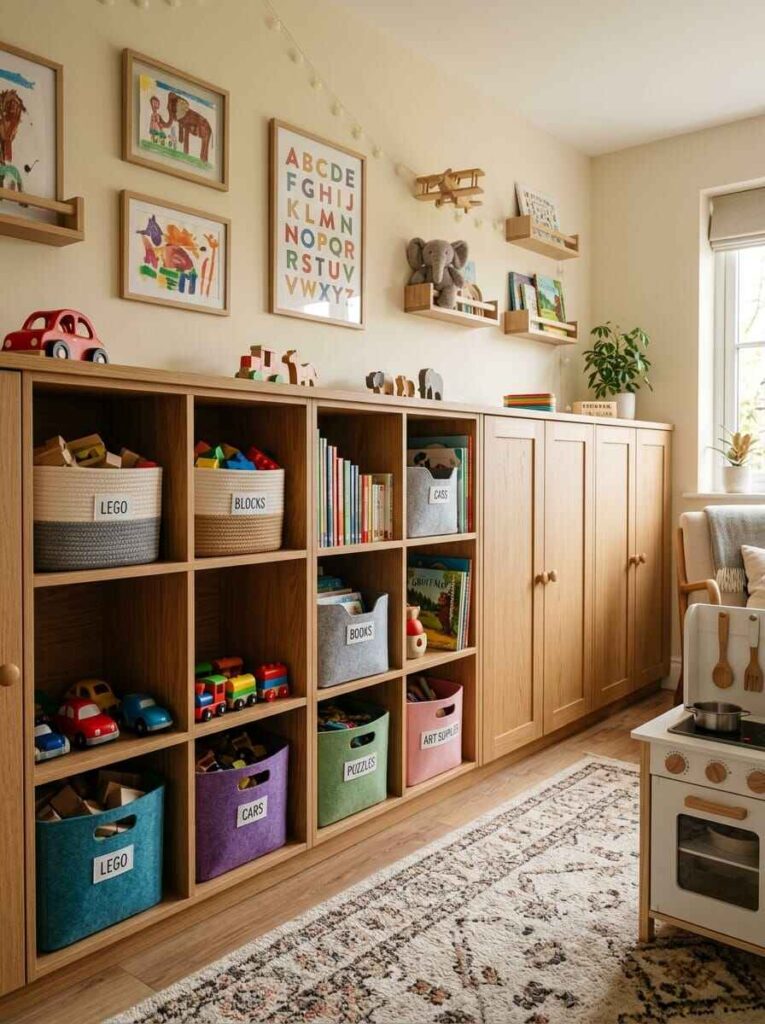
Clutter builds quickly when storage lacks division. This low custom oak cabinet lines walls. Open center cubbies hold colorful fabric bins. Neat labels identify cars, blocks, and books. Closed cabinet doors conceal messy board games. A small play stove stands nearby neatly. Wall shelves hold storybooks within reach.
Combine open cubbies with closed cabinet doors. Open bins give quick access to favorites. Closed doors hide games with many pieces. This keeps the room looking calmer and makes bedtime cleanup easier. Everything stays organized, tidy, and predictable daily.
- Closed Doors: Hide messy puzzles behind solid wooden doors.
- Open Cubbies: Keep daily toys in accessible bins.
15. Keep the Floor Plan Open and Flexible
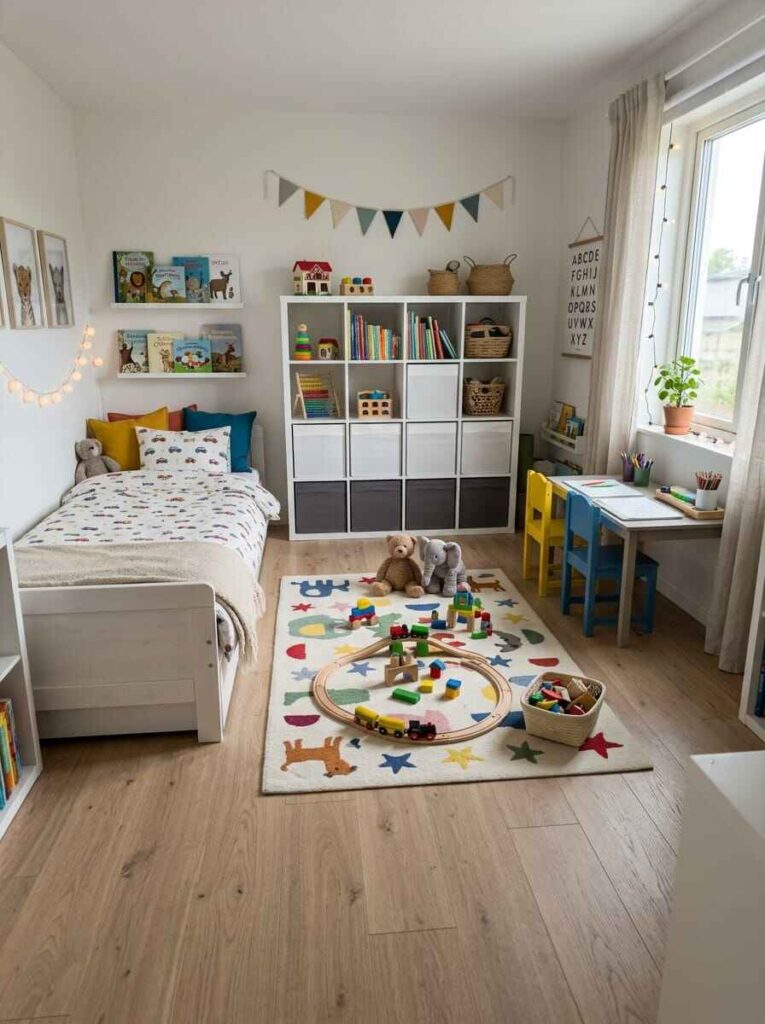
Children need clear floor space to thrive. They build elaborate train tracks and forts. This room pushes major furniture against perimeters. A toddler bed rests against the wall. A low white bookcase holds book collections. A small play table sits near windows. The large central printed rug stays clear.
Resist the urge to fill every corner. Push storage units flat against the walls. Keep main room walking pathways completely unblocked. Clear center carpets invite imagination and play. Regularly donate outgrown toys to maintain space.
- Perimeter Layout: Place bulky furniture flat against perimeter walls.
- Clear Play Zone: Keep large floor rugs open for games.
Frequently Asked Questions
How can I make a small kids room feel bigger?
Use light wall paint, hang tall vertical shelving, place mirrors near windows, and keep the center floor open.
What is the best bed for a small kids room?
A raised loft bed or a captain’s bed with built-in rolling drawers maximizes floor space efficiently.
How do you organize toys in a small bedroom?
Use labeled open baskets for everyday favorites, and hide multi-piece games inside closed cabinet cubbies.
How can I fit a desk into a small kids room?
Install a fold-down floating wall desk or place a narrow writing table in an unused corner.
Define clear personal territories with individual beds, personalized bedding, and separate wall art display pinboards.
Conclusion
Maximizing a compact children’s bedroom is all about smart space planning, creative vertical storage, and preserving room to play. You do not need a huge home to create an inspiring space for your child. Simple changes like raising the bed frame, adding deep under-bed drawers, and hanging shallow book ledges transform tight quarters completely.
Start by testing two or three practical ideas that solve your main clutter trouble spots. Use these practical small kids room ideas to design a tidy, comfortable, and functional haven where your child loves to sleep, learn, and imagine every day.
“Urooj Fatima is the founder and lead stylist of Blush Heaven, a digital sanctuary dedicated to budget-friendly home decor and small apartment styling. Trusted by a Pinterest audience of millions each month, she specializes in creating high-end aesthetics for small spaces. Urooj is the creator of the Small Apartment Glow-Up Guide, helping women worldwide transform their rooms into cozy, blush-toned havens.”
1 thought on “15 Small Kids Room Ideas to Maximize Space and Style”