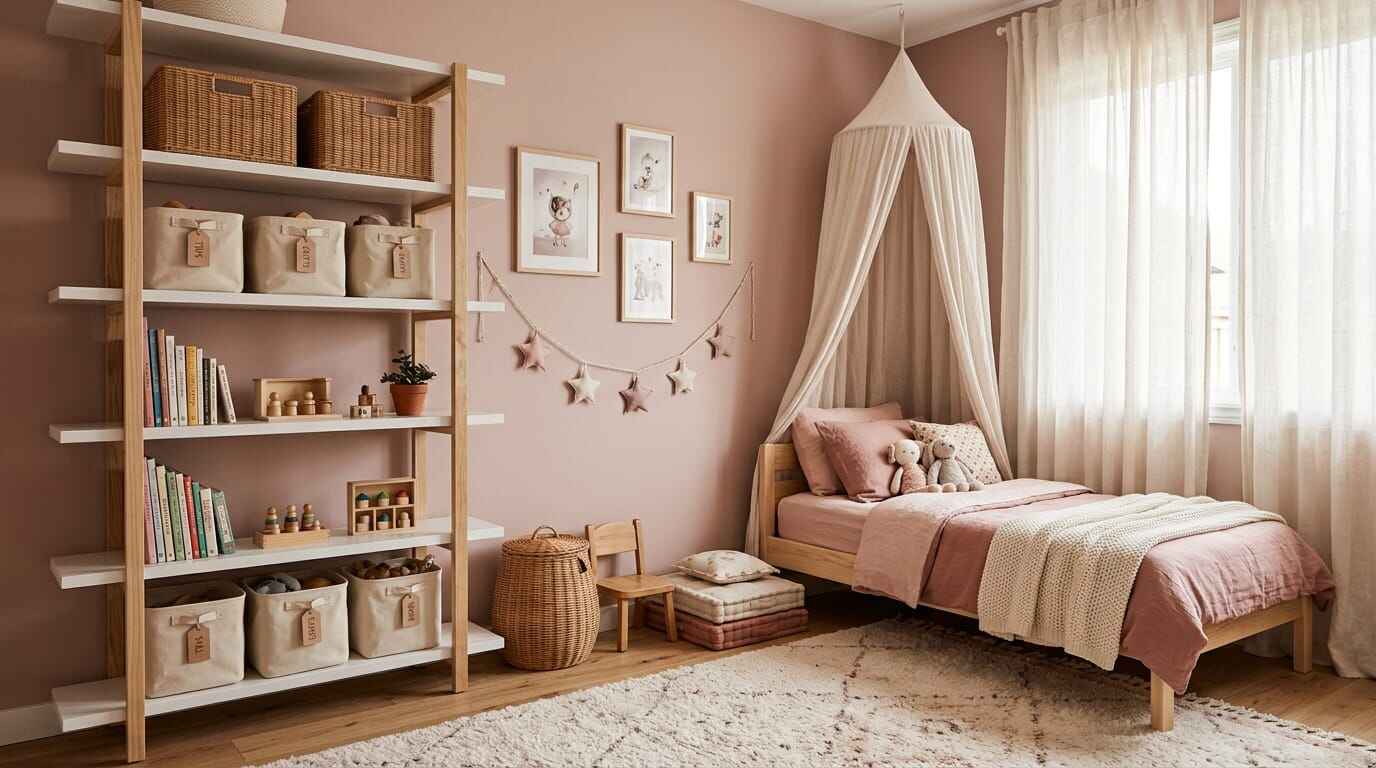
Kids’ bedrooms can become messy quickly. Storybooks pile up on carpets, school supplies collect on dressers, and clothes end up on chairs. Simple storage systems can make it easier for children to put things away and for parents to keep the room manageable. You do not need expensive renovations. A little planning can make even a small room easier to organize.
Helpful storage can encourage children to take part in everyday cleanup. Simple routines can also make tidying the room easier to manage.
Here are 13 practical kids room organization ideas to help organize toys, books, clothes, school supplies, and everyday clutter.
13 Kids Room Organization Ideas
1. Use Easy-to-Reach Toy Baskets
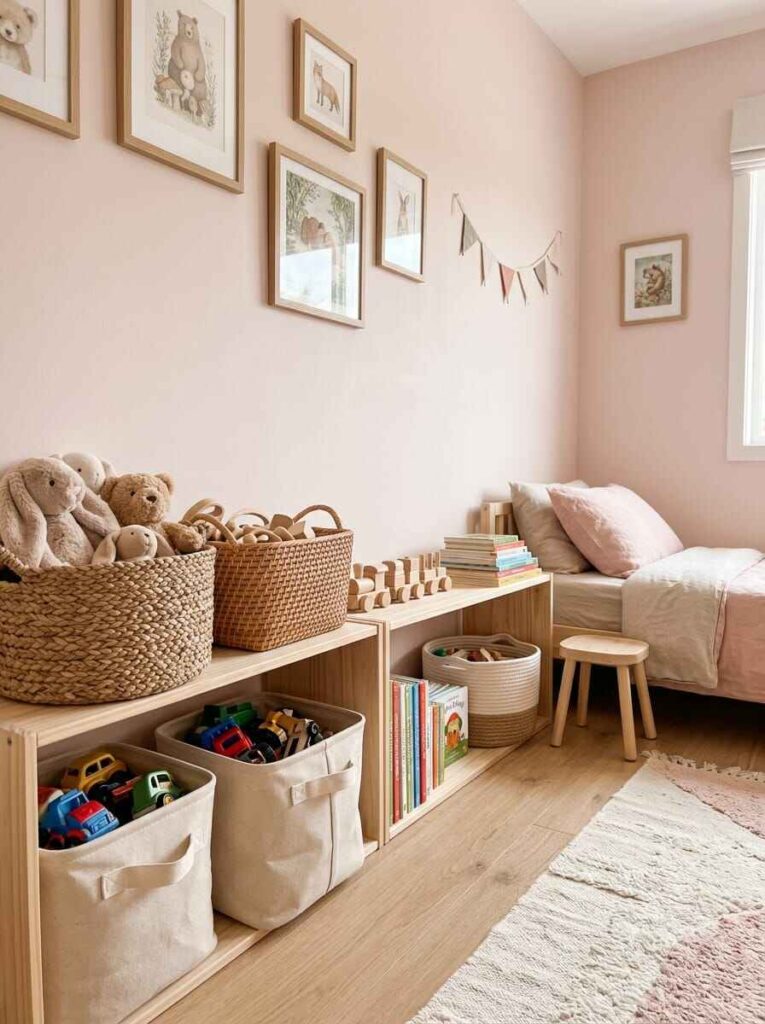
Low storage units build good habits. A low wooden shelf keeps baskets within easy reach. Woven seagrass baskets hold plush bears. Soft fabric bins store building blocks. Everything rests right at toddler height. Cheerful framed animal art hangs overhead. A low stool offers handy seating.
Placing bins low can make it easier for children to put toys away themselves. Kids return items without asking parents. Lightweight canvas baskets are easy for children to carry. Woven materials can also add natural texture while keeping the room looking organized.
- Low Placement: Keep toy containers along baseboards.
- Soft Bins: Choose lightweight handles for carrying.
2. Create a Dedicated Book Storage Area
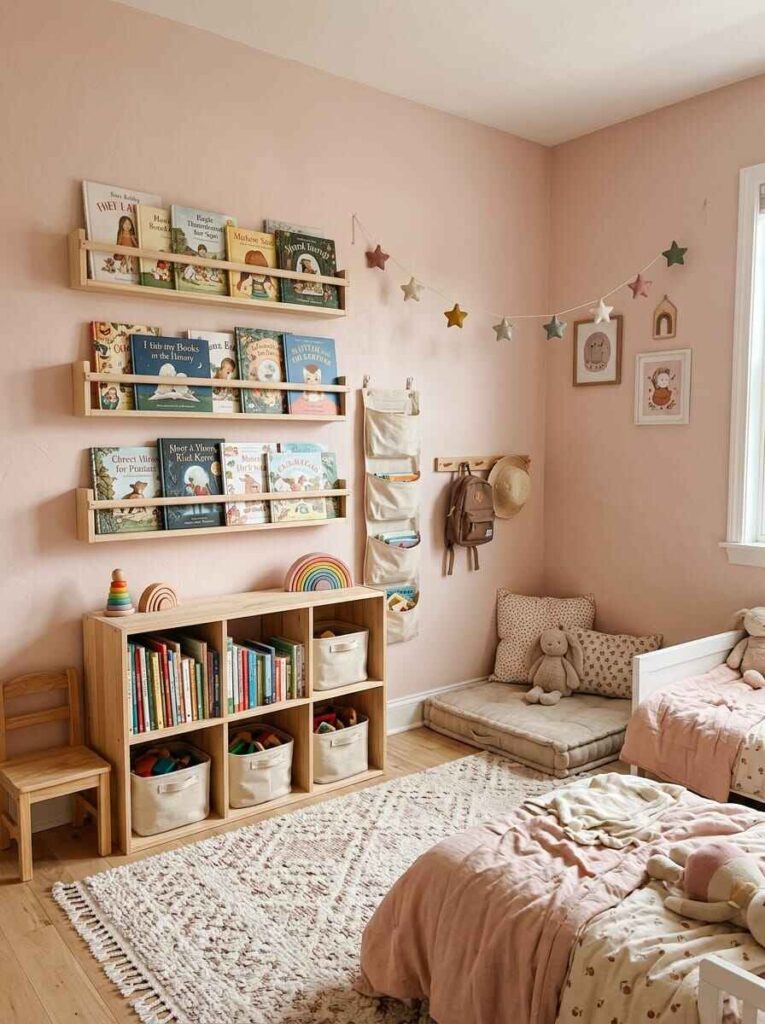
Forward-facing shelves invite children to read. Three natural pine ledges line walls. Colorful illustrated book covers face forward. A low storage unit sits underneath. Fabric bins store small wooden blocks. A plush quilted floor cushion rests. Playful star garlands hang across walls.
Standard bookshelves can hide colorful picture covers. Slim wall ledges make use of vertical wall space while keeping favorite books visible. They turn colorful books into art. Young children can easily spot their favorite bedtime books, and having a dedicated spot makes them easier to put away.
- Front-Facing Racks: Display illustrated story covers outward.
- Cozy Corners: Place floor cushions under shelves.
3. Add Labels to Storage Bins
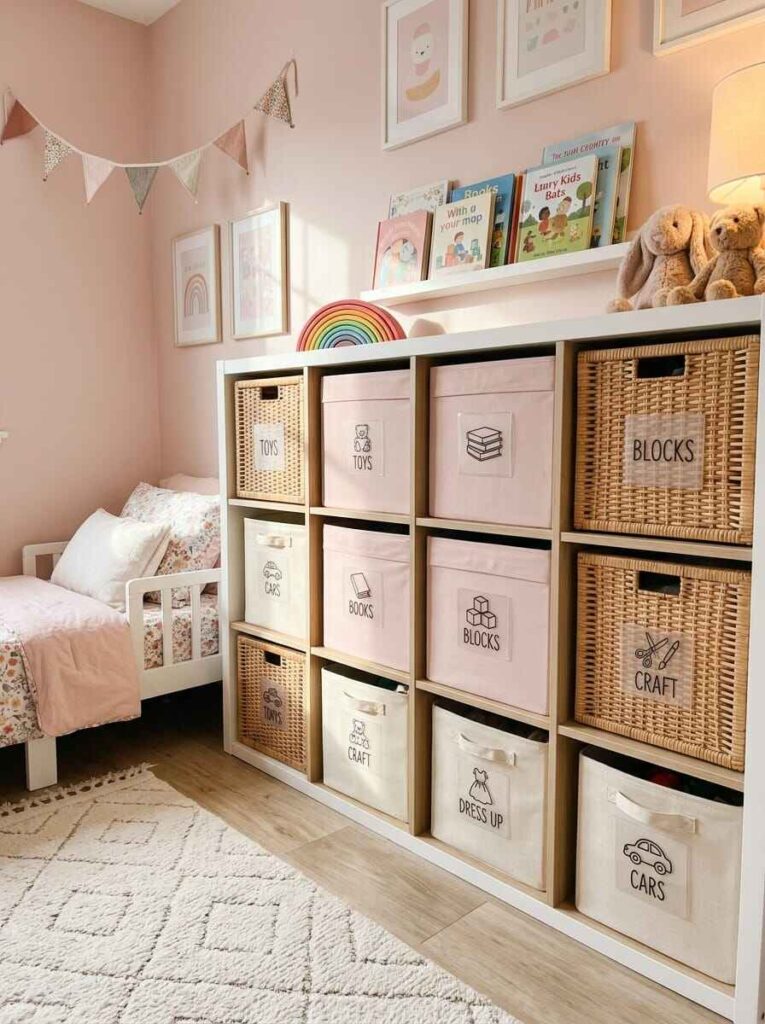
Labels remove all daily cleanup confusion. This white modular cube shelf organizes. Canvas bins display bold clear labels. Icons show cars, blocks, and crafts. Woven wicker baskets add warm texture. Picture ledges display books above shelves. A pastel rainbow arch decorates tops.
Picture icons help pre-readers tidy up completely on their own. Printed text reinforces early vocabulary as elementary kids grow. Clear label pockets let you swap categories whenever new hobbies take over.
- Picture Icons: Use simple drawings for early learners.
- Clear Pouches: Slip printed cards into clear sleeves.
4. Make the Most of Under-Bed Storage
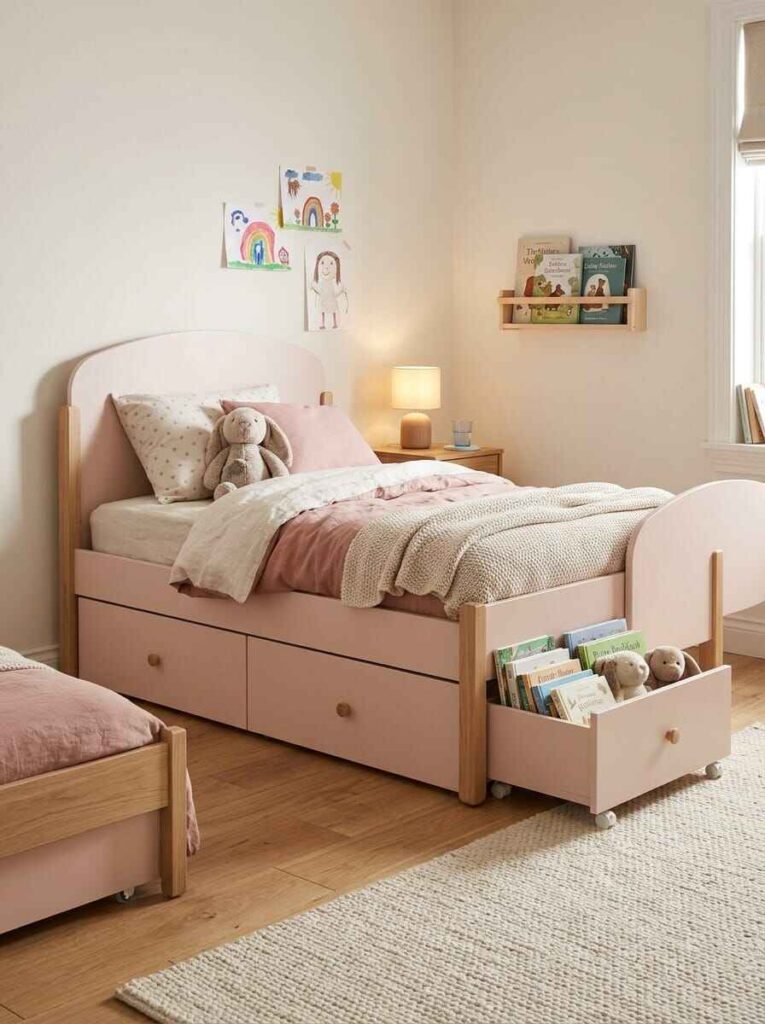
Clear away clutter beneath bed frames. This blush pink wooden bed features. Deep rollout wooden drawers slide smoothly. One drawer holds bedtime storybooks neatly. Another drawer stores soft plush bunnies. Smooth wooden knobs provide easy pulling. A small wall ledge holds books.
Rolling compartments protect items from dust. They keep seasonal blankets out of sight. Bulky winter clothes store away neatly. Children access extra items without climbing. This maximizes valuable floor space completely.
- Caster Wheels: Pick rolling drawers for smooth pulling.
- Bedside Access: Store evening books right beneath mattresses.
If you’re working with limited floor space, check out our 15 Small Kids Room Ideas to Maximize Space and Style for more space-saving ideas.
5. Create a Kids Closet Organization System
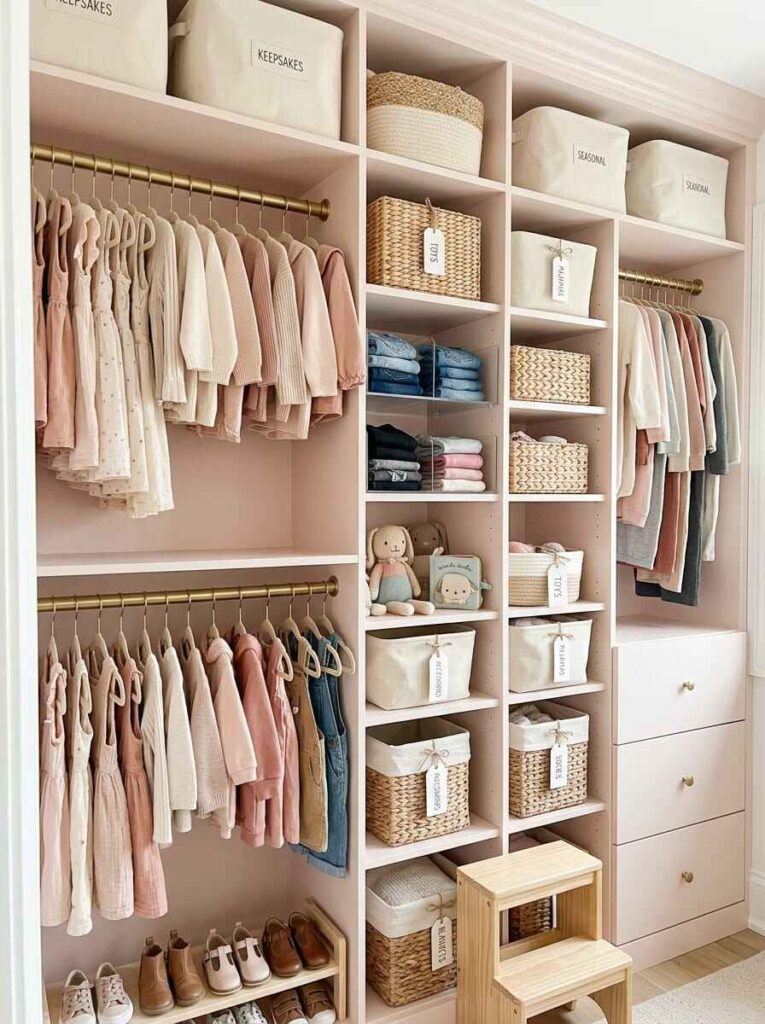
Double hanging rods double closet storage. This soft blush closet makes efficient use of its available space. Upper brass rods hold jackets neatly. A lower rod can make everyday clothes easier for children to reach. Center vertical cubbies hold folded pants. Labeled woven baskets store socks neatly. A bottom rack displays clean shoes.
A single hanging rod can leave useful vertical space unused in a child’s closet. Installing lower rods promotes morning independence. Kids pick daily outfits without help. Upper storage bins hold off-season coats. Shelf dividers keep folded denim stacks tidy.
- Dual Hanging: Add secondary hanging rods below.
- Step Stools: Keep wooden step stools inside closets.
6. Set Up a Homework and School-Supply Station
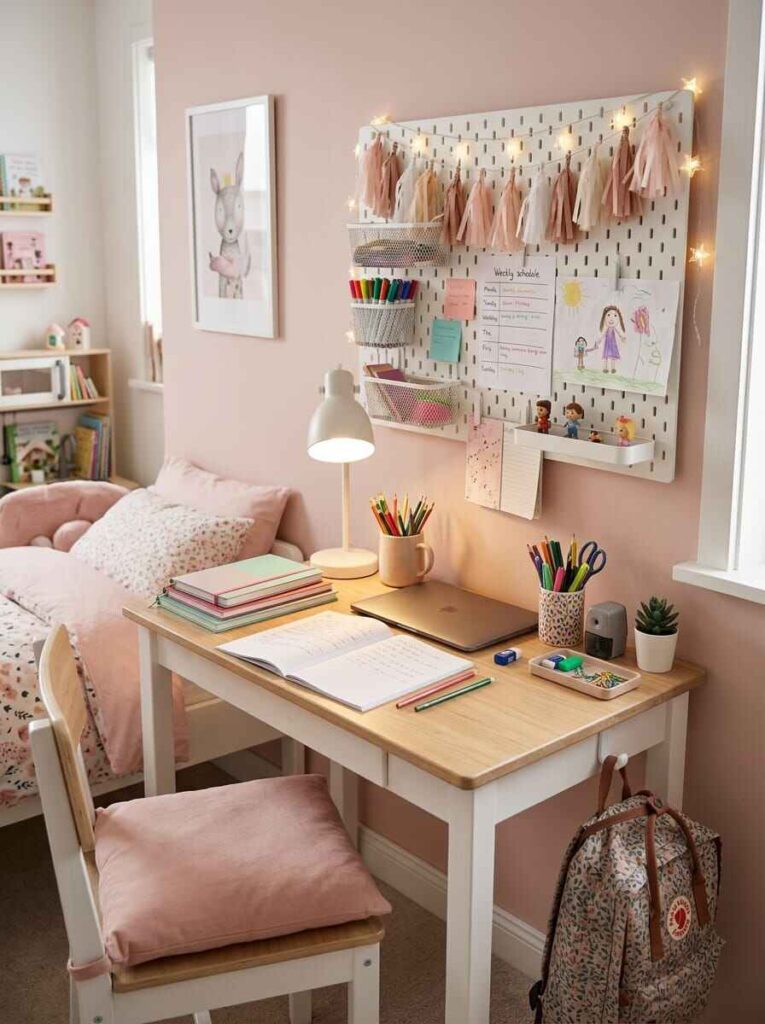
Keep school clutter in one area. This compact study station keeps everyday school supplies together. A white wooden desk holds books. An adjustable task lamp provides light. A metal pegboard mounts on walls. Wire bins hold markers and pencils. Hooks keep school backpacks off floors.
A dedicated work surface gives children a consistent place for homework, reading, and drawing. Pegboard organizers free up writing surfaces. Pencils, rulers, and scissors stay organized. Cork strips display weekly school schedules. Keeping school supplies together can make homework time easier to set up.
- Wall Pegboards: Mount metal boards to hold supplies.
- Backpack Hooks: Add heavy-duty hooks for school bags.
7. Organize Small Toys in Clear Containers
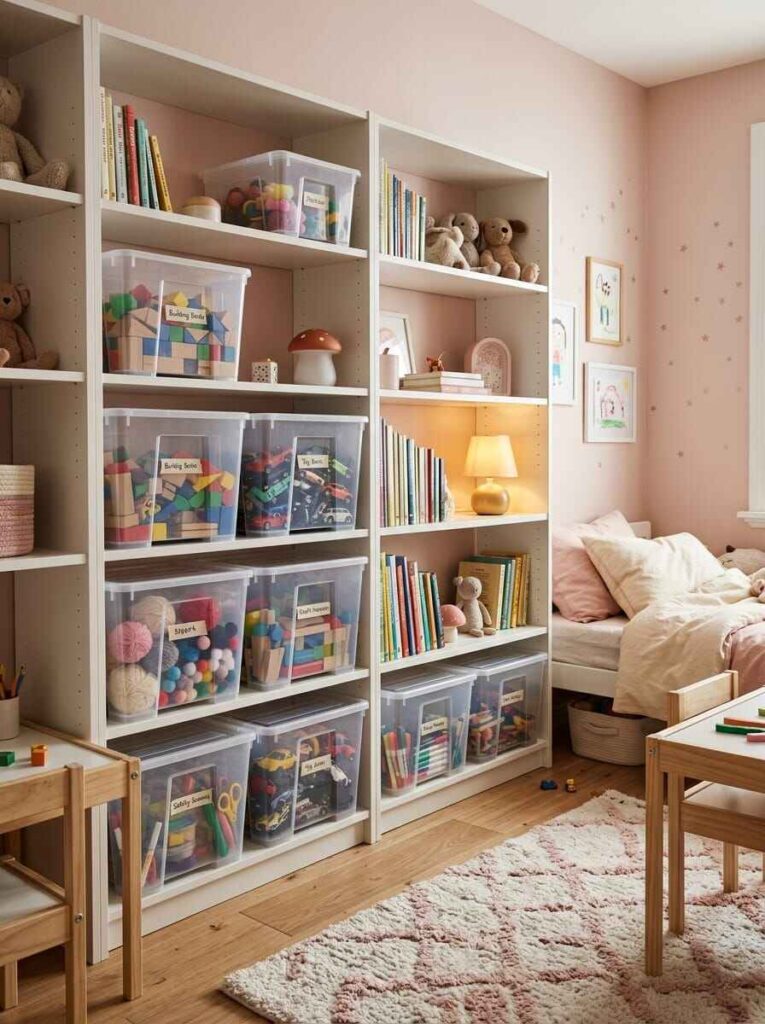
Tiny toy parts get lost easily. Here, tall white bookcases display order. Stackable transparent plastic tubs hold toys. Building blocks and cars stay visible. Lids keep tiny puzzle pieces safe. Neat labels mark each transparent bin. A low craft table sits nearby.
Latching containers can keep small building pieces together and are easy to wipe clean. Divided trays can help separate small figurines and other tiny pieces. Stackable tubs make better use of vertical shelf space.
- Latching Tubs: Seal small blocks inside locking tubs.
- Clear Sides: Keep toys visible to avoid digging.
8. Create a Special Spot for Stuffed Animals
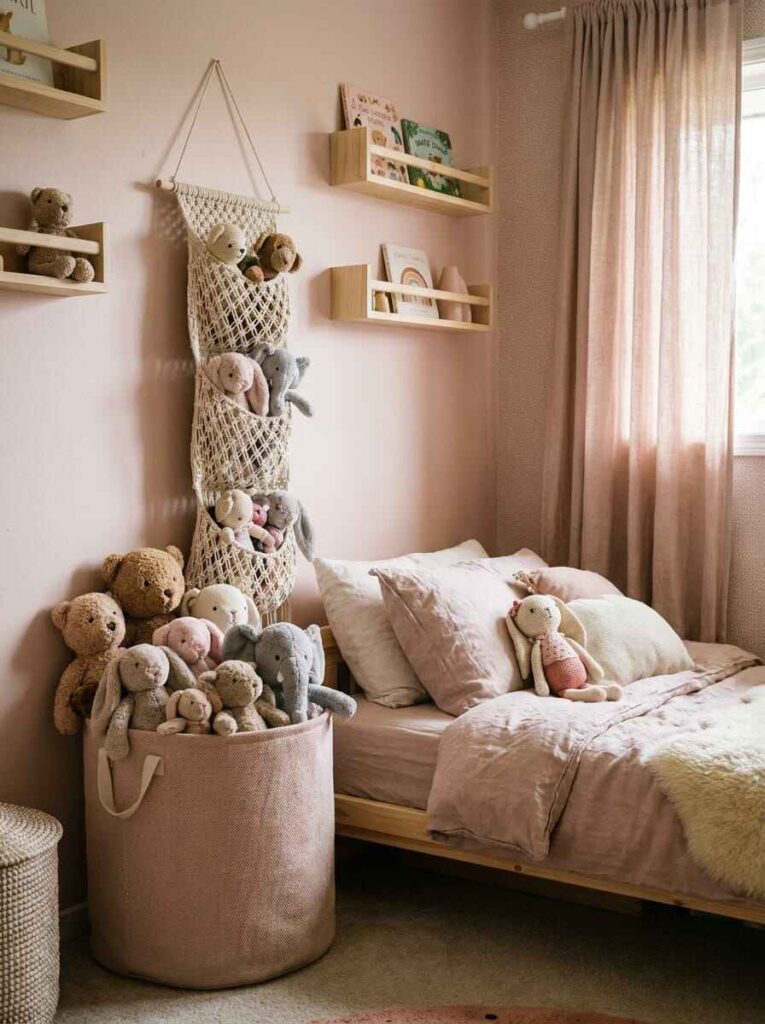
Stuffed animal collections can take up a surprising amount of space. In this cozy corner, plushies gather. A three-tiered woven macrame hanger mounts. Friendly plush bears peek through cords. A large blush canvas bin rests. Oversized stuffed elephants sit inside comfortably. Bed mattresses stay neat and uncrowded.
Hanging hammocks keep plush toys off floors. They display favorite stuffed animals decoratively. Large canvas tubs corral oversized plushies. Children can easily grab their favorite stuffed animals at bedtime. This keeps stuffed animals off the bed and floor while giving them a dedicated storage spot.
- Macrame Hangers: Hang tiered yarn hammocks on walls.
- Fabric Totes: Use deep canvas tubs for plushies.
9. Use Wall-Mounted Storage to Save Floor Space
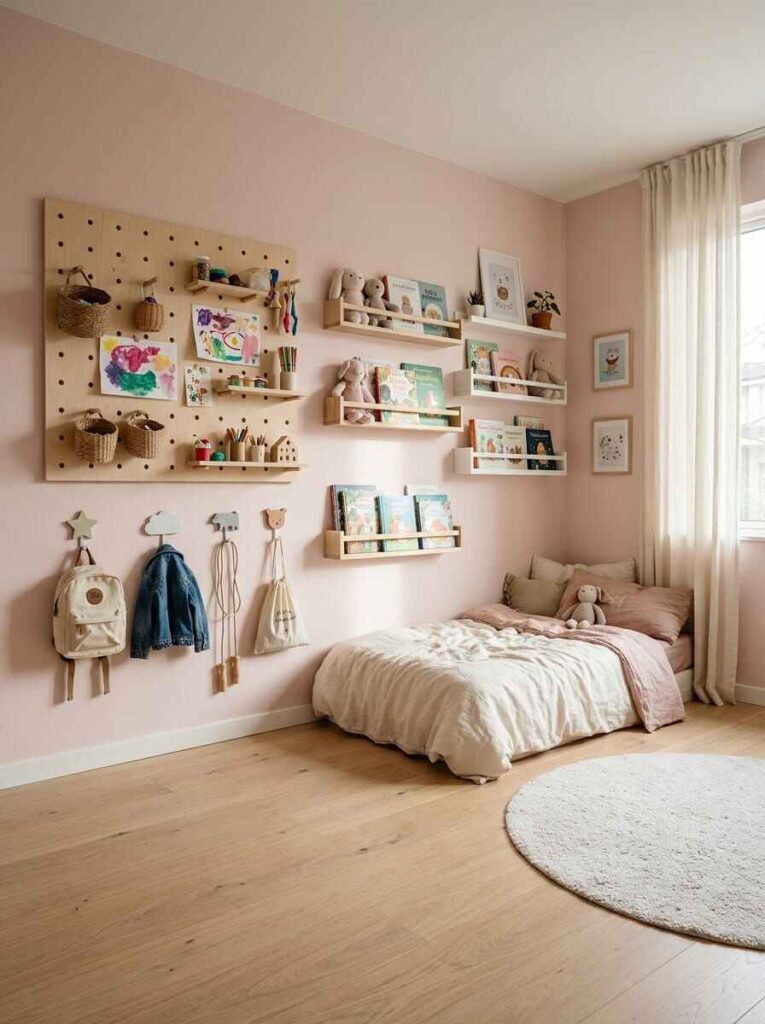
Empty walls can provide useful storage space. This blush bedroom utilizes wall heights. A large birch pegboard hangs mounted. Small ledges display favorite framed drawings. Hanging wicker cups hold craft scissors. Lower peg hooks hold jackets neatly. Floating shelves display storybooks and toys.
Using vertical storage can leave more open floor space for play. Pegboards adjust as children get older. Move wooden pegs to hang backpacks. Switch shallow shelves for book ledges. Keeping storage off the floor can make the room easier to move around in.
- Birch Pegboards: Install modular wooden peg storage boards.
- Floating Racks: Add shallow display ledges for trinkets.
10. Create a Simple Artwork Display and Storage System
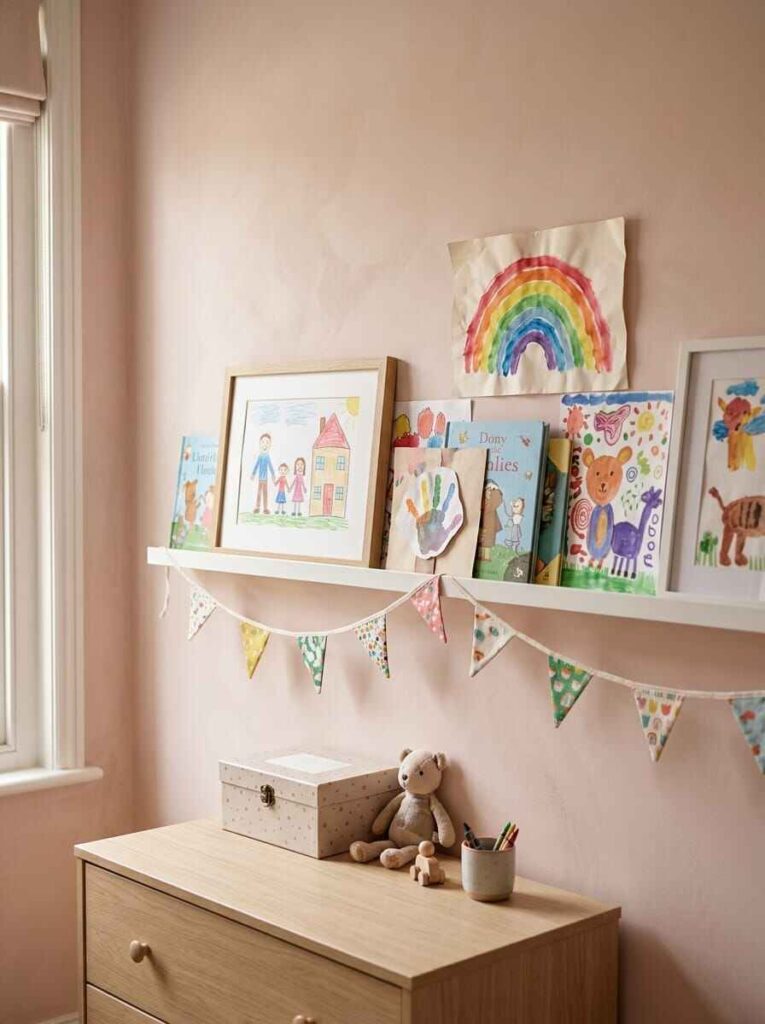
Children can bring home piles of drawings, paintings, and school artwork. Without a dedicated storage system, these pieces can quickly take over desks and shelves. Here, a sleek white ledge mounts. Framed family portraits rest alongside watercolors. Playful fabric bunting drapes along bottoms. A wooden dresser holds craft boxes. A few carefully chosen pieces can make the display feel organized without covering the entire room.
Picture ledges let parents rotate paintings. Switch school drawings without making holes. Frame a few standout artistic pieces. File other paper drawings inside portfolios. Displaying a few favorite pieces gives children a place to see and enjoy their artwork.
- Picture Rails: Rest unframed paper art on ledges.
- Memory Tins: Store keepsake drawings in keepsake boxes.
11. Give Every Toy Category Its Own Home
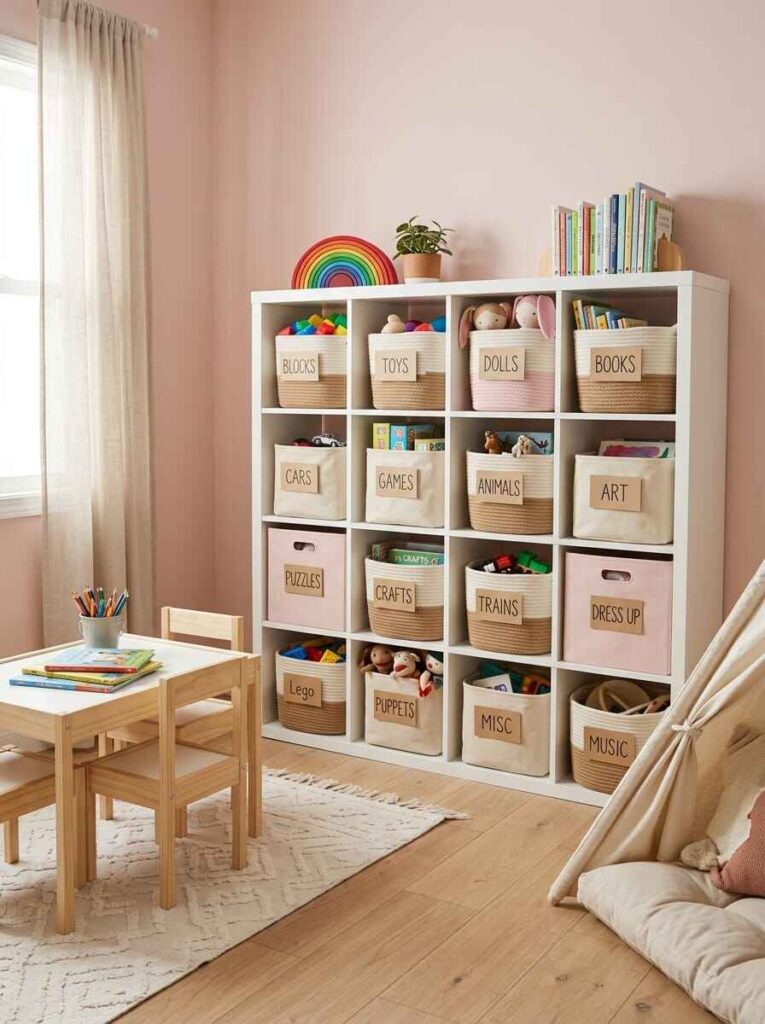
Grouping toys by category can make tidying easier. This sixteen-cube organizer creates order. Each square cubby holds specific items. Bins hold blocks, cars, and puzzles. Soft fabric labels show clear categories. A wooden activity table sits nearby. A canvas play tent decorates corners.
Heavy wooden blocks belong on the bottom tier so toddlers reach safely. Medium-weight puzzles and craft kits fit neatly across the middle shelves. Keep delicate keepsakes and less frequently used items on higher shelves, where appropriate.
- Bottom Cubbies: Place heavy wooden blocks low down.
- Middle Shelves: Store everyday games at eye level.
12. Use Storage Furniture That Serves More Than One Purpose
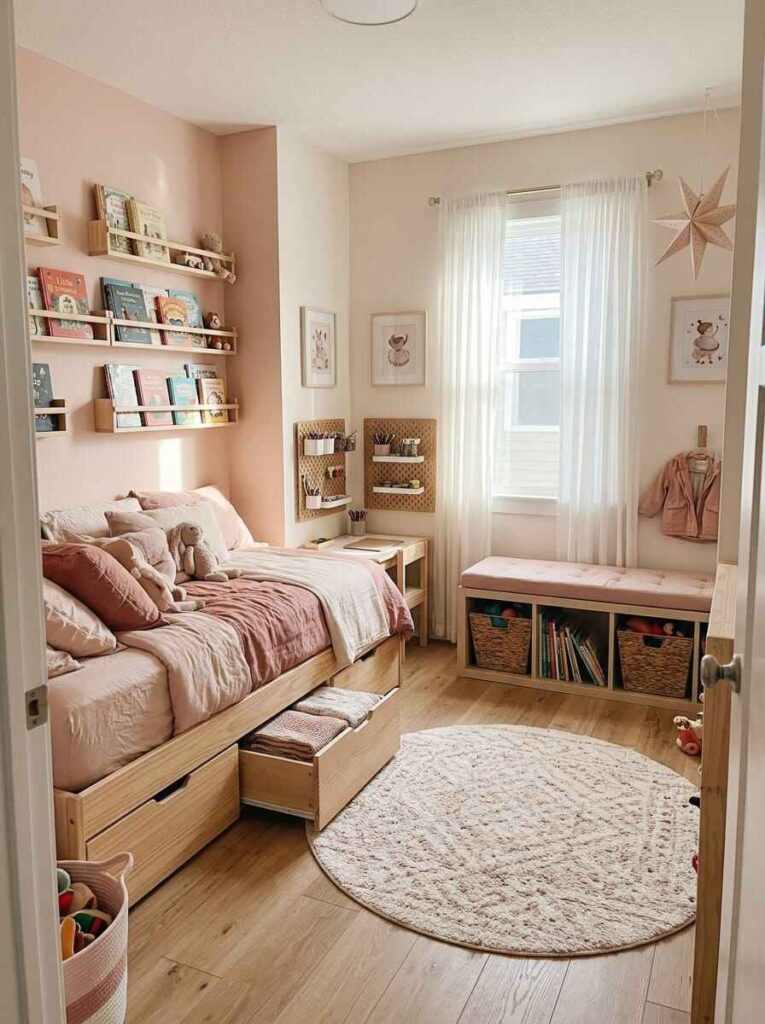
Multifunctional furniture can make better use of limited floor space. This bedroom uses smart dual-purpose pieces. A captain’s bed features deep drawers. A low bench holds woven baskets. The padded bench top provides seating. A compact floating desk mounts nearby. A circular rug centers the space.
Dual-purpose furniture can reduce the need for separate storage pieces. Toy benches can provide both seating and storage. Storage beds hide blankets underneath mattresses. Desks incorporate vertical shelving for supplies. This can add useful storage without taking up as much additional floor space.
- Storage Benches: Choose benches with integrated lower bins.
- Storage Beds: Select beds with built-in wooden drawers.
13. Create a Simple Weekly Kids Room Reset
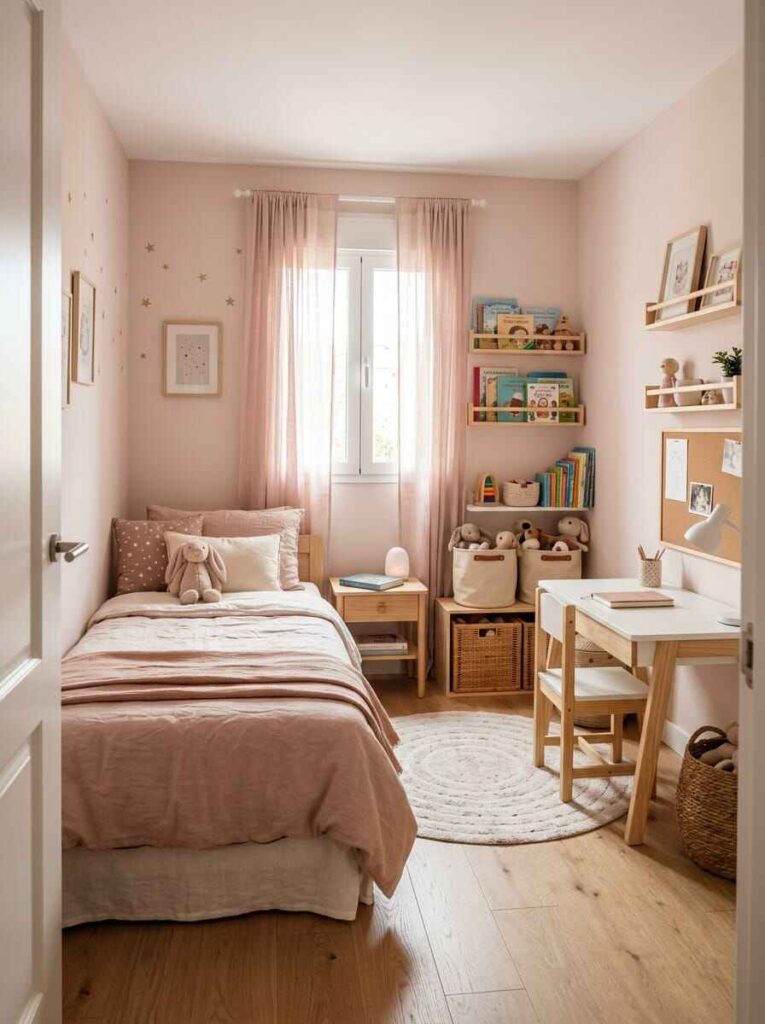
A quick weekly reset can help keep your organization systems working. In this tidy bedroom, everything has a designated place. In this tidy bedroom, calmness reigns. The single bed displays smooth linens. A student desk sits cleared off. Woven baskets hold books along walls. Floor boards remain clear of toys. Soft sunlight streams through sheer curtains.
Set aside 10 minutes once a week for a quick room reset. Return stray toys to labeled baskets. File school papers in memory boxes. Empty bedroom trash cans and hampers. Clear writing desks for upcoming weeks. Simple routines can help keep toy clutter from building up.
- Daily Reset: Set a short timer for an evening cleanup routine.
- Donation Bins: Regularly remove outgrown clothes and toys.
Frequently Asked Questions
How do I organize my kids’ room with too many toys?
Sort toys into simple categories such as blocks, cars, dolls, crafts, and puzzles. Store each category in a labeled basket or bin, and rotate less-used toys into closet or under-bed storage when needed.
What is the best storage solution for a small kids room?
Use vertical shelving, under-bed drawers, wall-mounted storage, and multifunctional furniture to make better use of limited floor space. Secure tall furniture according to the manufacturer’s instructions.
How do I get my child to keep their bedroom tidy?
Keep storage bins low, use picture labels, and make cleanup part of a simple daily routine that matches your child’s age.
How should I organize children’s clothes in a small closet?
Install double hanging rods for shirts, use shelf dividers for pants, and add labeled fabric bins for socks.
Where should I store children’s artwork?
Display current drawings on a shallow picture ledge, and save meaningful pieces inside a keepsake portfolio box.
Conclusion
A well-organized kids’ room doesn’t have to be perfect. The goal is to make everyday items easier to find and give your child simple places to put things away.
Start with two or three ideas that solve your biggest storage problems, such as low toy baskets, labeled bins, under-bed drawers, or a dedicated school-supply station. Small changes can make the room easier to use and simpler to maintain.
For more decorating inspiration, explore our 17 Kids Room Ideas That Feel Fun, Cozy & Stylish.
“Urooj Fatima is the founder and lead stylist of Blush Heaven, a digital sanctuary dedicated to budget-friendly home decor and small apartment styling. Trusted by a Pinterest audience of millions each month, she specializes in creating high-end aesthetics for small spaces. Urooj is the creator of the Small Apartment Glow-Up Guide, helping women worldwide transform their rooms into cozy, blush-toned havens.”